
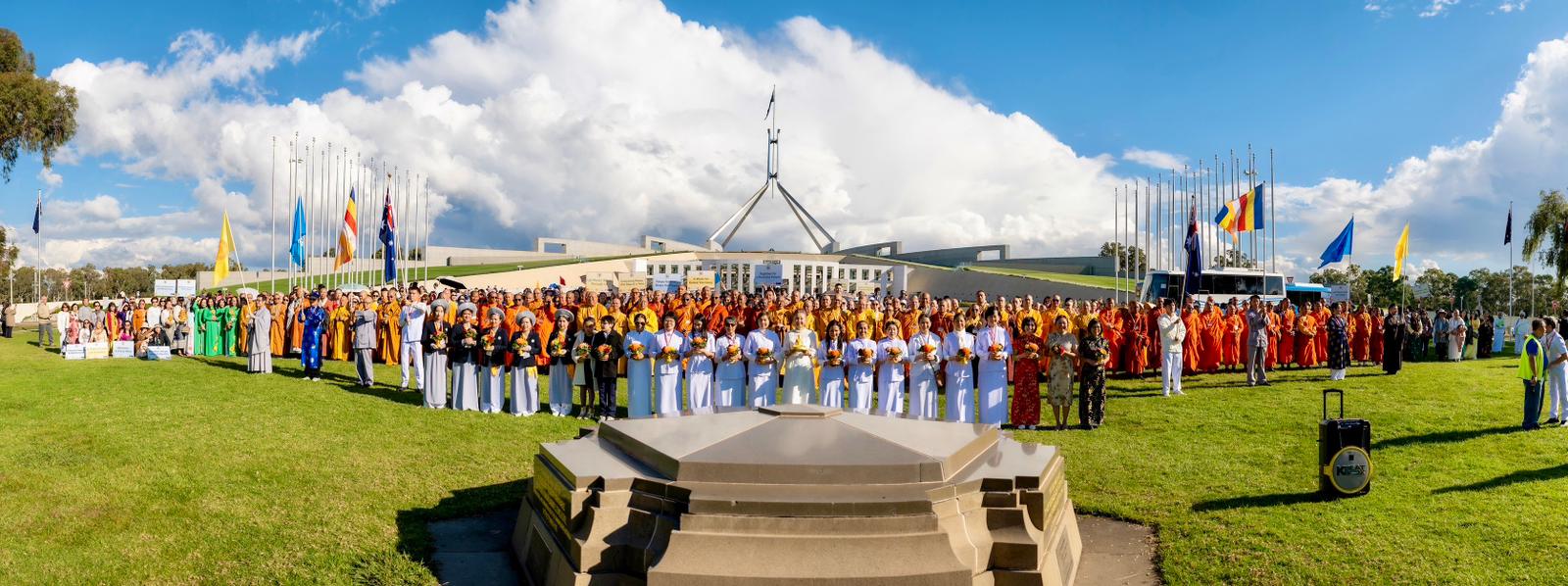
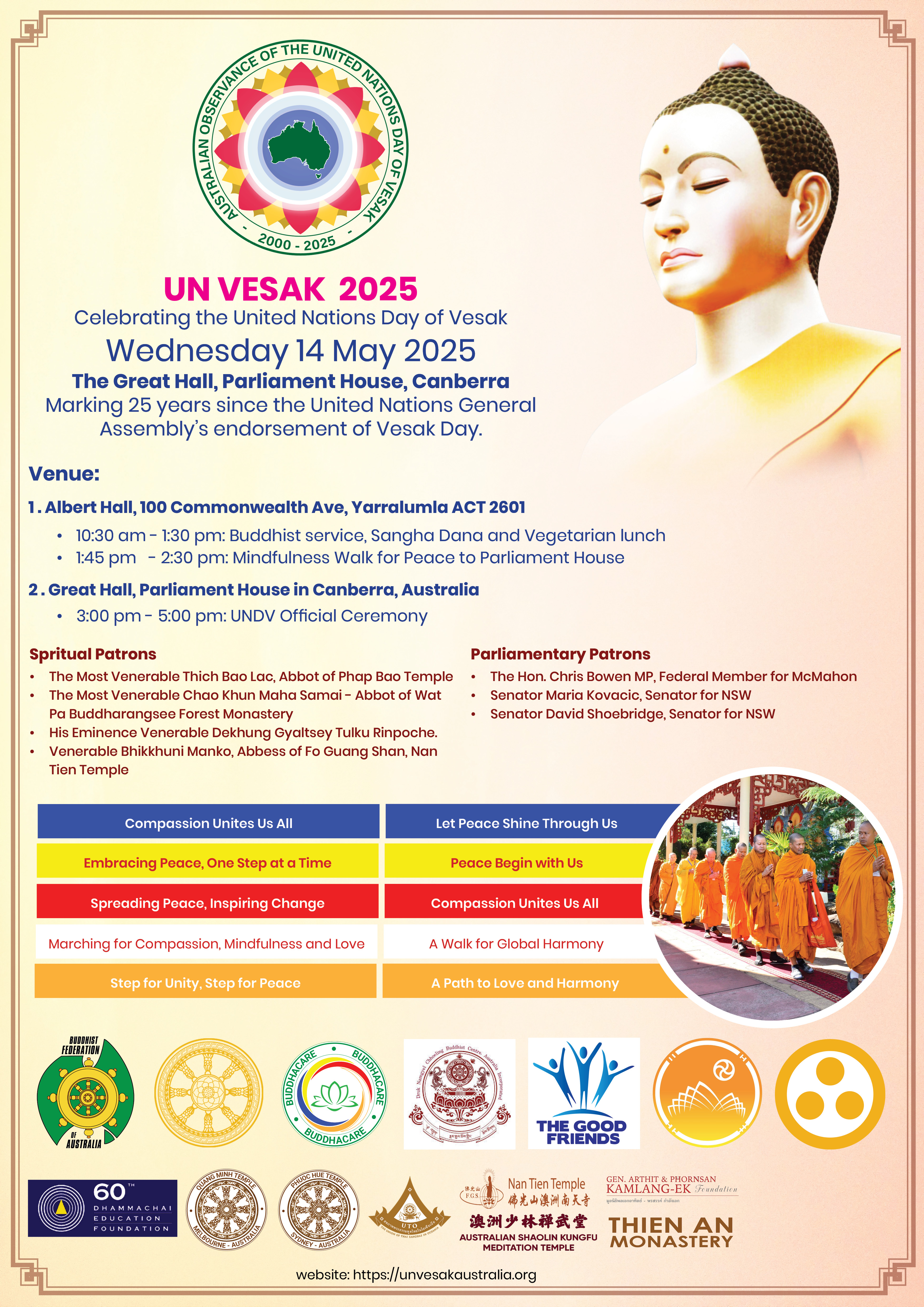
Australian Observance of the United Nations Day of Vesak 2025
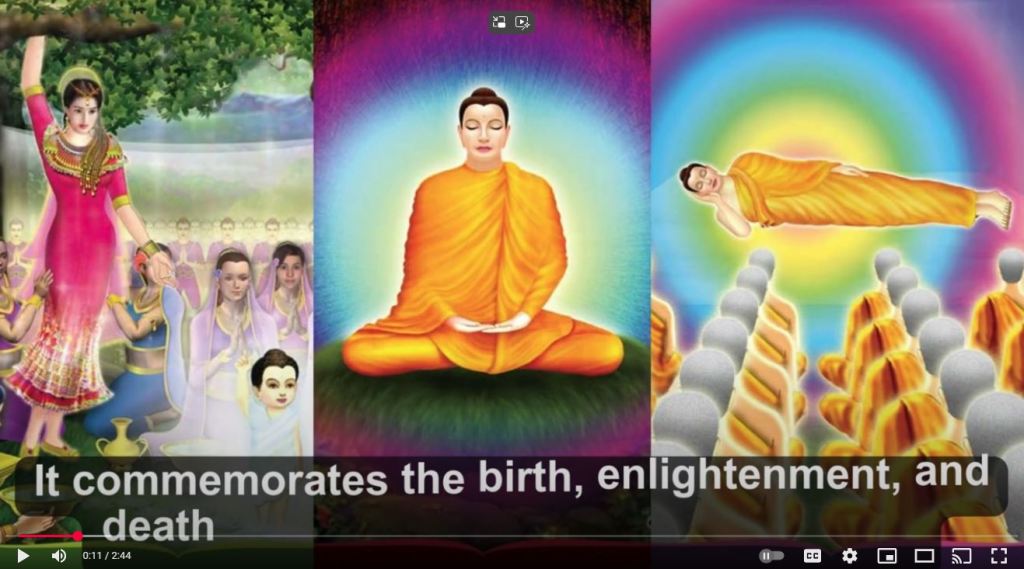
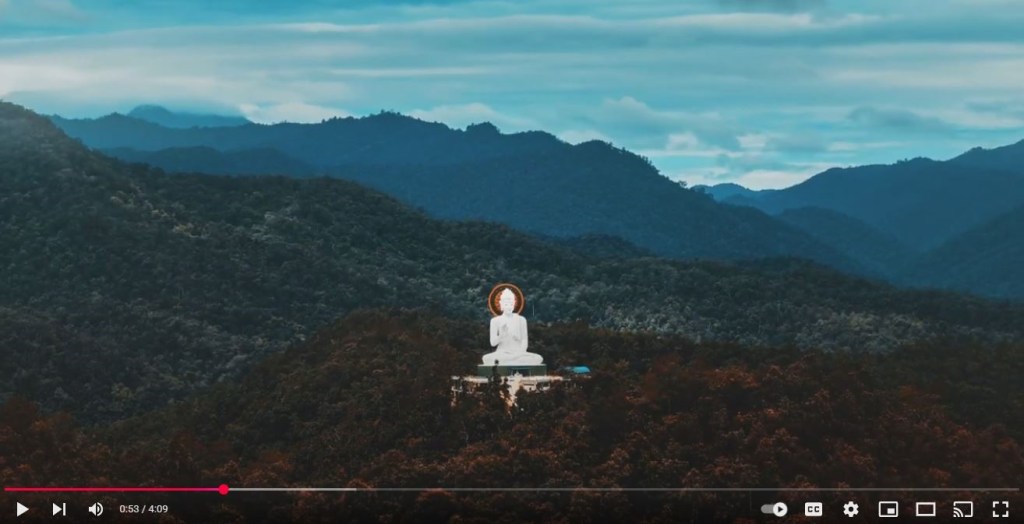
Australian Observance of the United Nations Day of Vesak – A short Video
UN Secretary-General’s message on the Day of Vesak 2025

On this Day of Vesak, I extend my warmest wishes to Buddhists worldwide as they commemorate the birth, enlightenment, and passing of the Buddha.
The Buddha’s teachings of compassion, tolerance, and selfless service resonate deeply with the values of the United Nations.
In an era of profound global challenges, these timeless principles must guide our shared path forward.
As we honor this sacred occasion, may we be inspired to bridge divides, foster solidarity, and work together towards a more peaceful, sustainable, and harmonious world.
Happy Vesak Day to all.
António Guterres
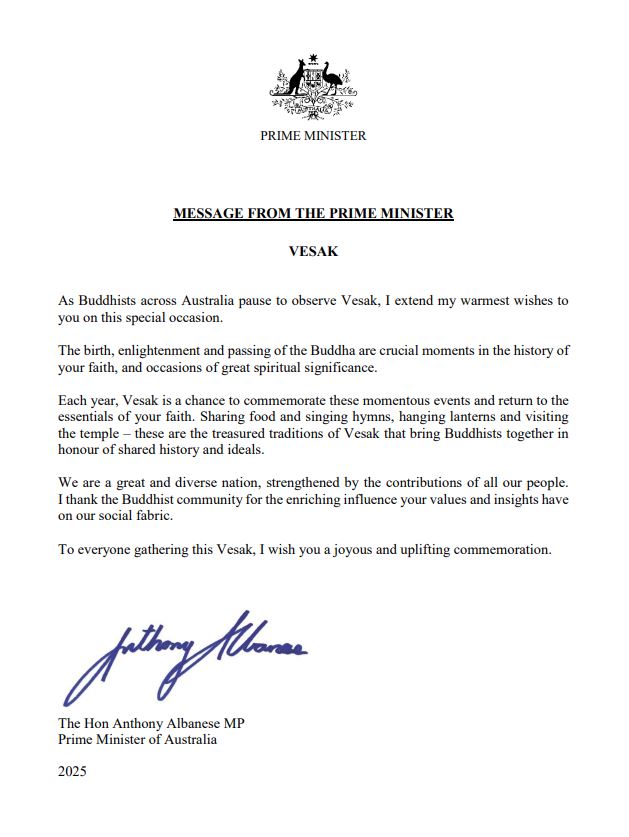
Vesak Message from The Hon Anthony Albanese MP, Prime Minister of Australia

Vesak Day Welcoming Message from Most Venerable Thich Bao Lac, Spiritual Sponsor
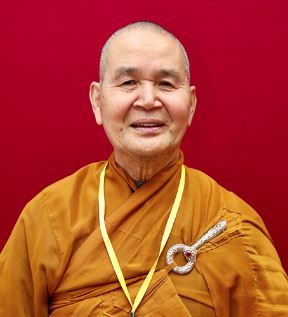
The 25th United Nations Day of Vesak Celebrations.
The 2nd at Parliament House, Canberra Australia 2025 B.E 2569
Homage to The Lord Sakyamuni Buddha
On this sacred occasion of Vesak Day, we extend our warmest greetings and our heartfelt welcome to all distinguished guests, members of the Sangha, community leaders, Australian government leaders and fellow participants gathered here, to celebrate the birth, enlightenment, and nirvana of the Blessed One, the Buddha.
This day of deep spiritual significance brings together people from all walks of life to reflect on the teachings of compassion, wisdom, and peace.
As a proud sponsor of this meaningful event, we are honored to support a celebration that promotes inner growth, mindfulness, and harmony in our community.
Vesak reminds us that through right understanding, right action, and a sincere heart, we can contribute to a more compassionate and peaceful world.
We are inspired by the dedication of the organizing committee and the Buddhist community in creating such a beautiful and inclusive event.
Your efforts in spreading Dhamma and fostering kindness make a lasting impact on society.
Let us take this time to cultivate gratitude, extend loving-kindness to all beings, and renew our commitment to living mindfully. May the light of the Buddha’s wisdom shine brightly within us, guiding us toward a path of balance, peace, and purpose.
Once again, we thank you for allowing us to be part of this special celebration. May this Vesak bring joy, insight, and blessings to you and your loved ones. Happy Vesak Day!
The Most Venerable Thich Bao Lac,
12 May 2025
Vesak Day Welcoming Message Vesak Message from Spiritual Patron, Bhikkhuni Manko
12 May 2025
To: The Senior Venerable Phuoc Tan, OAM, and Organising Committee
AUSTRALIAN OBSERVANCE OF THE UNITED NATIONS DAY OF VESAK 2025
The sacred birth of Sakyamuni Buddha illuminates hearts across the world. Here in Australia, this celebration carries profound significance, creating a precious opportunity where diverse cultural streams flow harmoniously into the mainstream of Australian society. The Buddha compassionately opened the doors of wisdom, guiding us to awaken from ignorance and perceive with clarity and understanding the suffering of all beings. Through his boundless compassion, we are blessed with teachings that illuminate the noble path of truth, goodness, and beauty—both within ourselves and in our interactions with all sentient beings.
When we commemorate the Buddha’s birth, we are reminded to continuously cultivate morality, compassion, and mutual respect—the essential nutrients that allow harmony to flow. As our late founder, Venerable Master Hsing Yun, wisely foster the Five Harmonies to nurture: individual harmony through inner joy, interpersonal harmony through mutual respect, family harmony through loving deference, social harmony through sincere cooperation, and world harmony manifested through lasting peace.
Like ripples expanding across still water, we begin with the cultivation of joy within ourselves, extend this harmony to embrace our families and communities, and ultimately contribute to the peace of our world.
Harmony is truly the most treasured jewel in existence. Without it, material wealth, possessions, and even love lose their meaning and value. When harmony dwells within and between us, even the simplest life becomes rich with purpose and contentment.
May the light of the Buddha’s wisdom continue to guide our steps along the path of peace and social cohesion.
Bhikkhuni Manko, Chief Abbess, Fo Guang Shan Temples of Australia and New Zealand
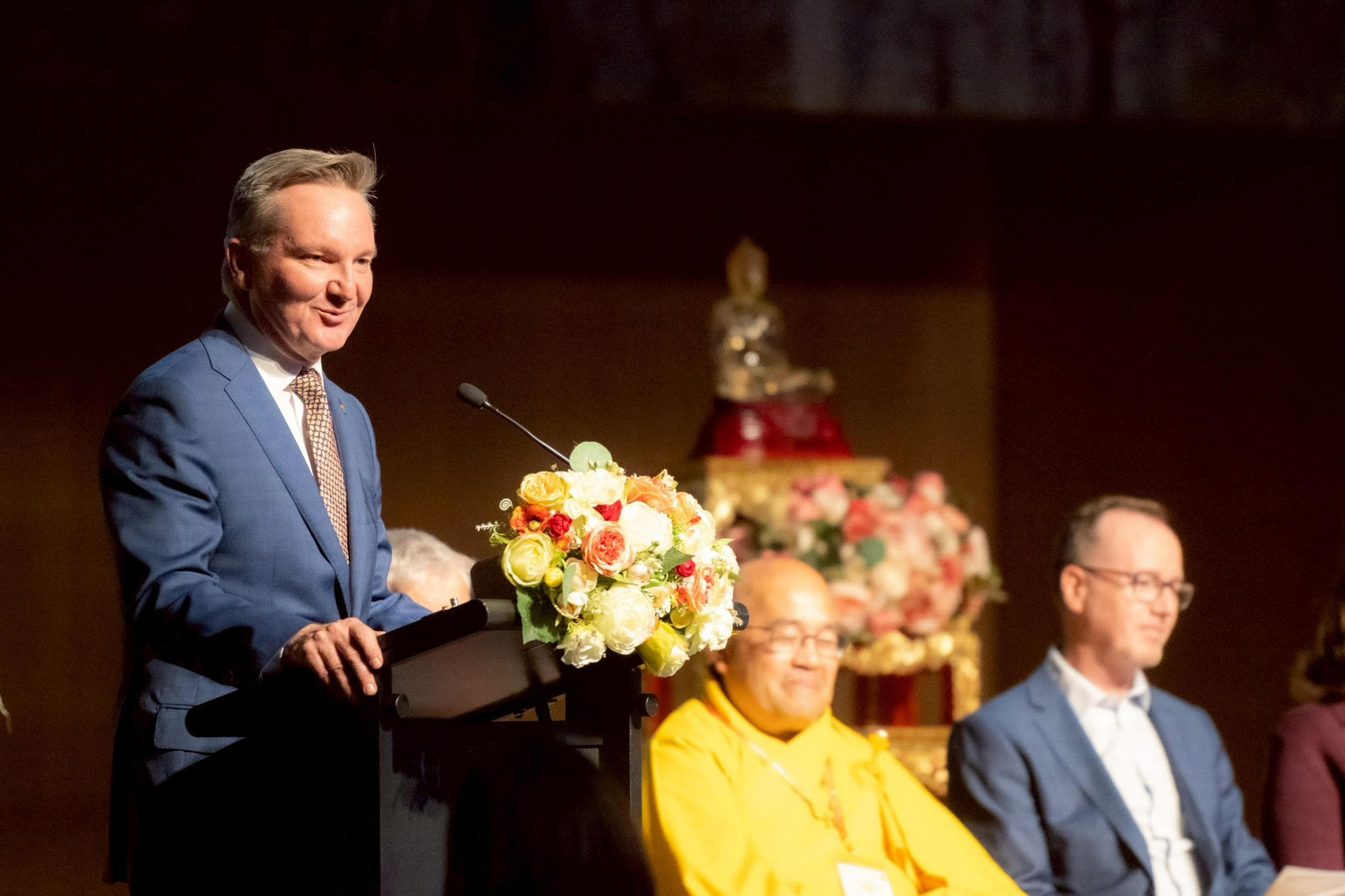
Vesak Day Welcoming Address from The Hon. Chris Bowden MP, Member for McMahon, Minister for Climate Change and Energy

It is right and appropriate that the 25th United Nations recognised Vesak Day be marked with a major event in Australia’s Parliament House, and I am delighted to join you.
As you know, while Vesak Day has been recognised UN Day for 25 years, it has been the most important day in the Buddhist calendar for thousands of years.
The day of the Buddha’s birth, enlightenment and death is a day which has become important to Buddhists and non-Buddhist alike because it’s a day to reflect on the Lord Buddha’s teachings which are so vital in this trouble world.
I have been immensely moved to celebrate Vesak Day in Western Sydney for many years. I want to congratulate the organisers for bringing Vesak Day to our national capital today.
Chris Bowden, MP
Member for McMahon
Vesak Day Welcoming Message from Senator Maria Kovacic, Senator for New South Wales

I extend my warmest wishes to all those in Australia and around the world observing Vesak –the most sacred day on the Buddhist calendar, commemorating the birth, enlightenment and passing of Gautama Buddha.
Vesak is an important time for reflection – not only for the Buddhist community, but for all of us who value compassion, peace and the enduring pursuit of wisdom. It is an opportunity to honour the teachings of the Buddha, whose message of non-violence, mindfulness and service to others continues to inspire people across generations and continents.
Australia’s vibrant and diverse Buddhist community enriches the social, spiritual and cultural fabric of our nation. From nurturing younger generations in the Dhamma, to supporting the wellbeing of the broader community, their contributions exemplify the very best of civic leadership.
As we mark this special occasion, let us be reminded of the power of kindness in shaping stronger, more unified communities. In a world often challenged by division and conflict, the universal values at the heart of Vesak – generosity, understanding, and respect for all life – serve as a guiding light.
To everyone celebrating, may this Vesak be a time of spiritual renewal, joy, and deeper connection with others.
May you and your families enjoy a peaceful and meaningful Vesak.
Senator Maria Kovacic
Senator for New South Wales
Vesak Day Welcoming Message from Senator David Shoebridge, Senator for New South Wales

I’d like to extend my warmest congratulations to the Buddhist community on this sacred day and to thank you for the honour of being a parliamentary patron.
Vesak is a time of meditation and introspection, where millions of people reflect upon the Buddha’s timeless teaching. In a world troubled by greed, competition and war, such wisdom could not be more relevant.
Fundamental human values of compassion and humility, peace and nonviolence offer a beacon of clarity for humanity to be guided toward a more harmonious world. Indeed, a world that commits to peace and nonviolence is a world that would ensure the flourishing and sustainability of all life on earth.
As a Greens senator, I join your commitment to peace and nonviolence – these are pillars of the Australian Greens.
I’d like to extend gratitude to the Australian Buddhist community for fostering the Buddha’s ideals. Your dedication to promoting peace, compassion and understanding aligns with the highest aspirations of our society.
May this Day of Vesak inspire a renewed commitment to the values that unite us all.
Senator David Shoebridge,
Senator for New South Wales,
Australian Greens
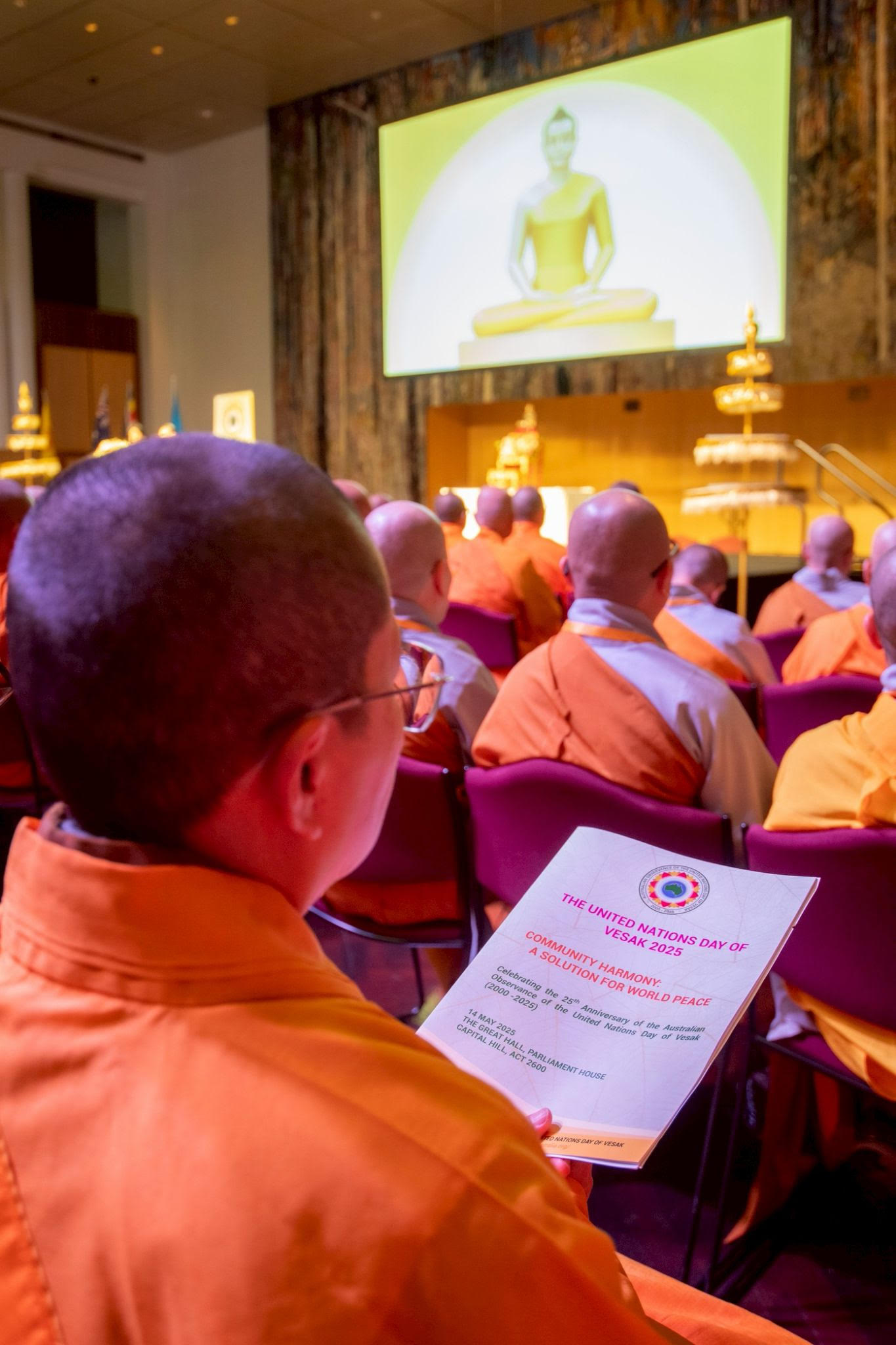
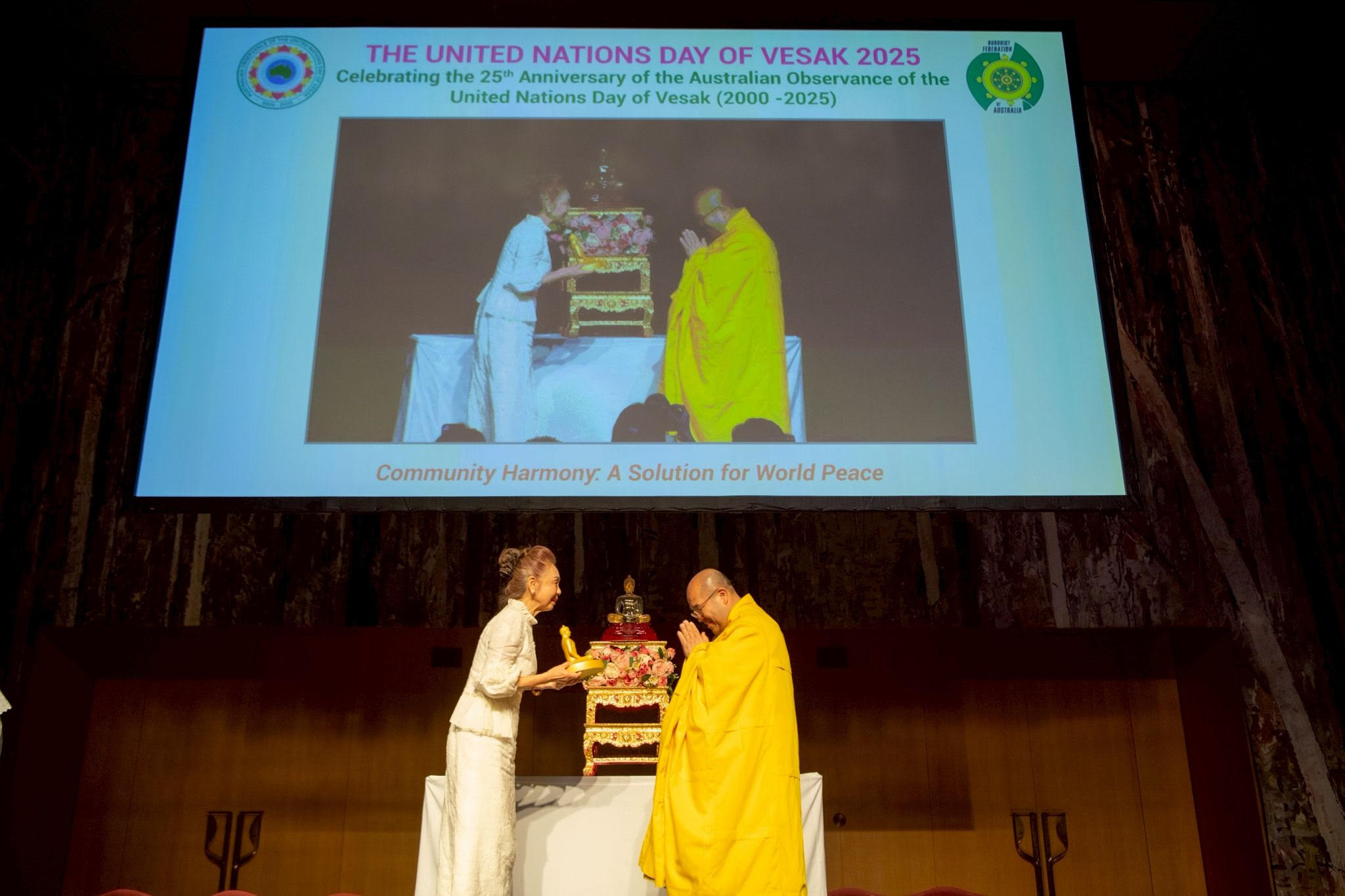
THE UNITED NATIONS DAY OF VESAK 2025 – 14 May 2025, Canberra, ACT.
COMMUNITY HARMONY: A SOLUTION FOR WORLD PEACE
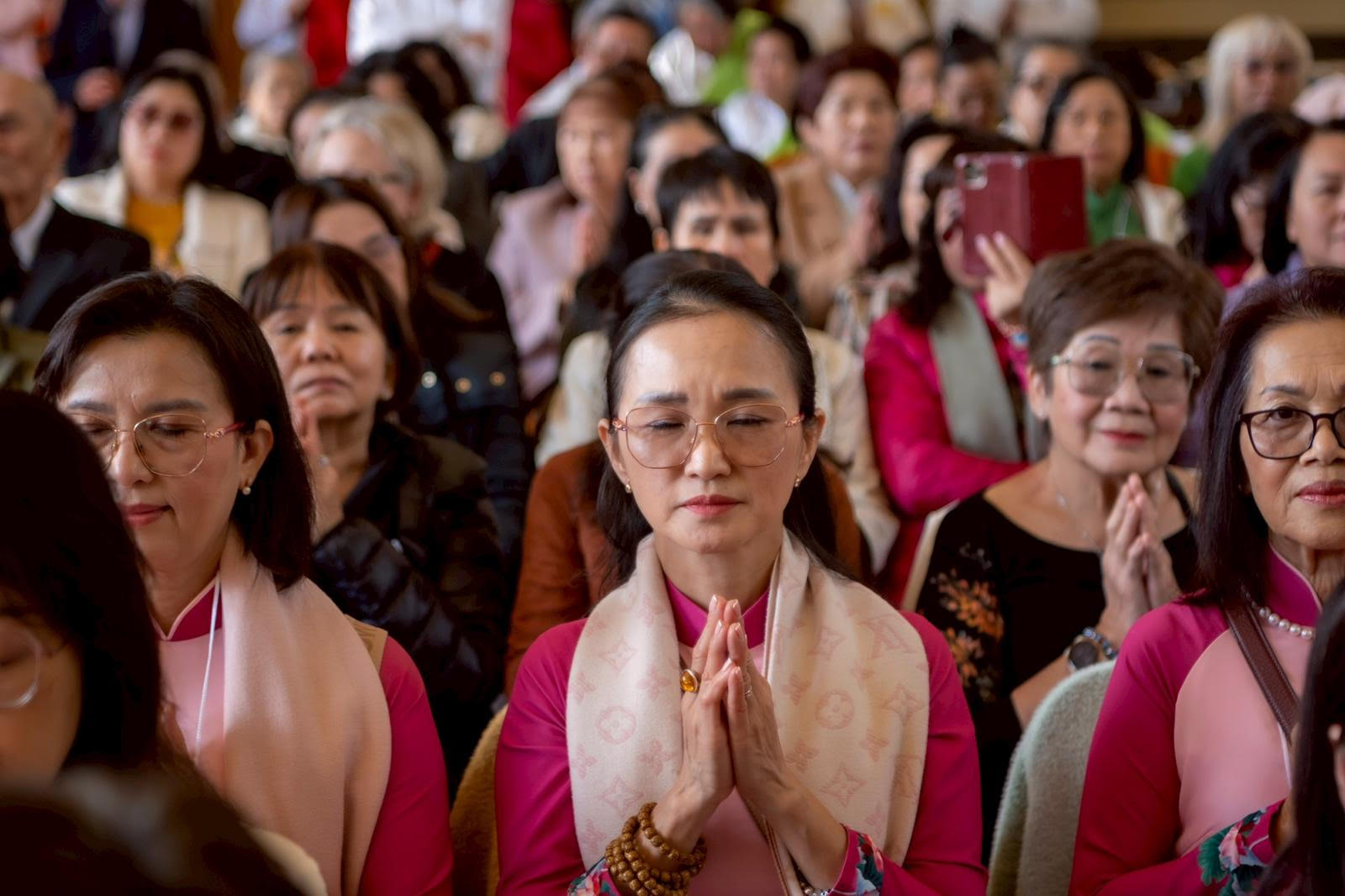
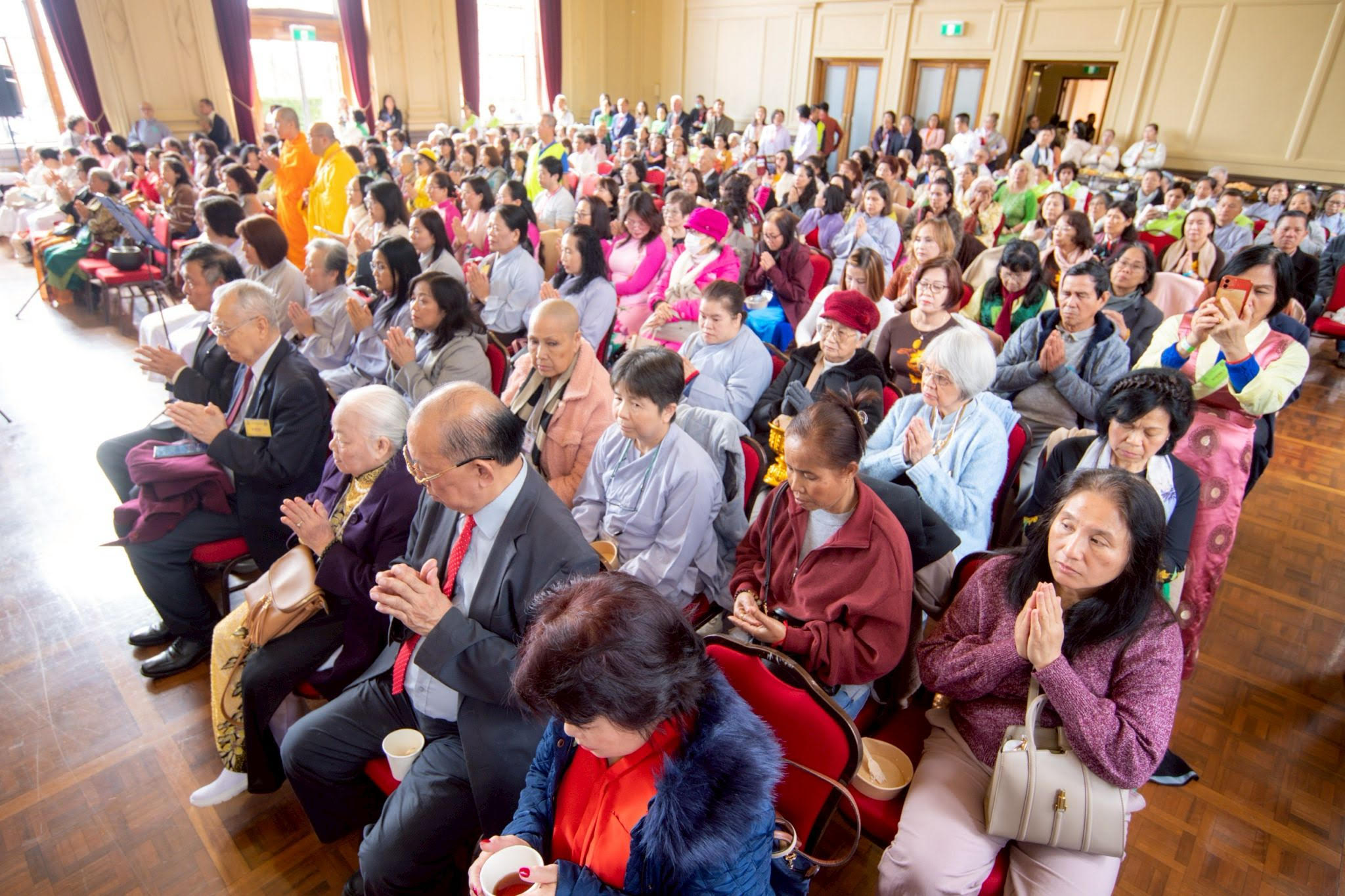
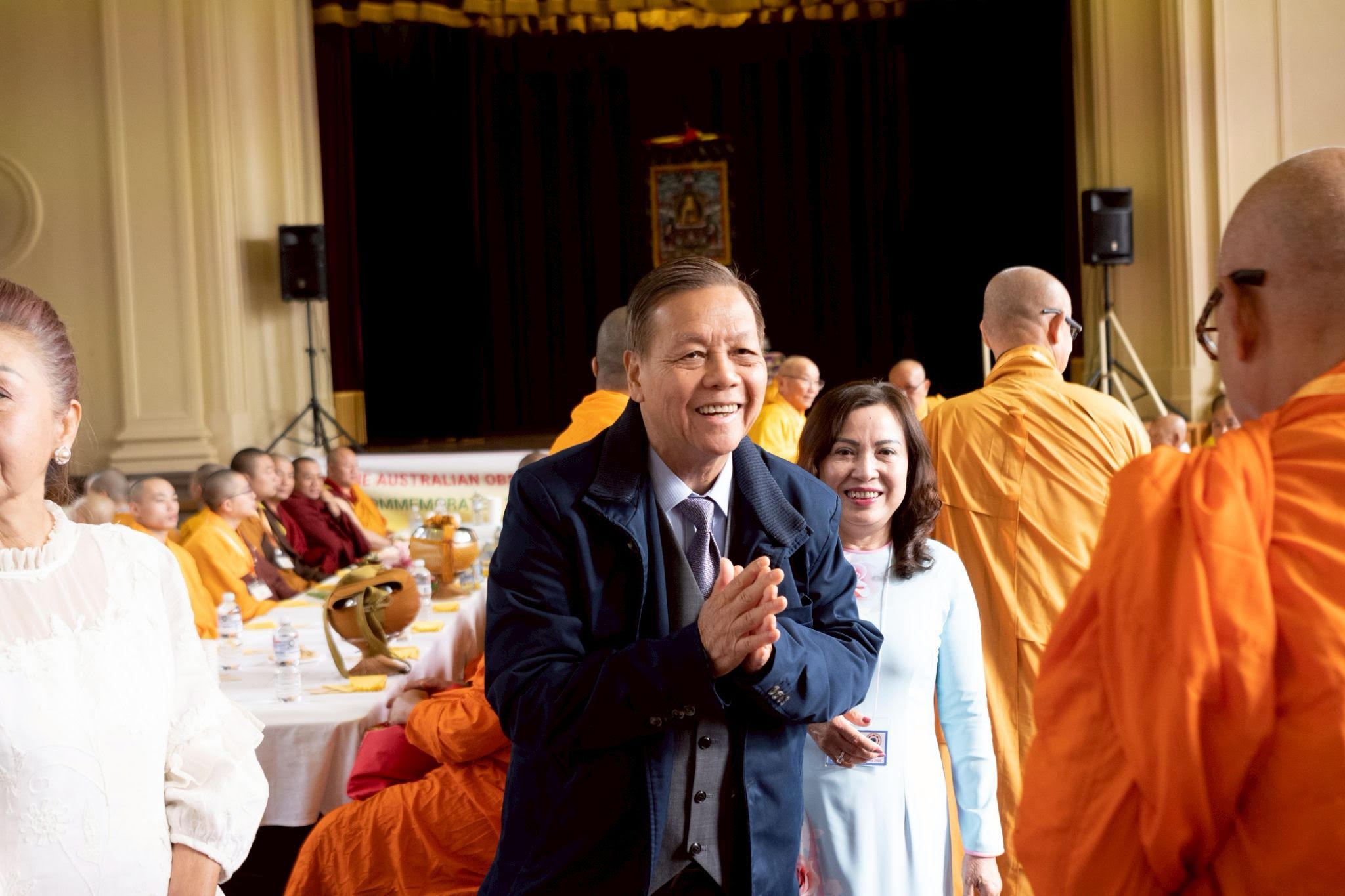
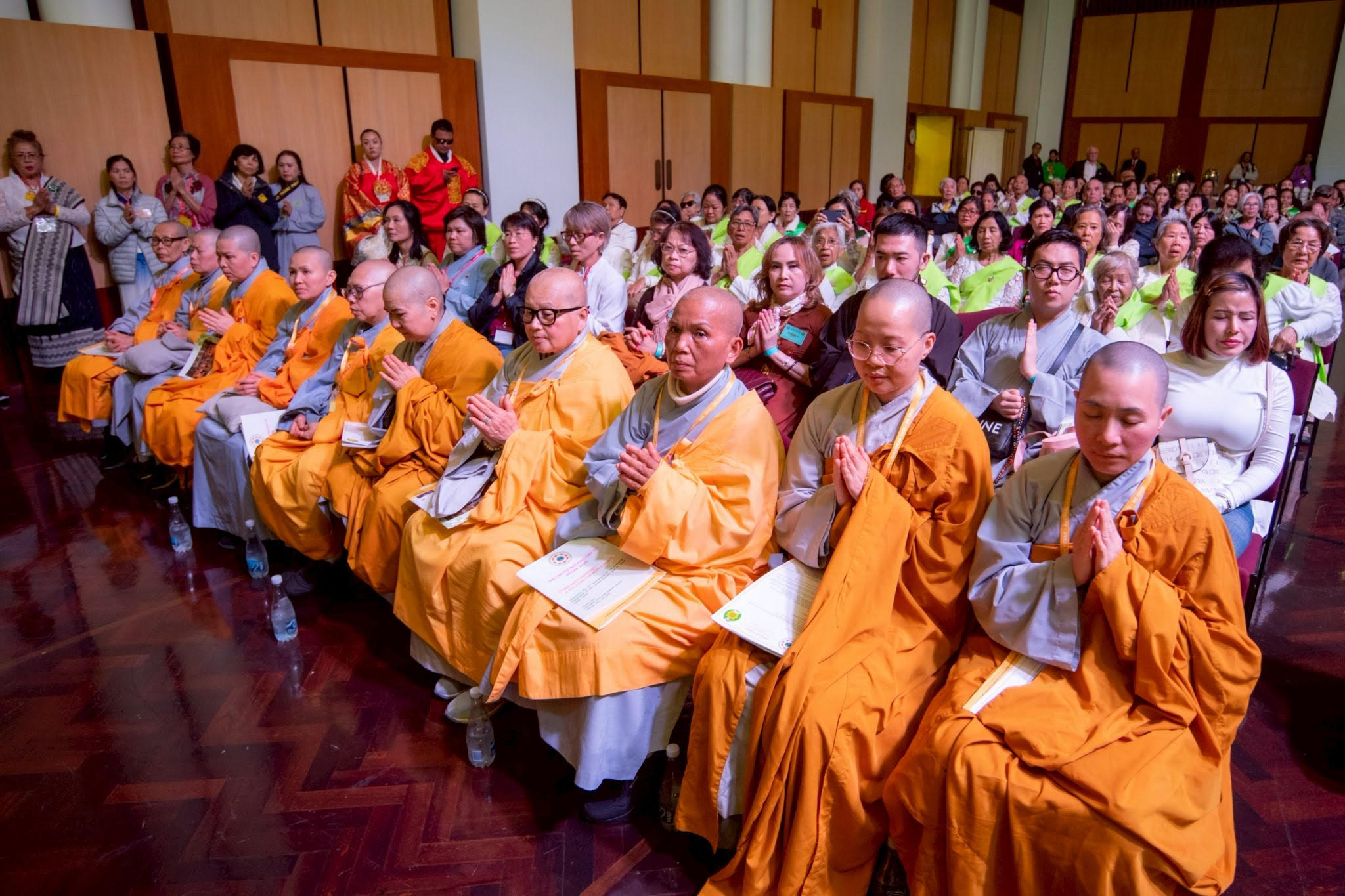
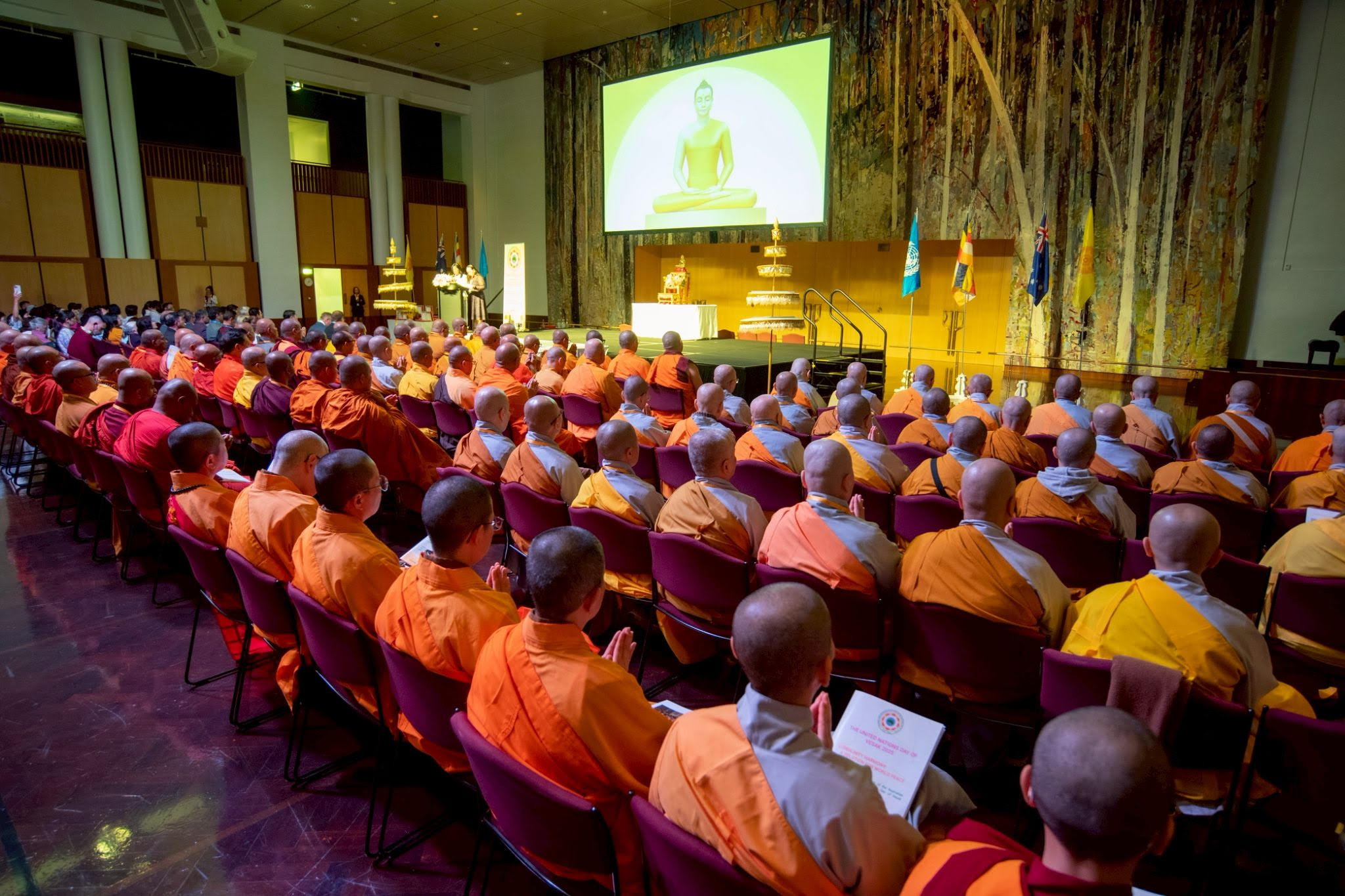
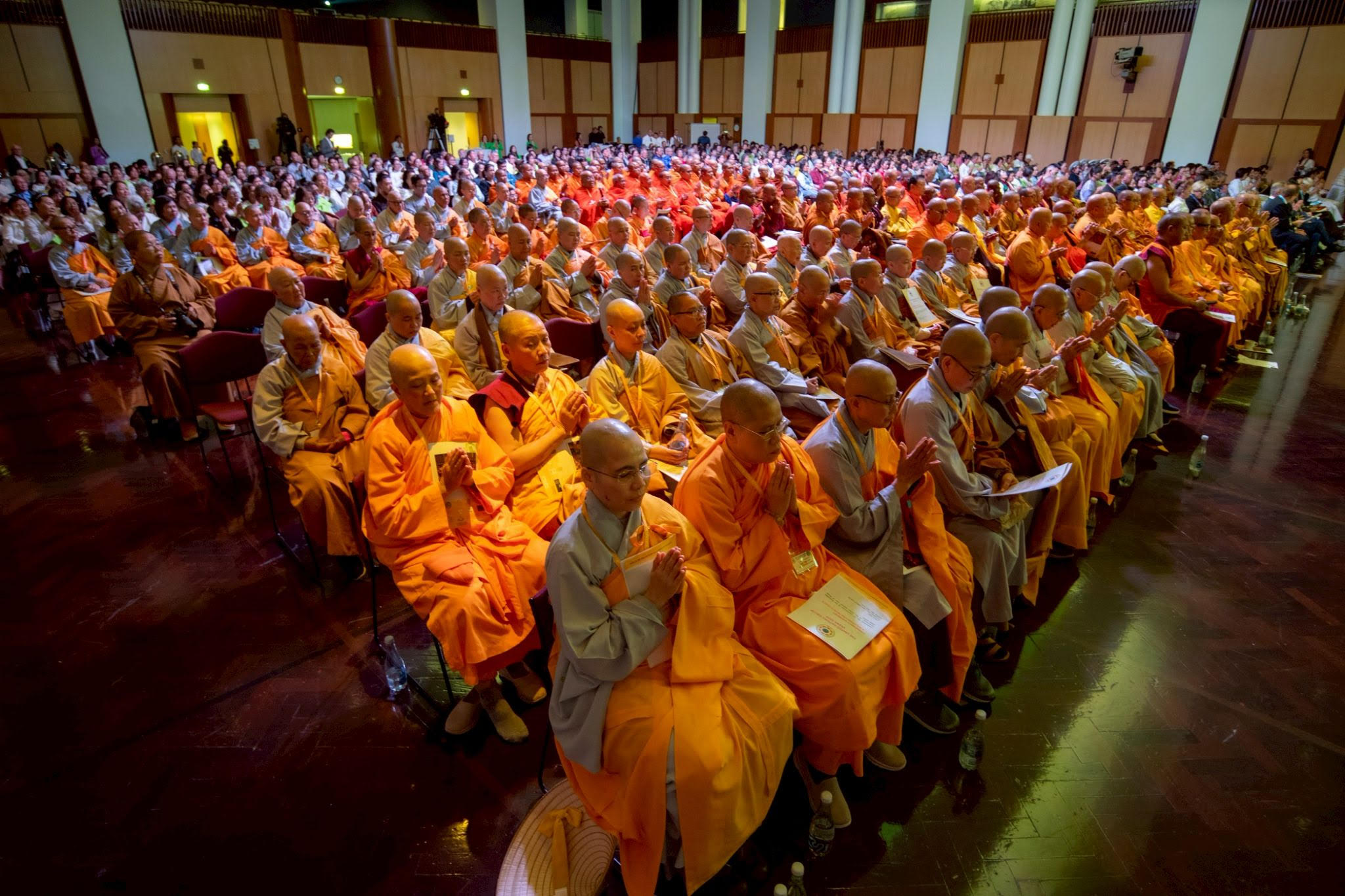
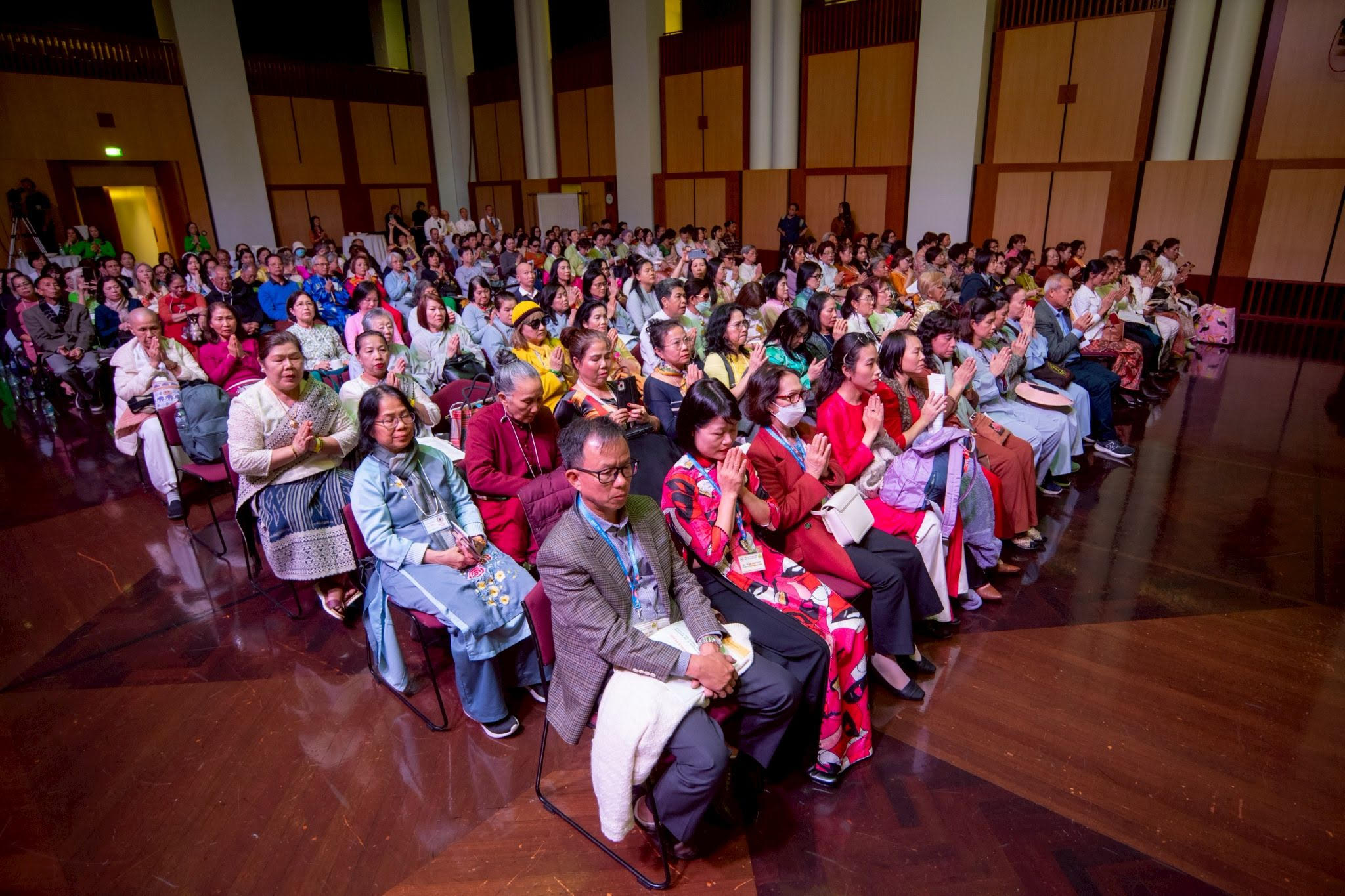
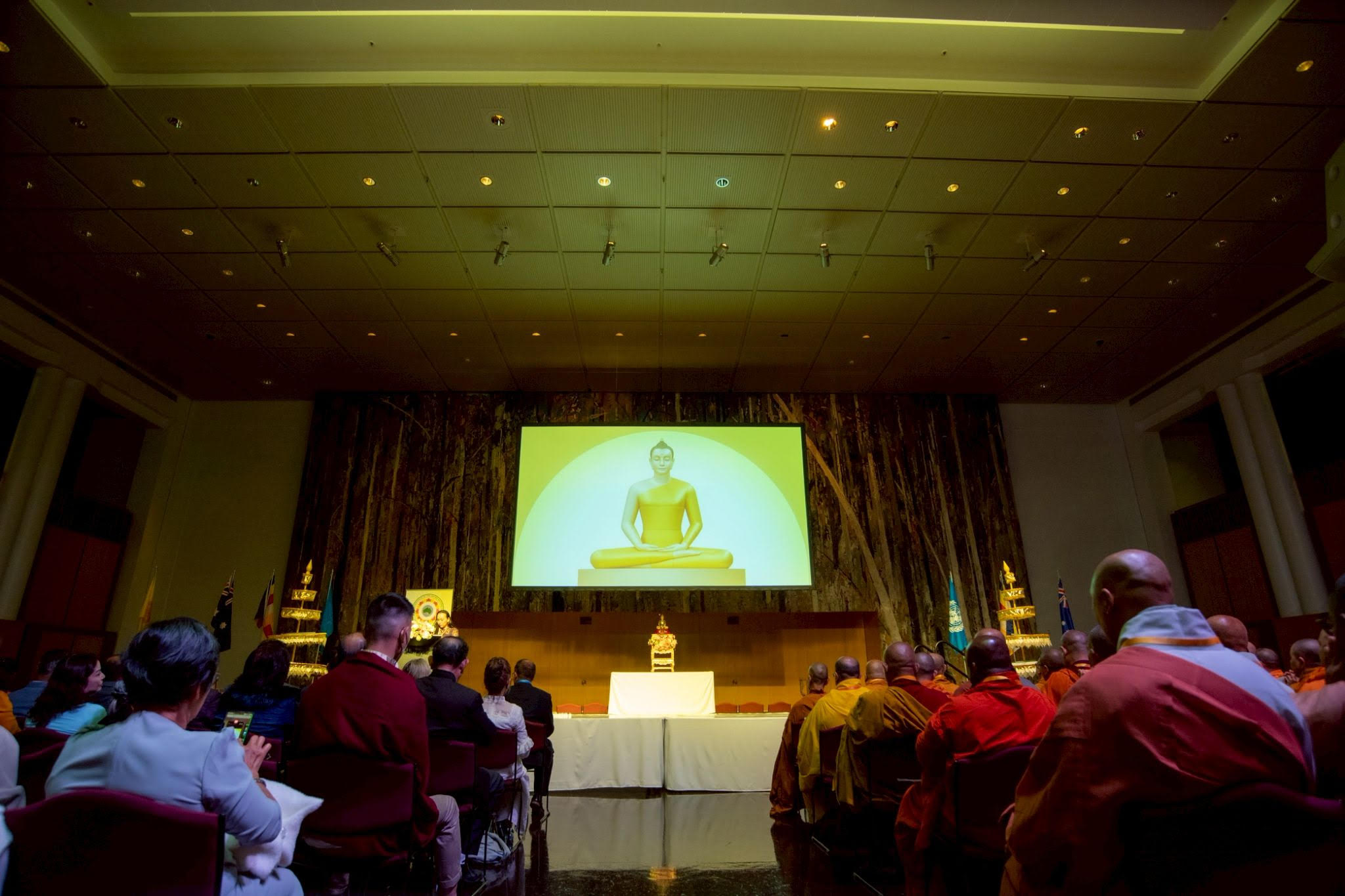
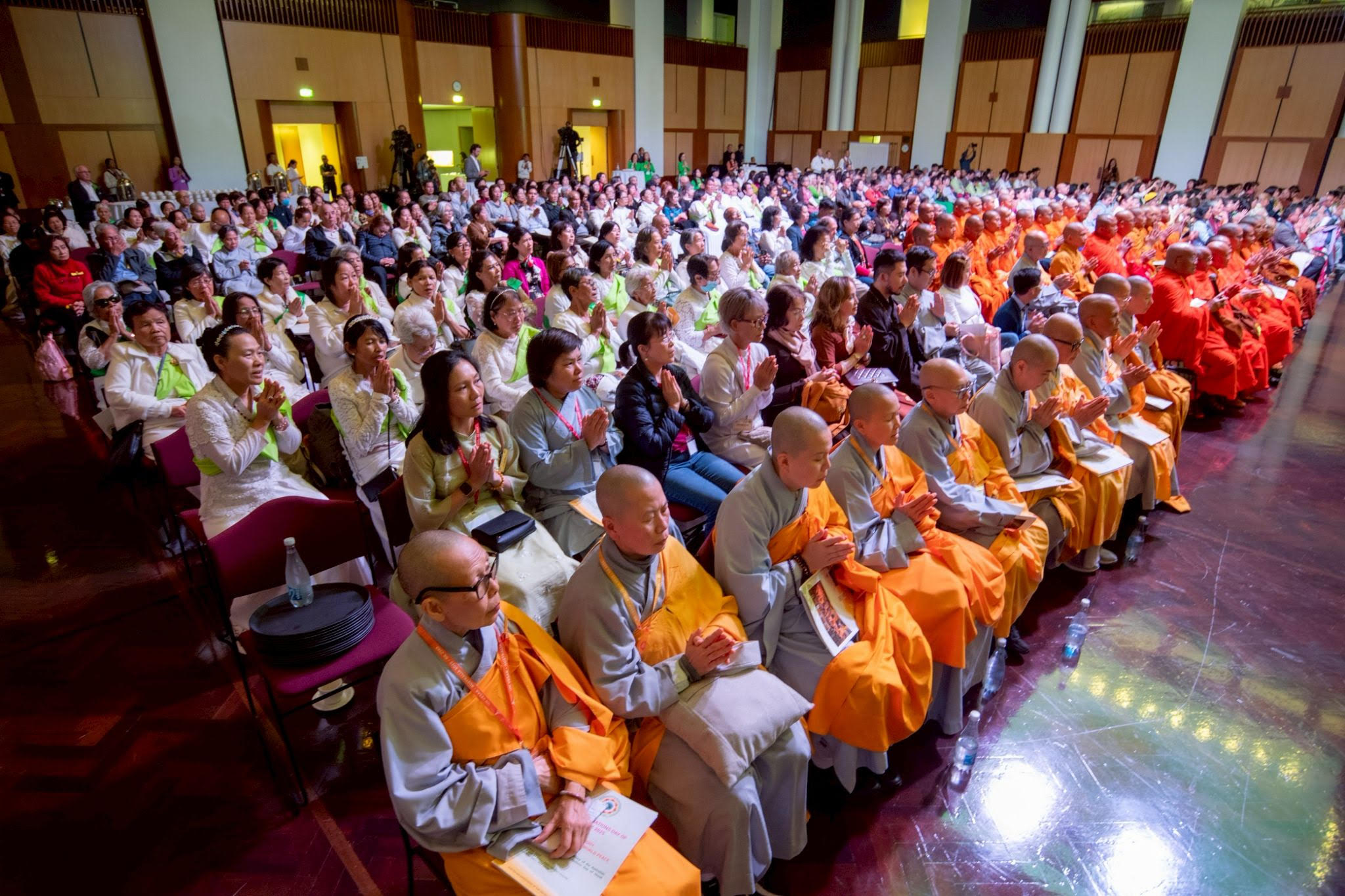
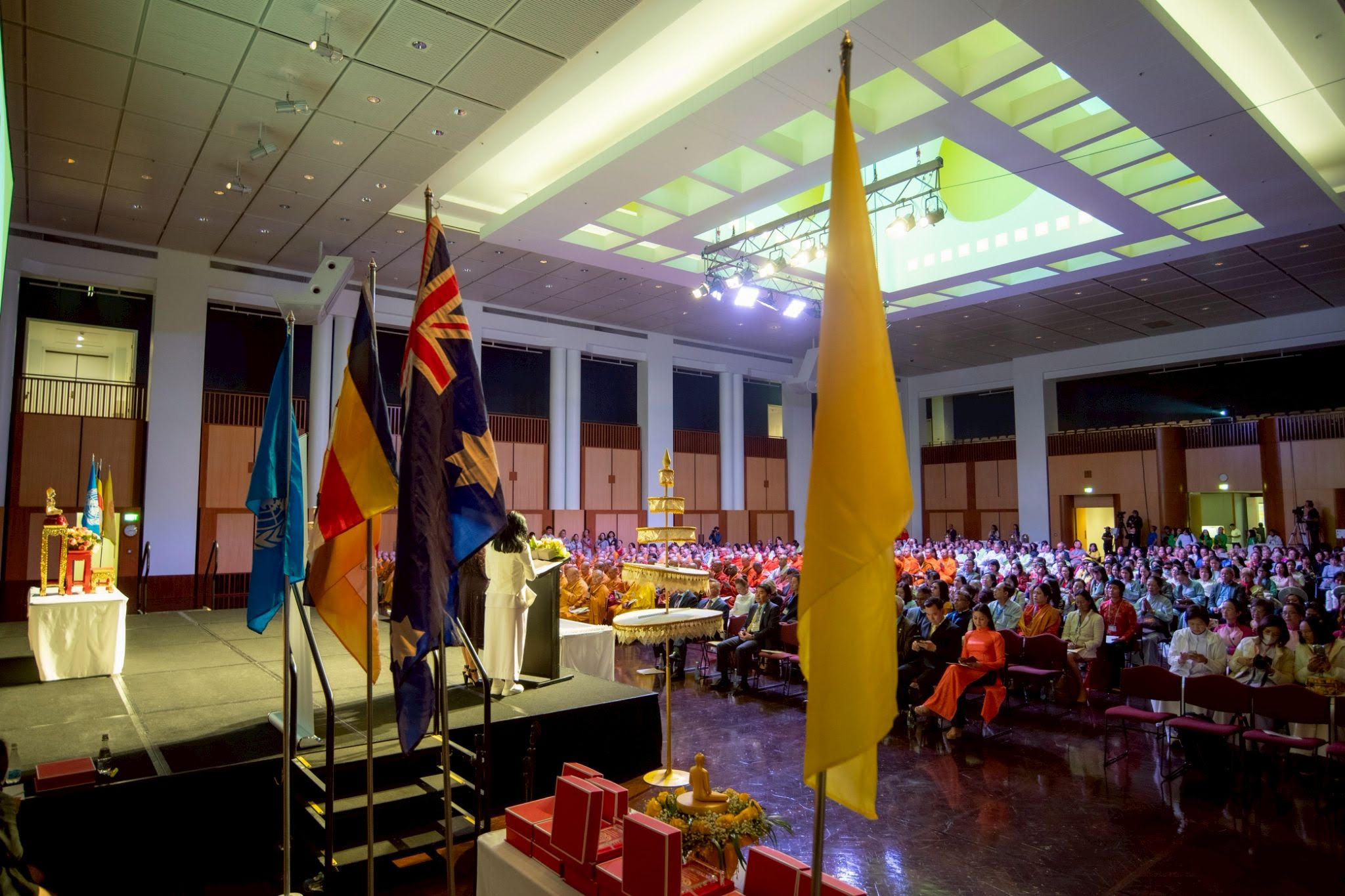
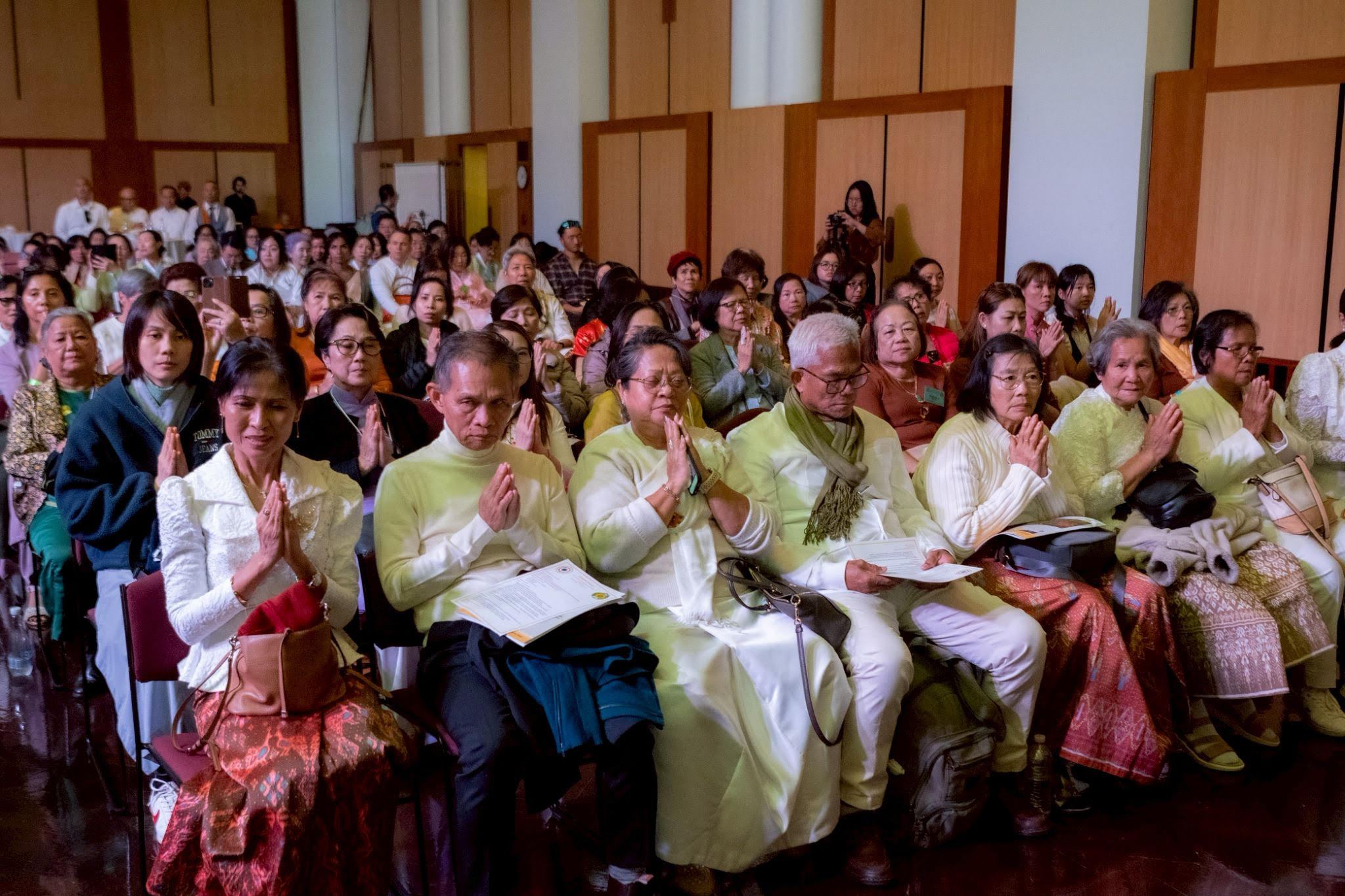
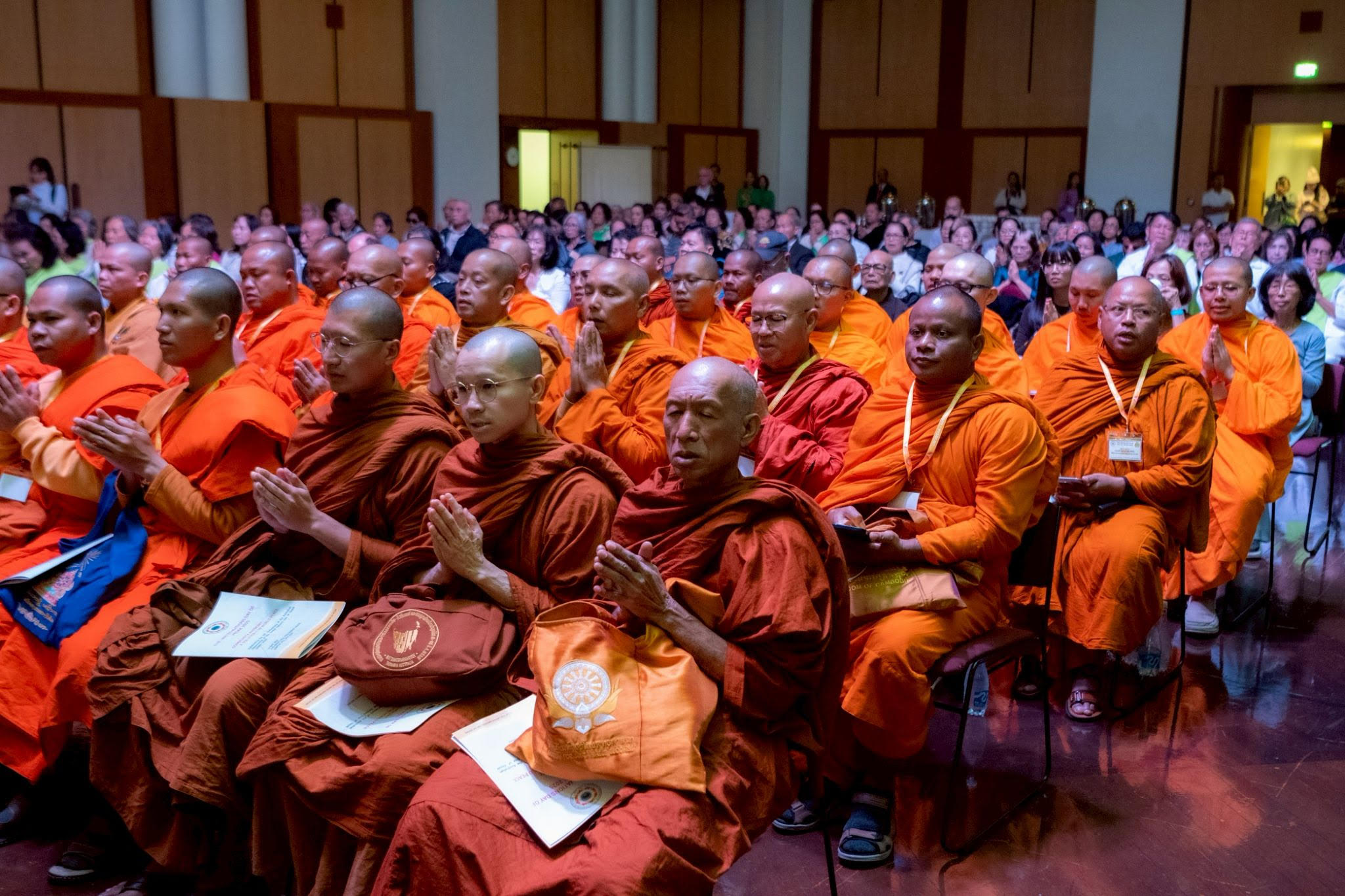
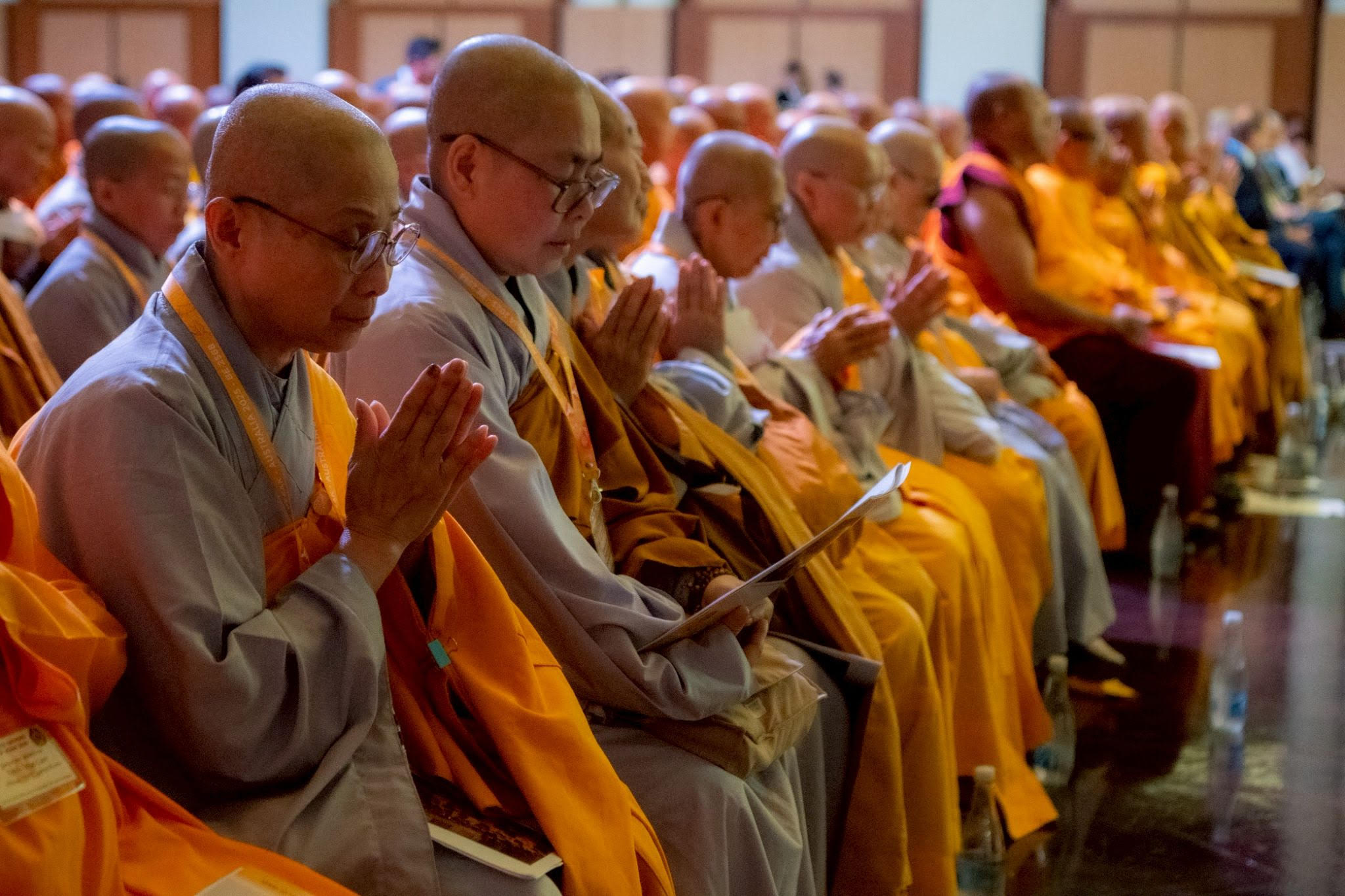
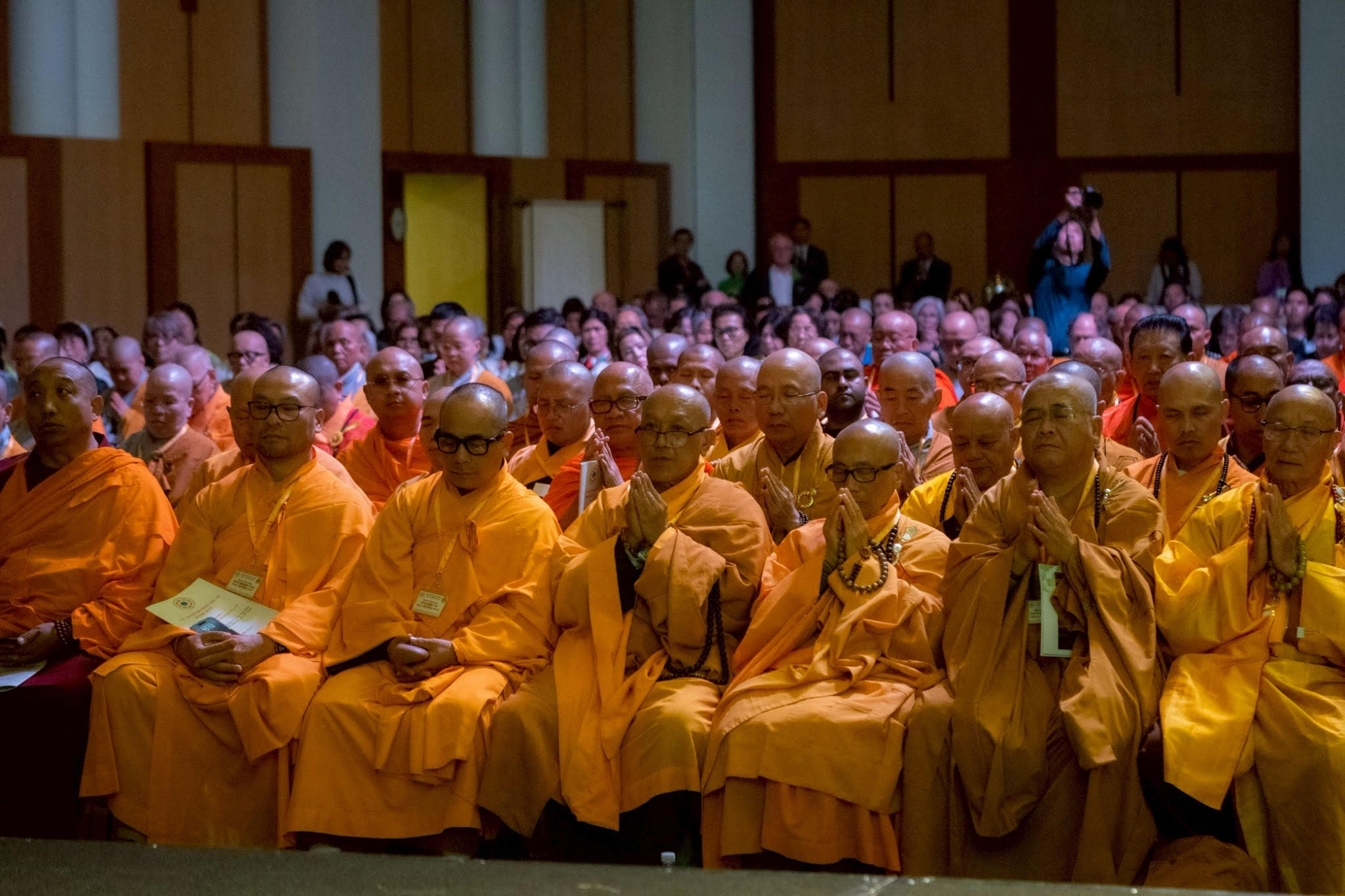
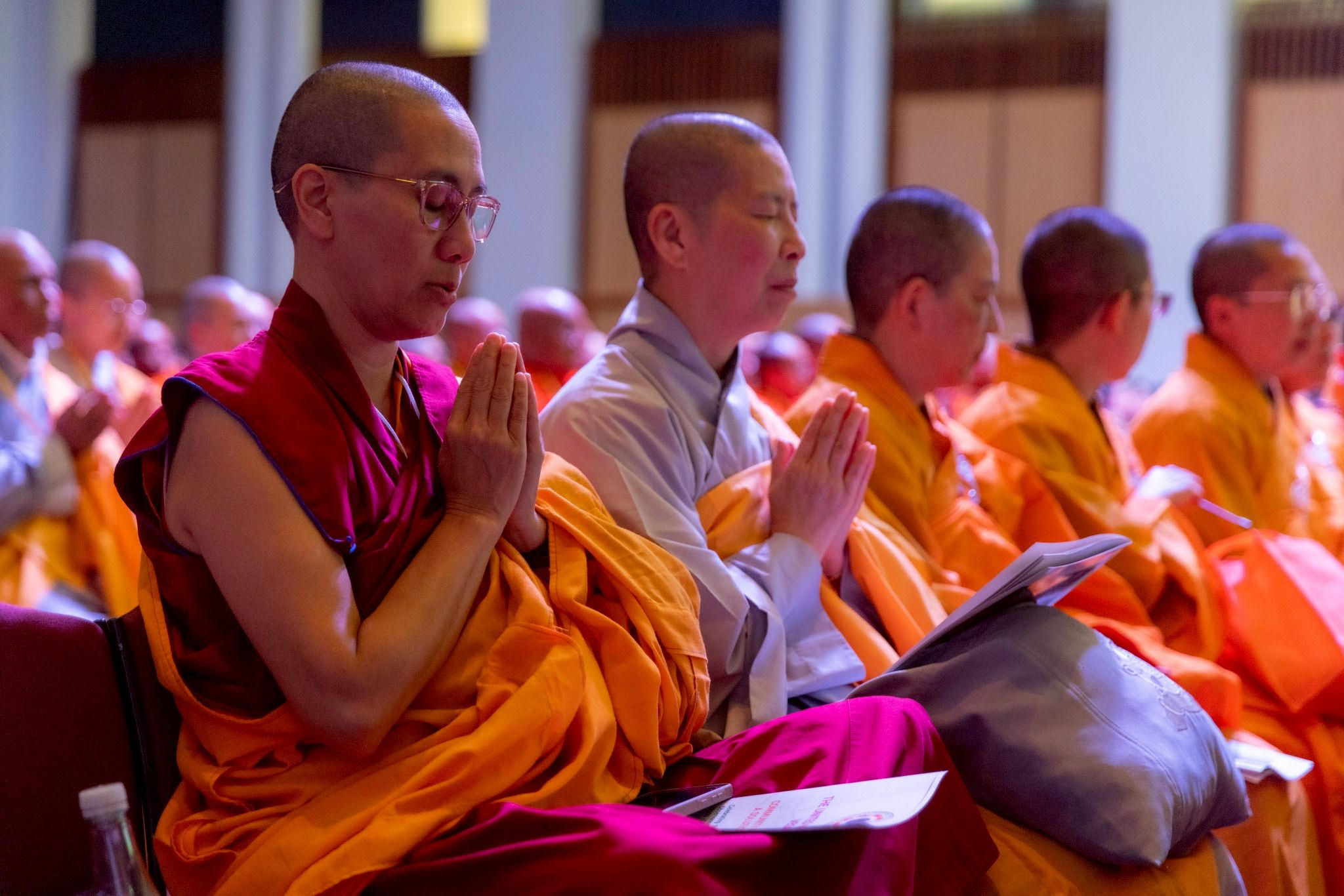
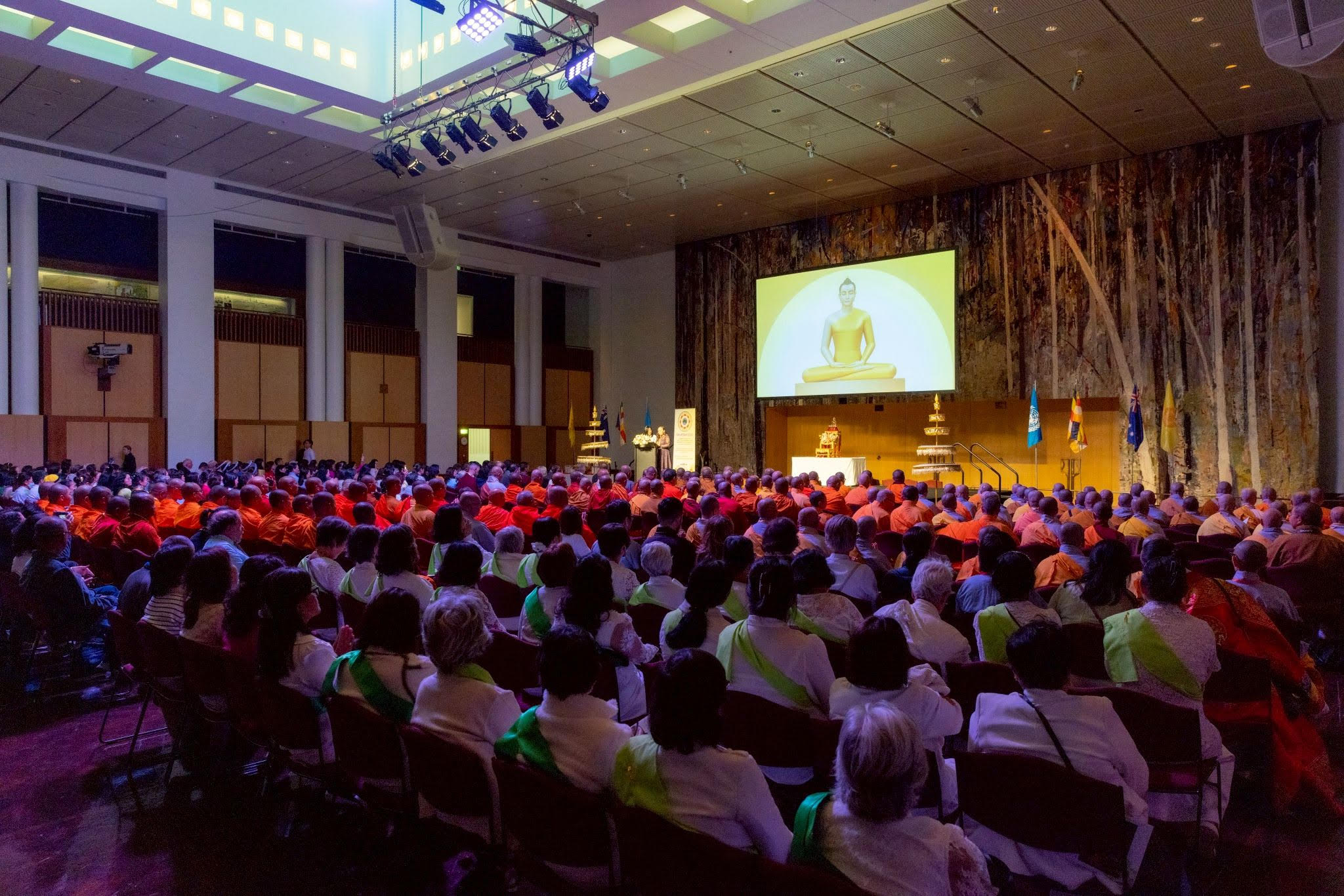
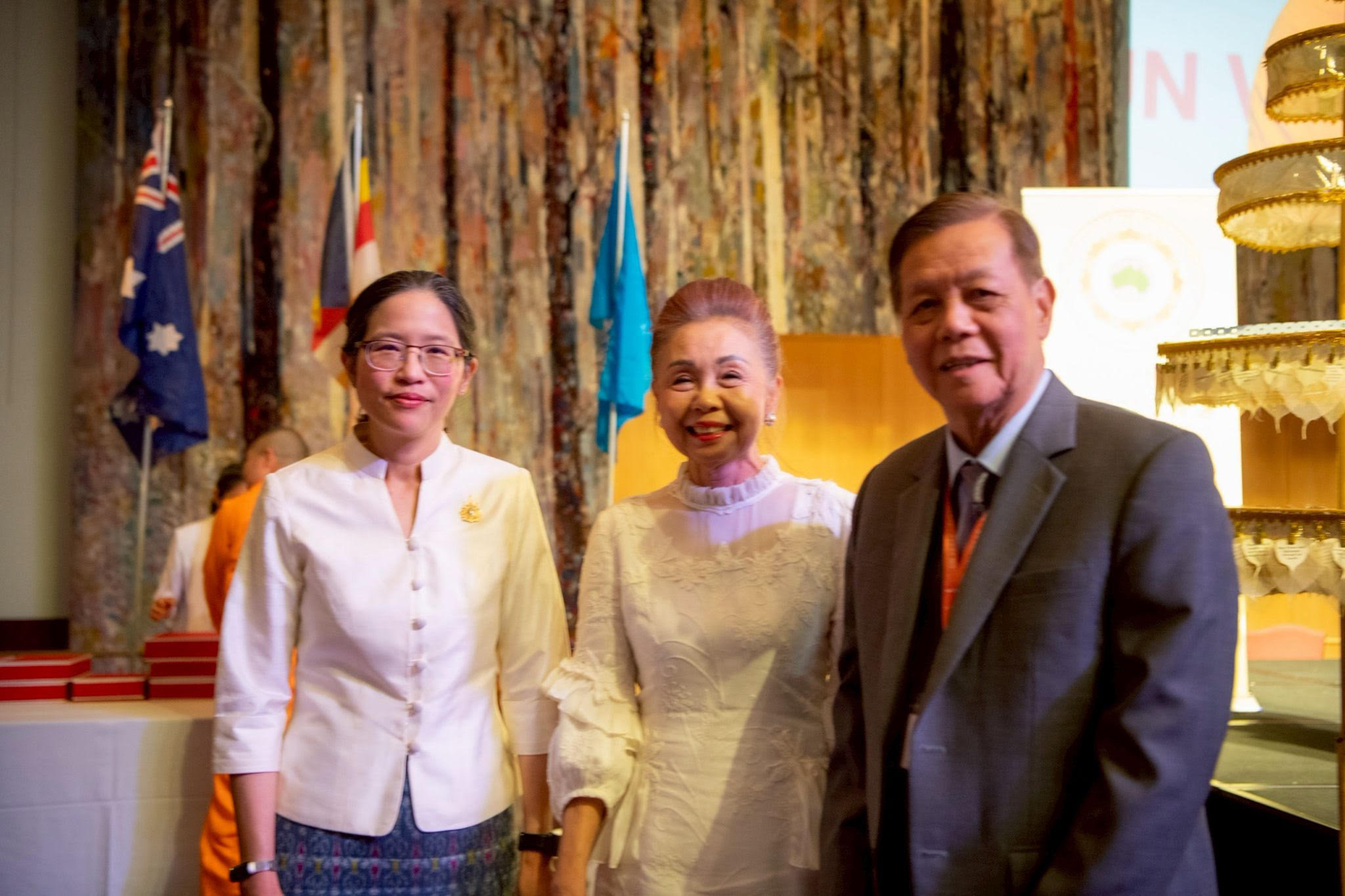
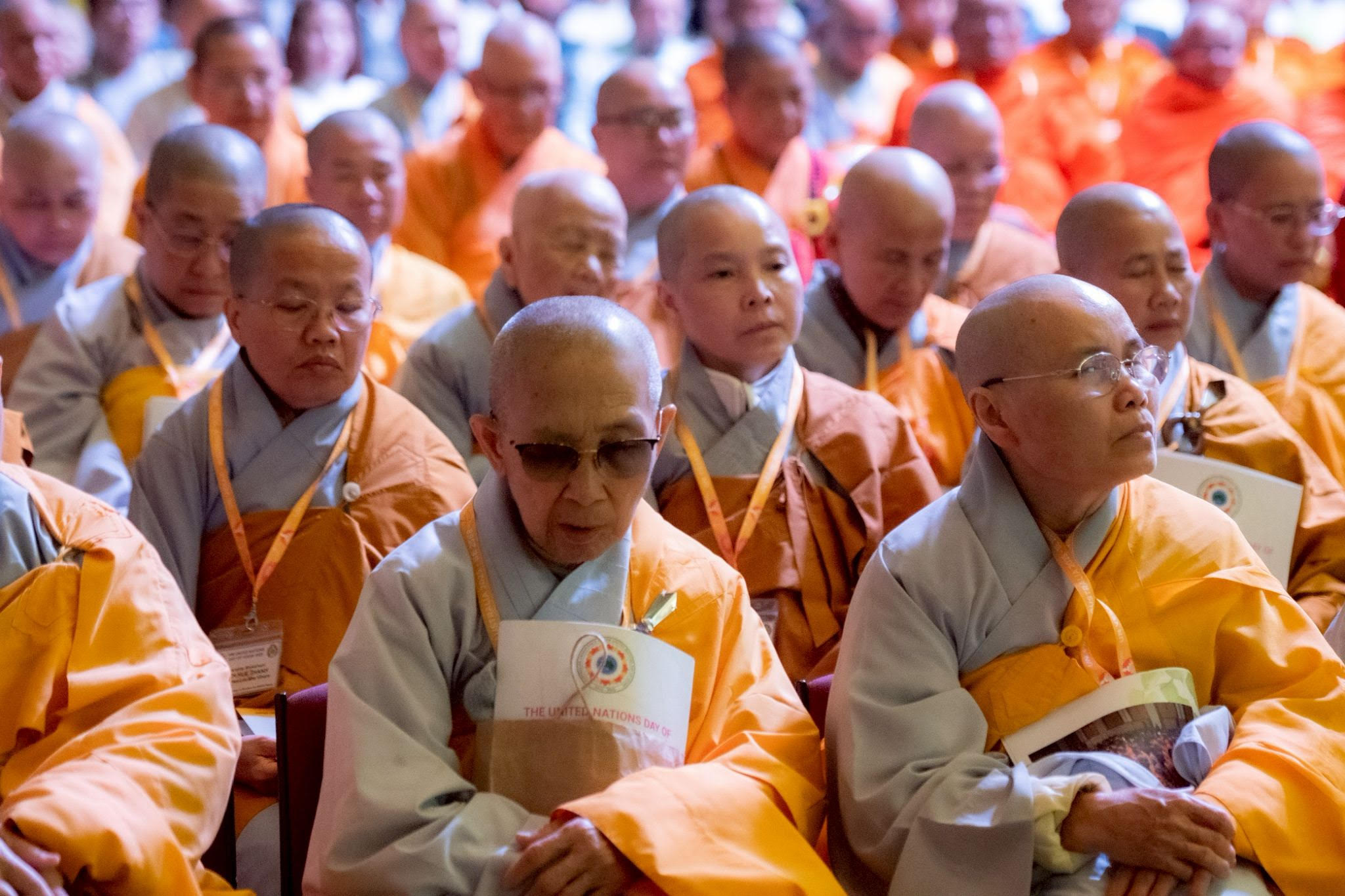
Nearly a thousand Buddhists from across Australia gathered in Canberra to celebrate the 25th Anniversary of the United Nations Day of Vesak. Organized by the Australian Observance of the United Nations Day of Vesak’s Organising Committee and led by the Buddhist Federation of Australia, the event showcased Buddhist cultural traditions, with the official ceremony held in the Great Hall of Parliament House.
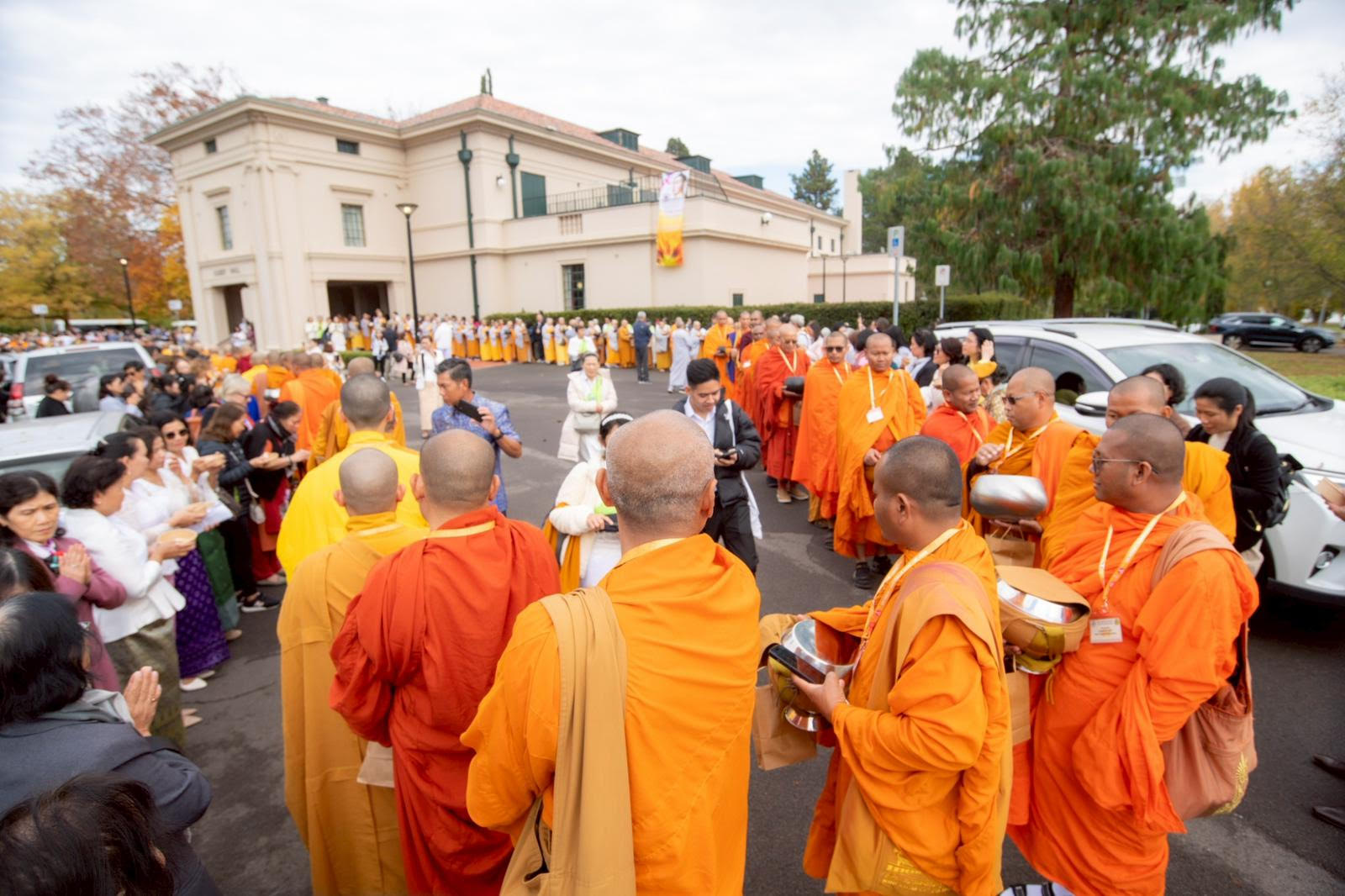
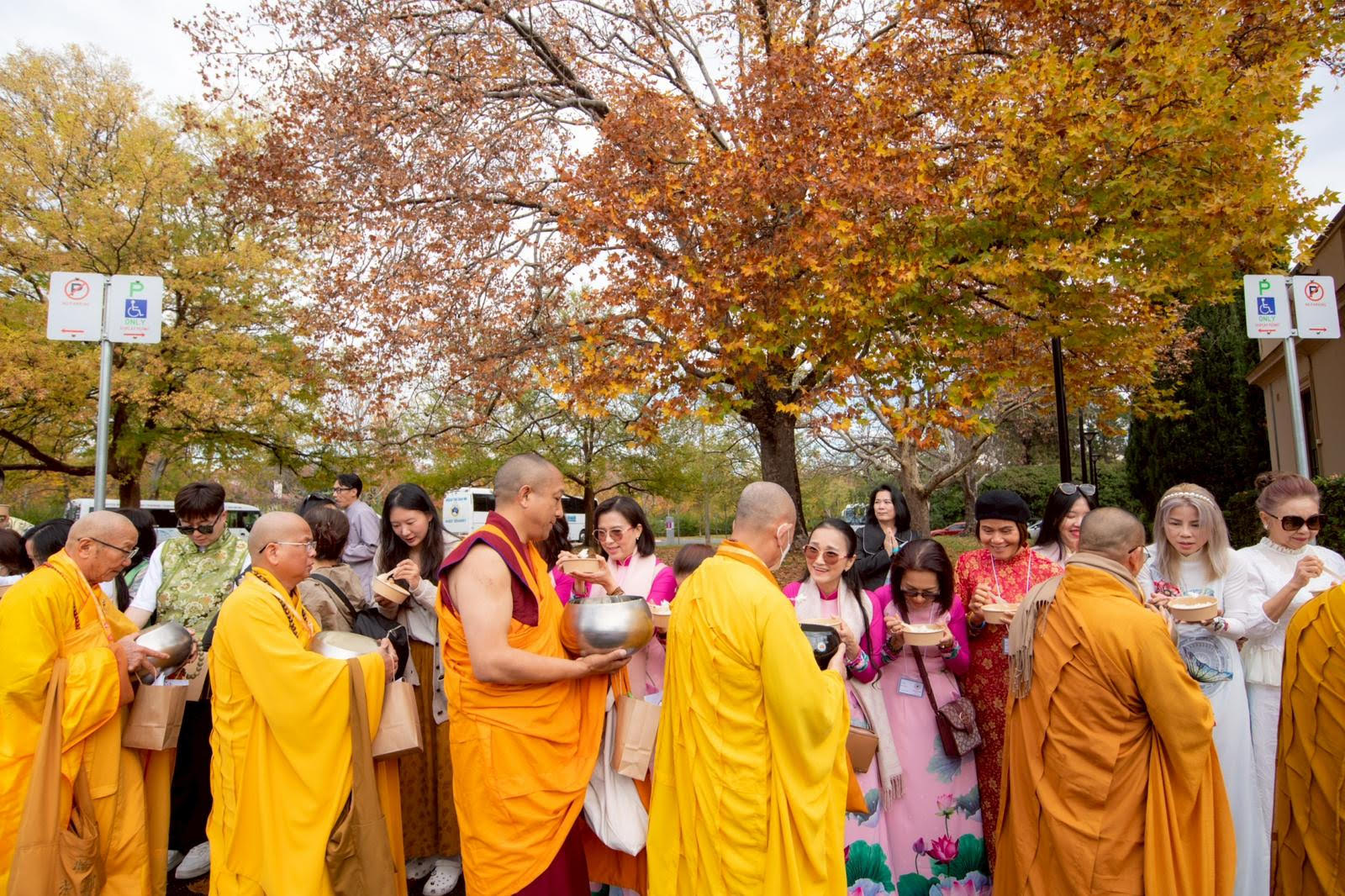
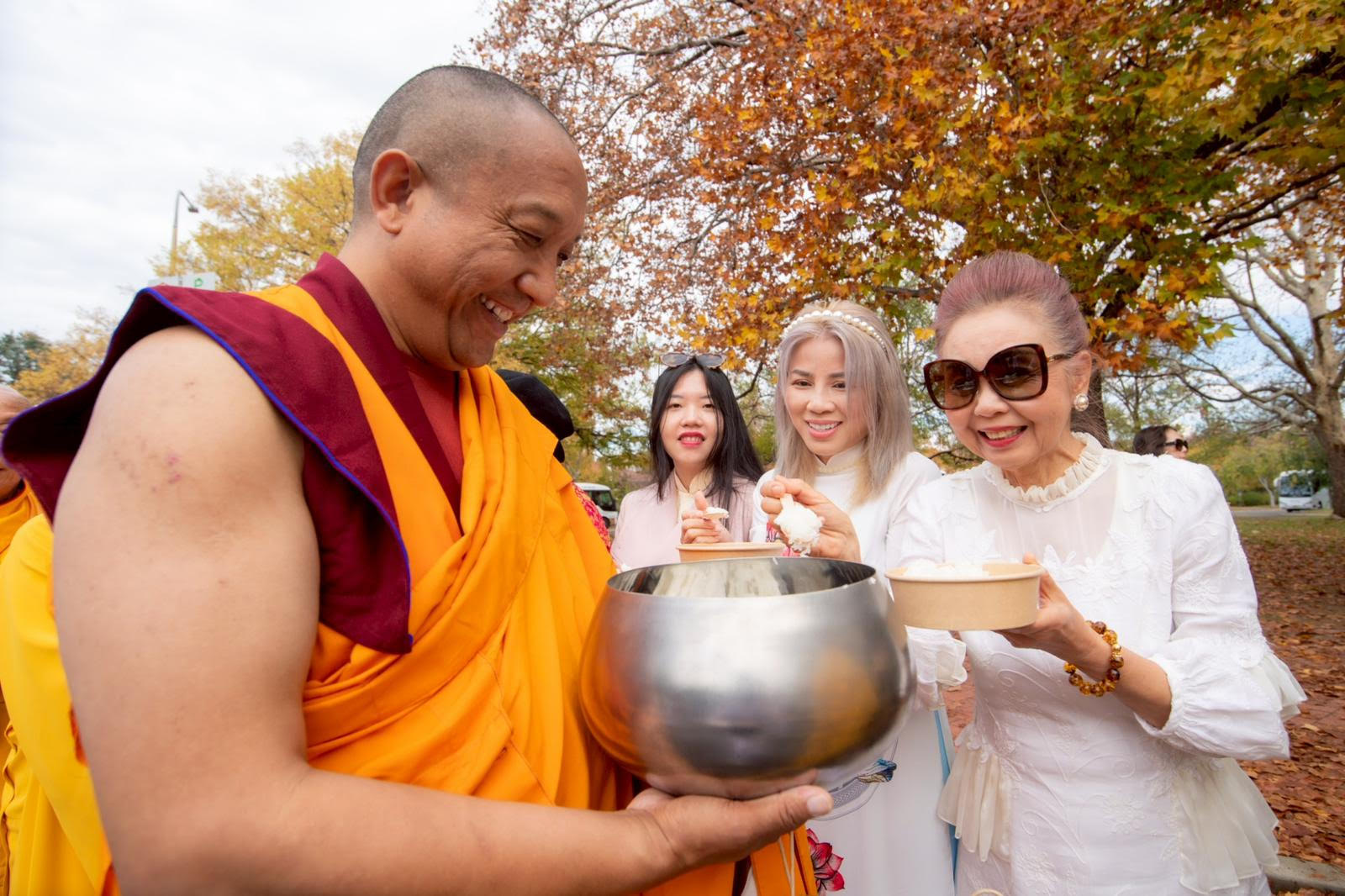
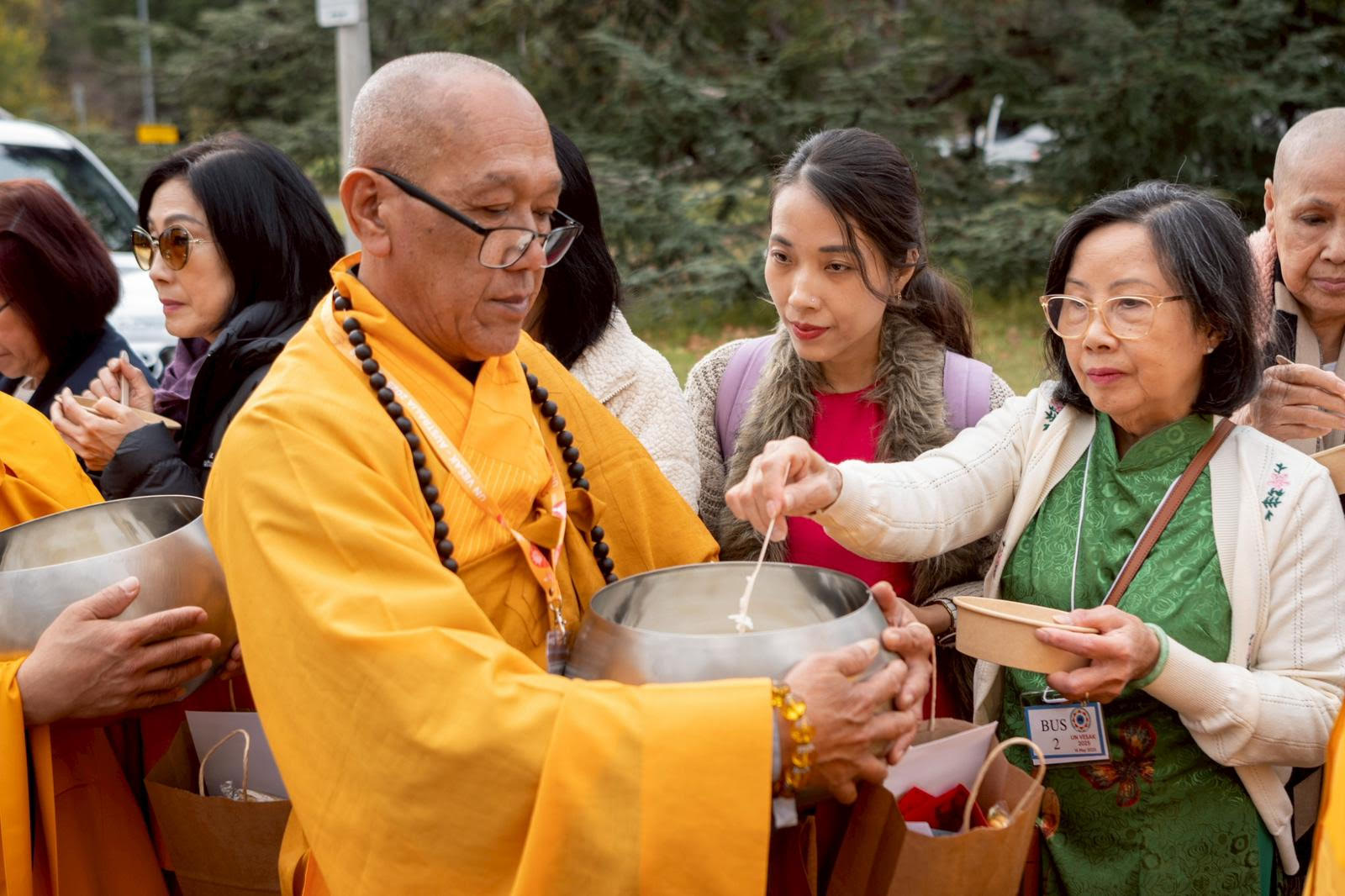
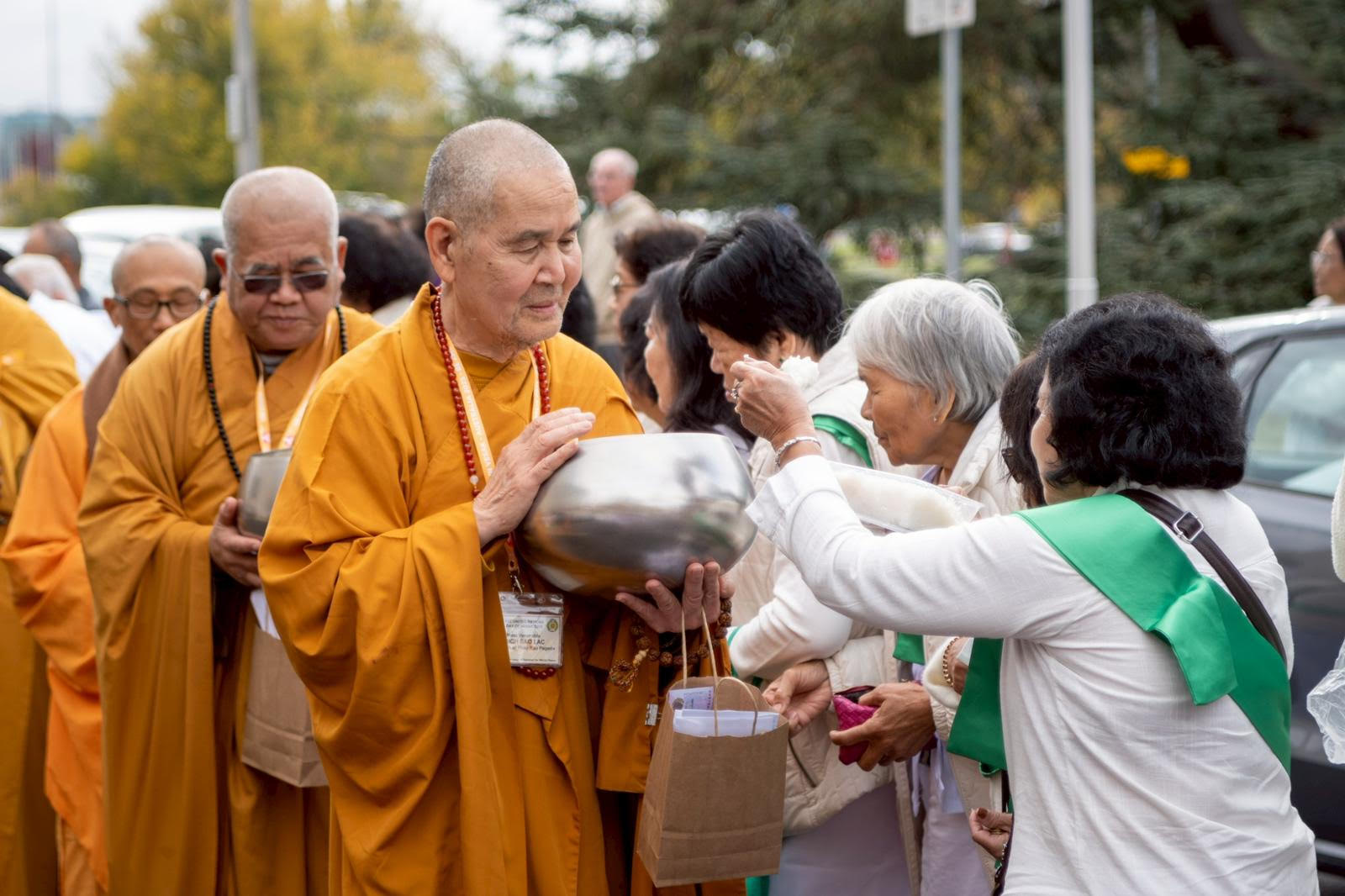
Morning Activities: Alms Offering and Sangha Gathering
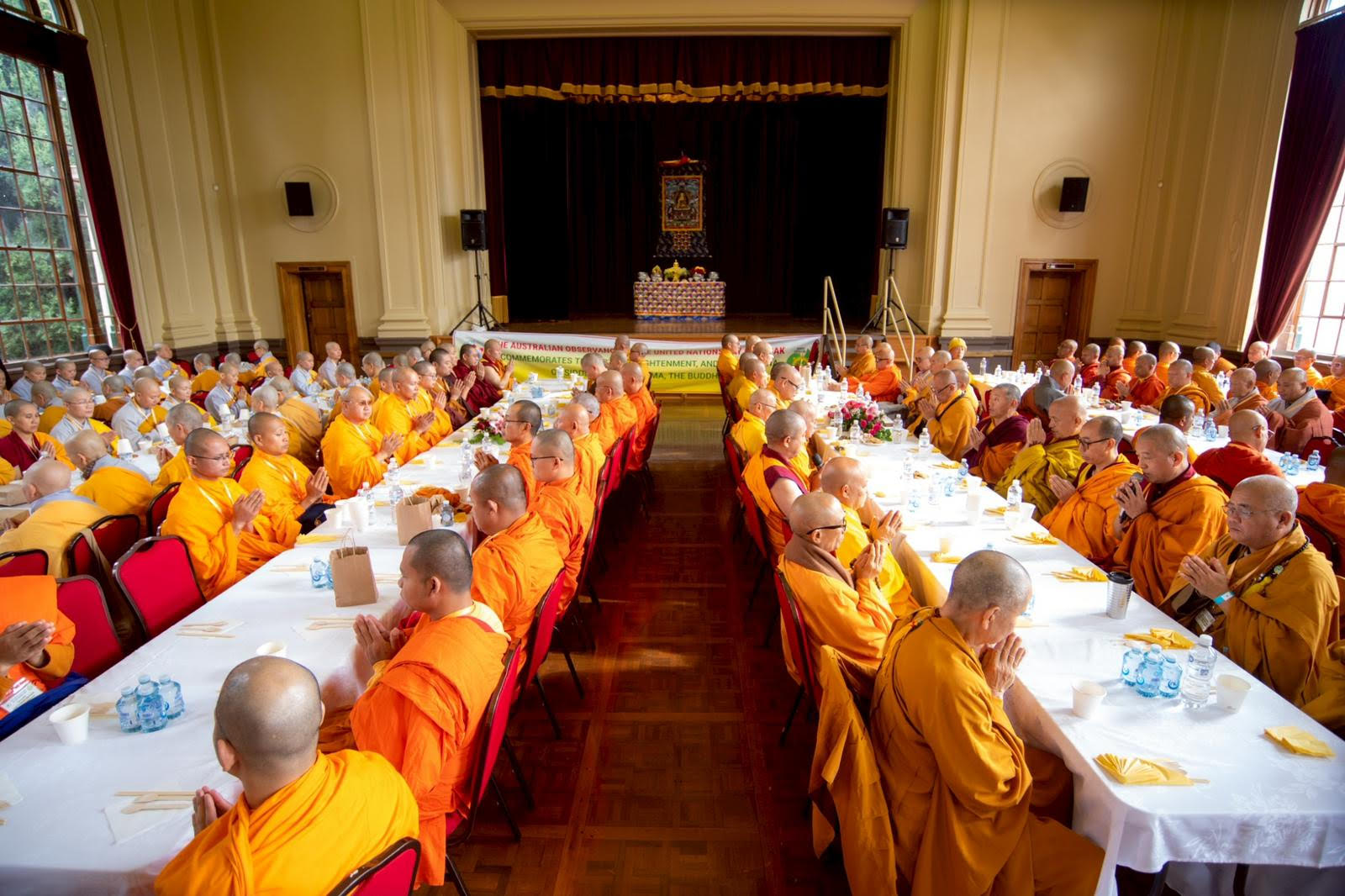
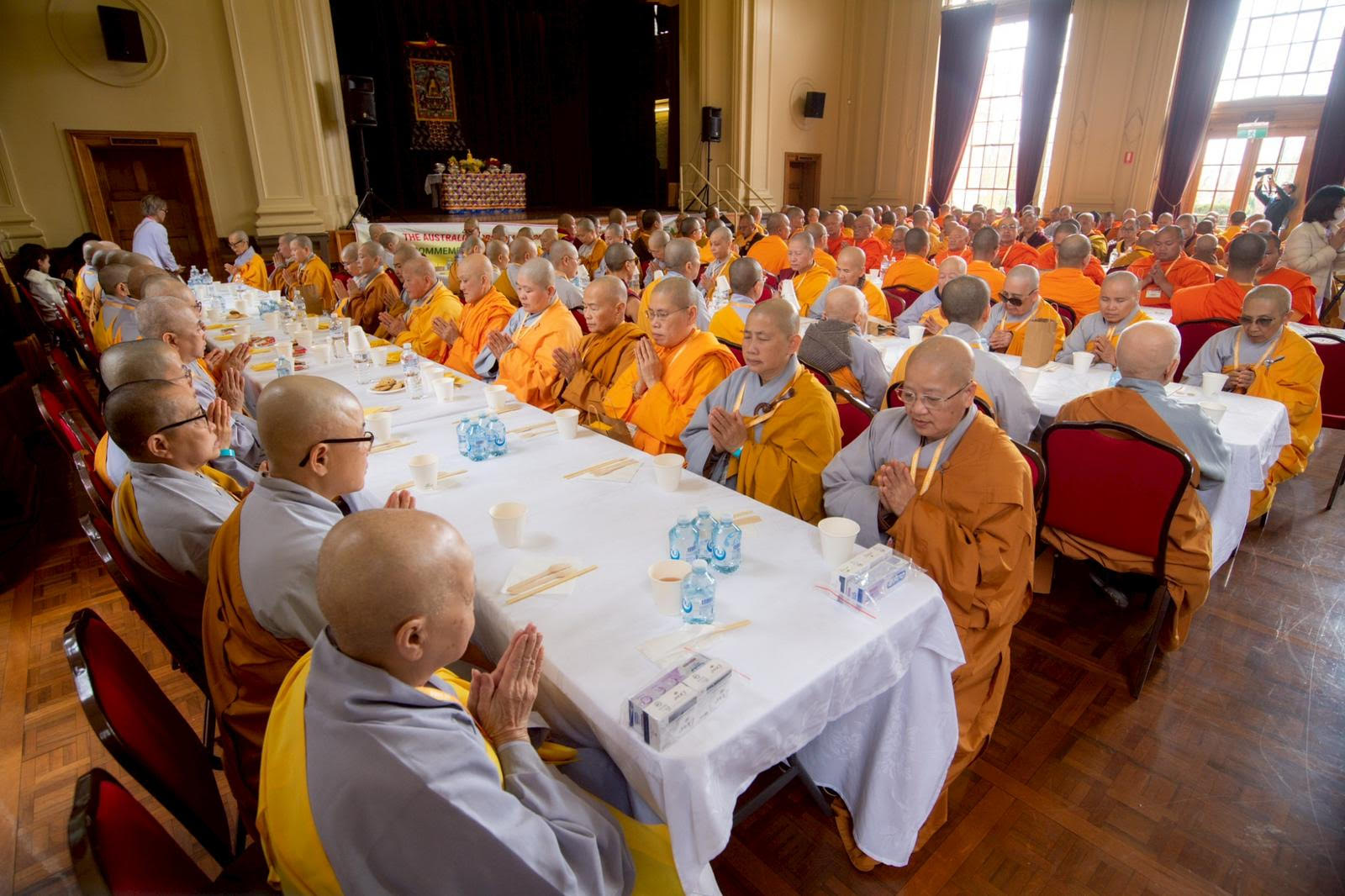
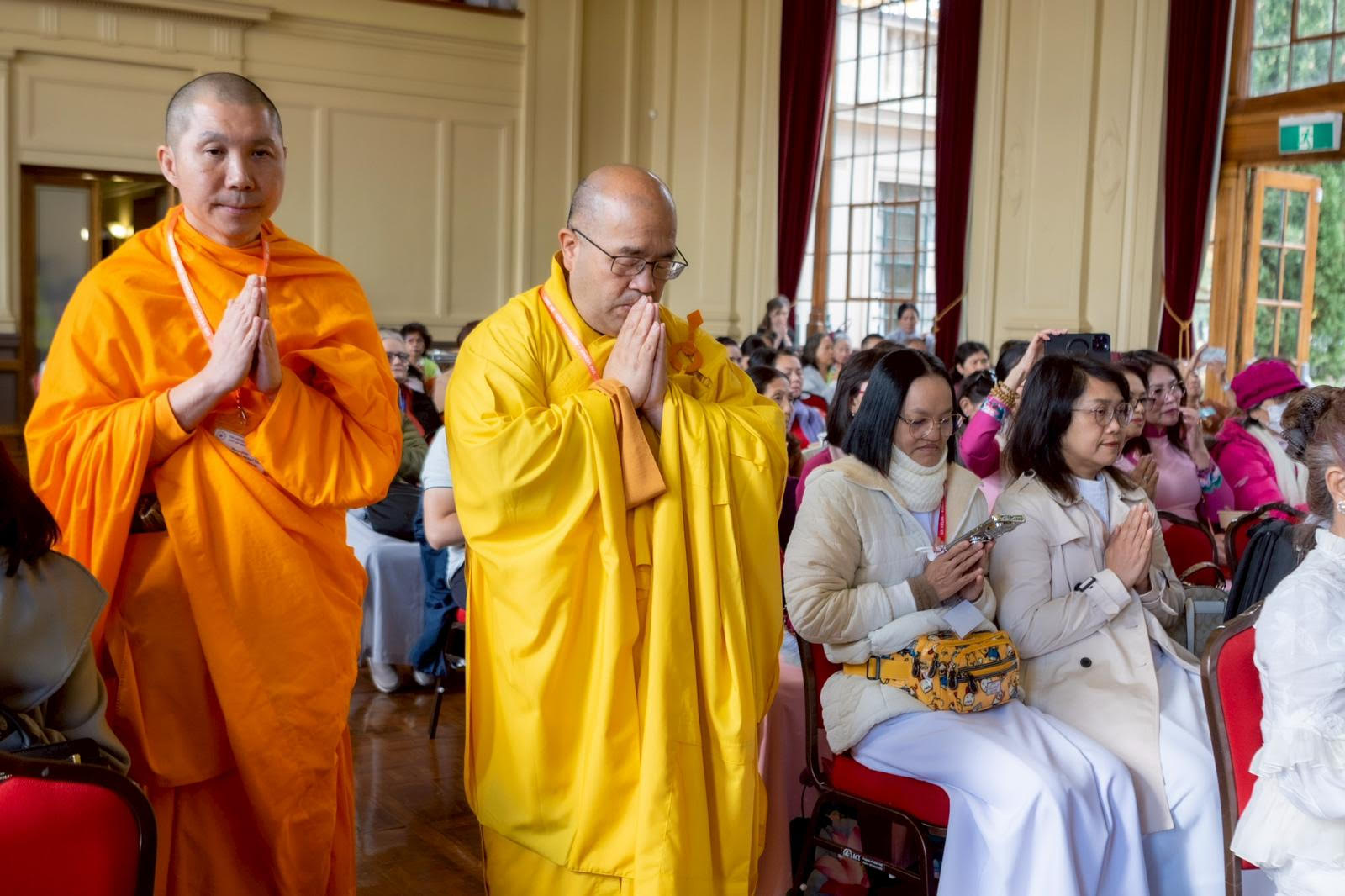
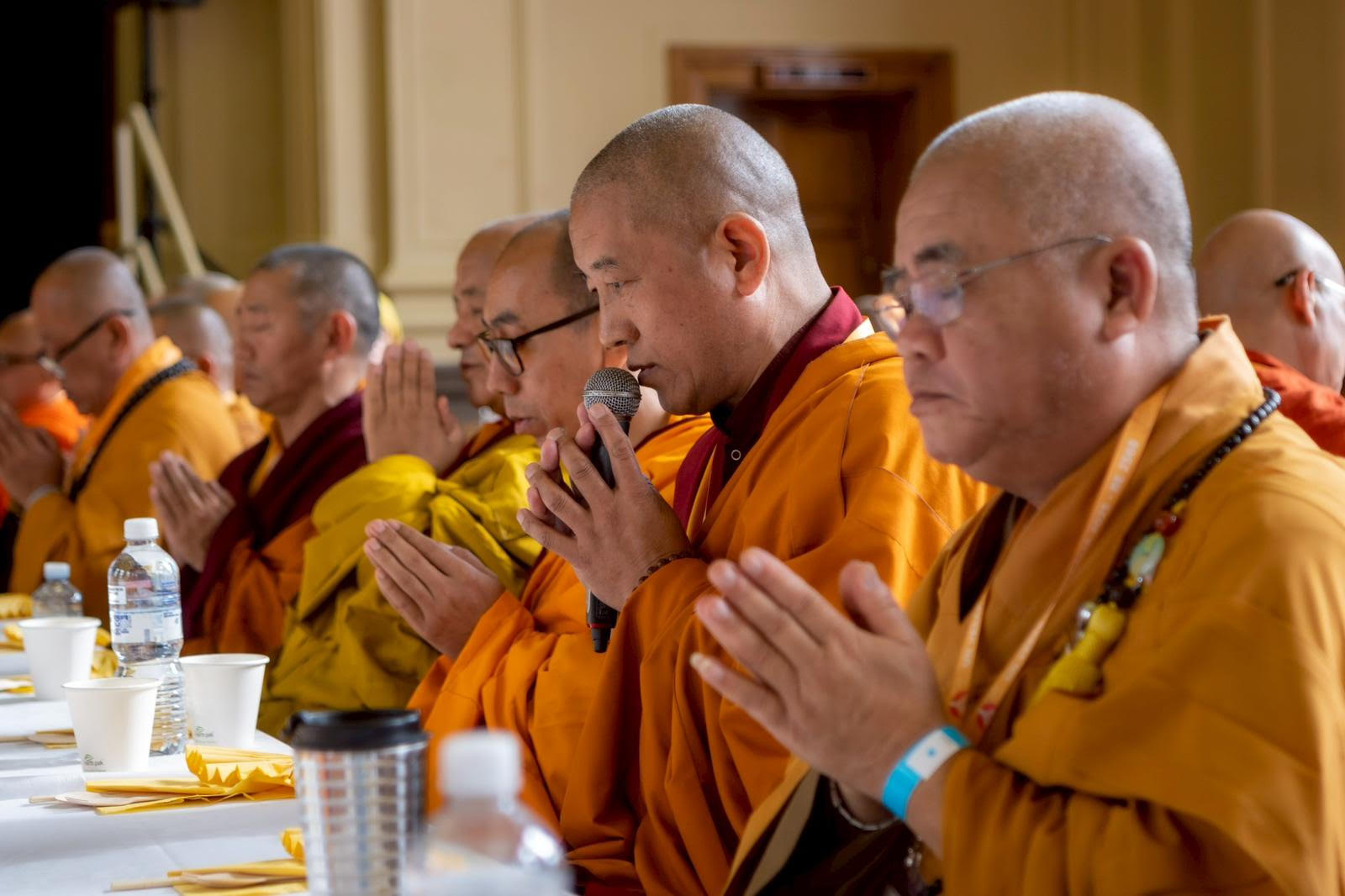
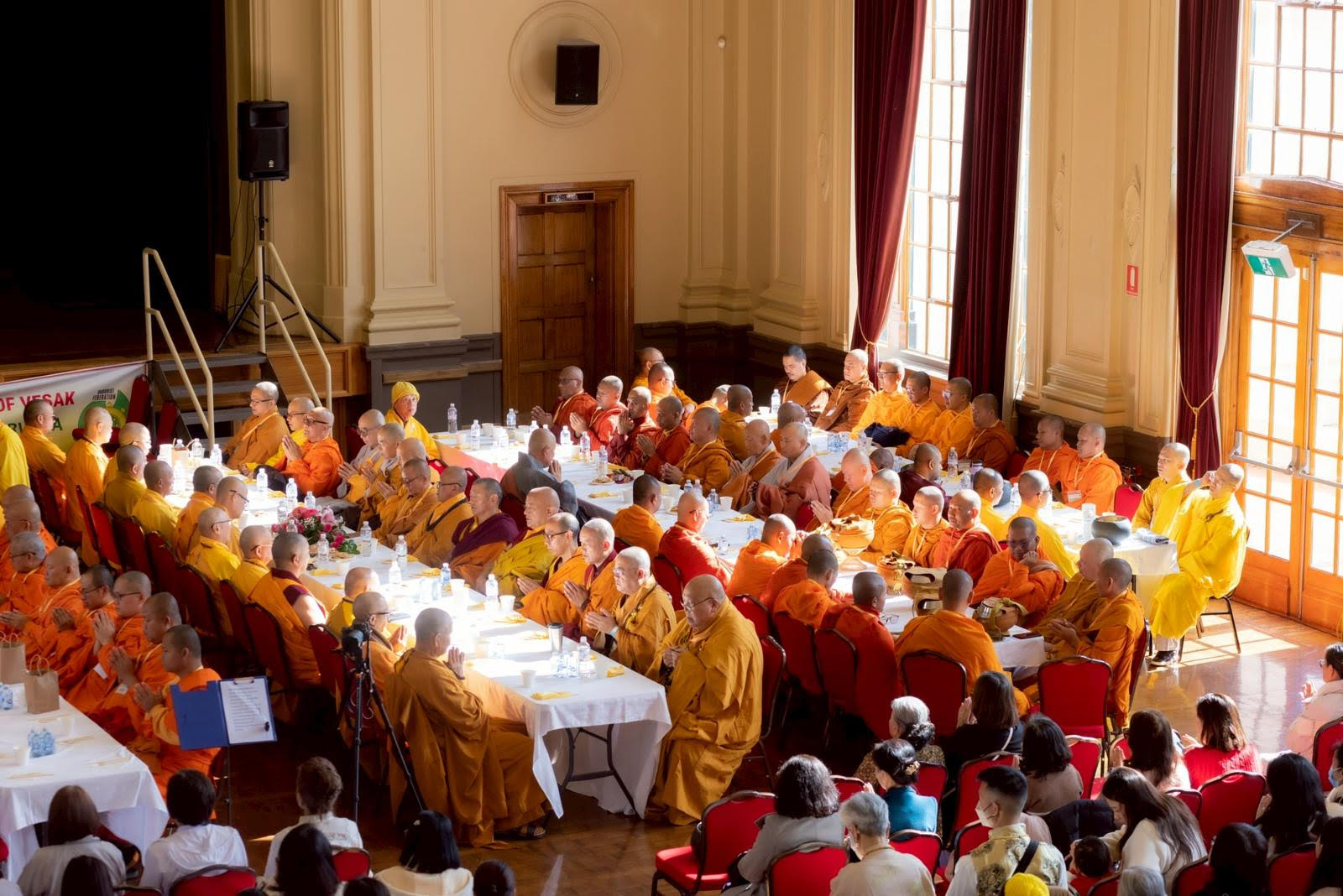
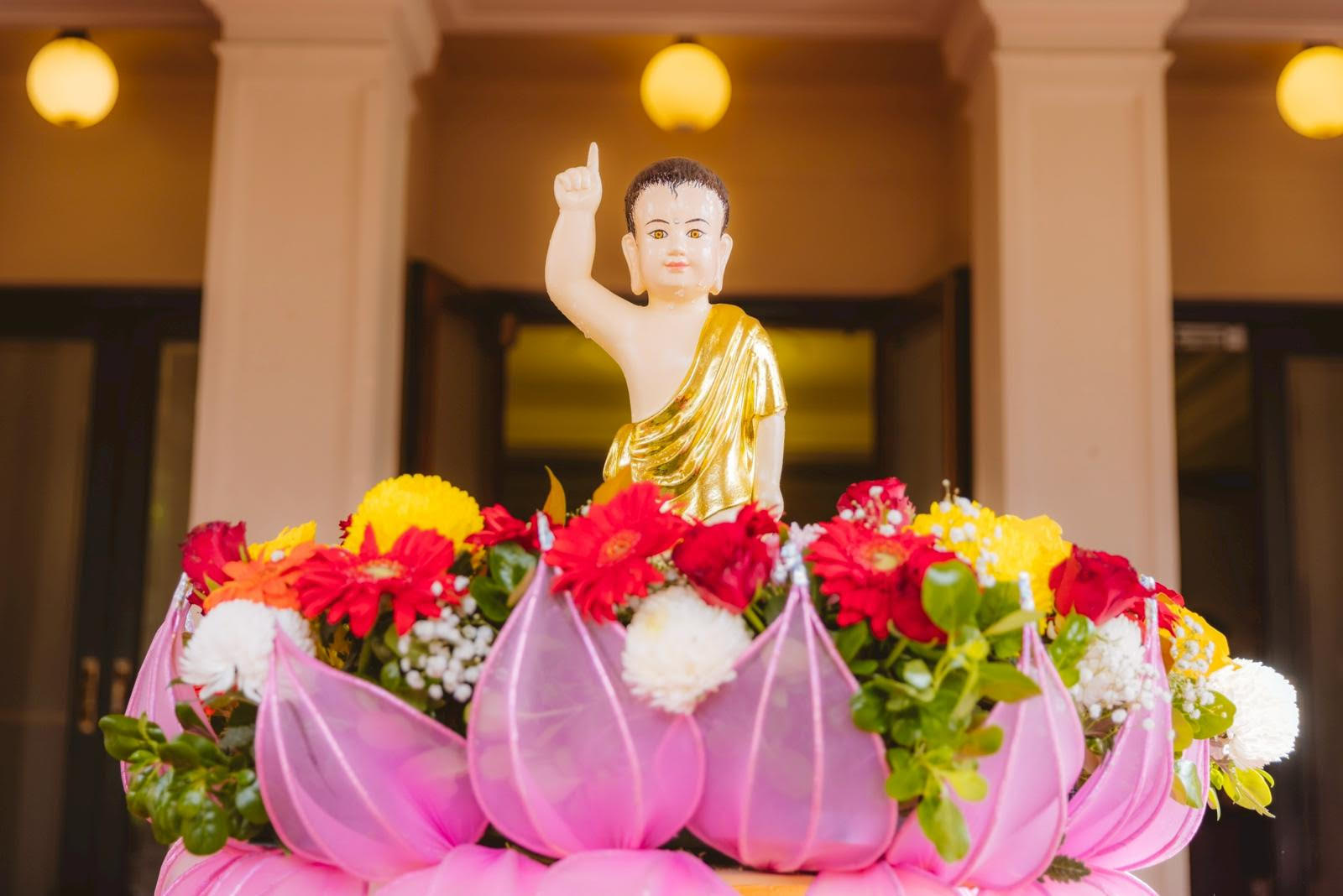
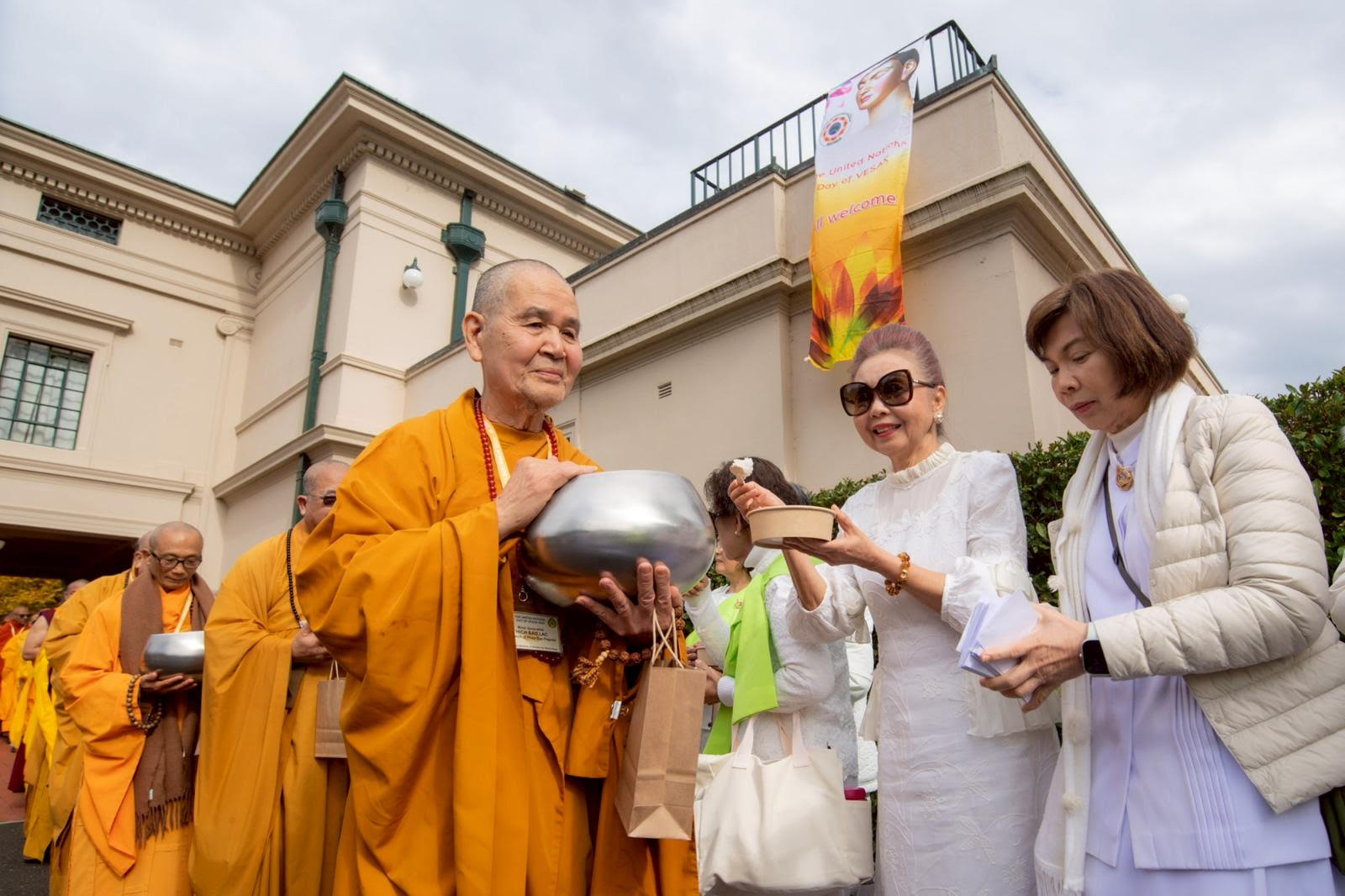
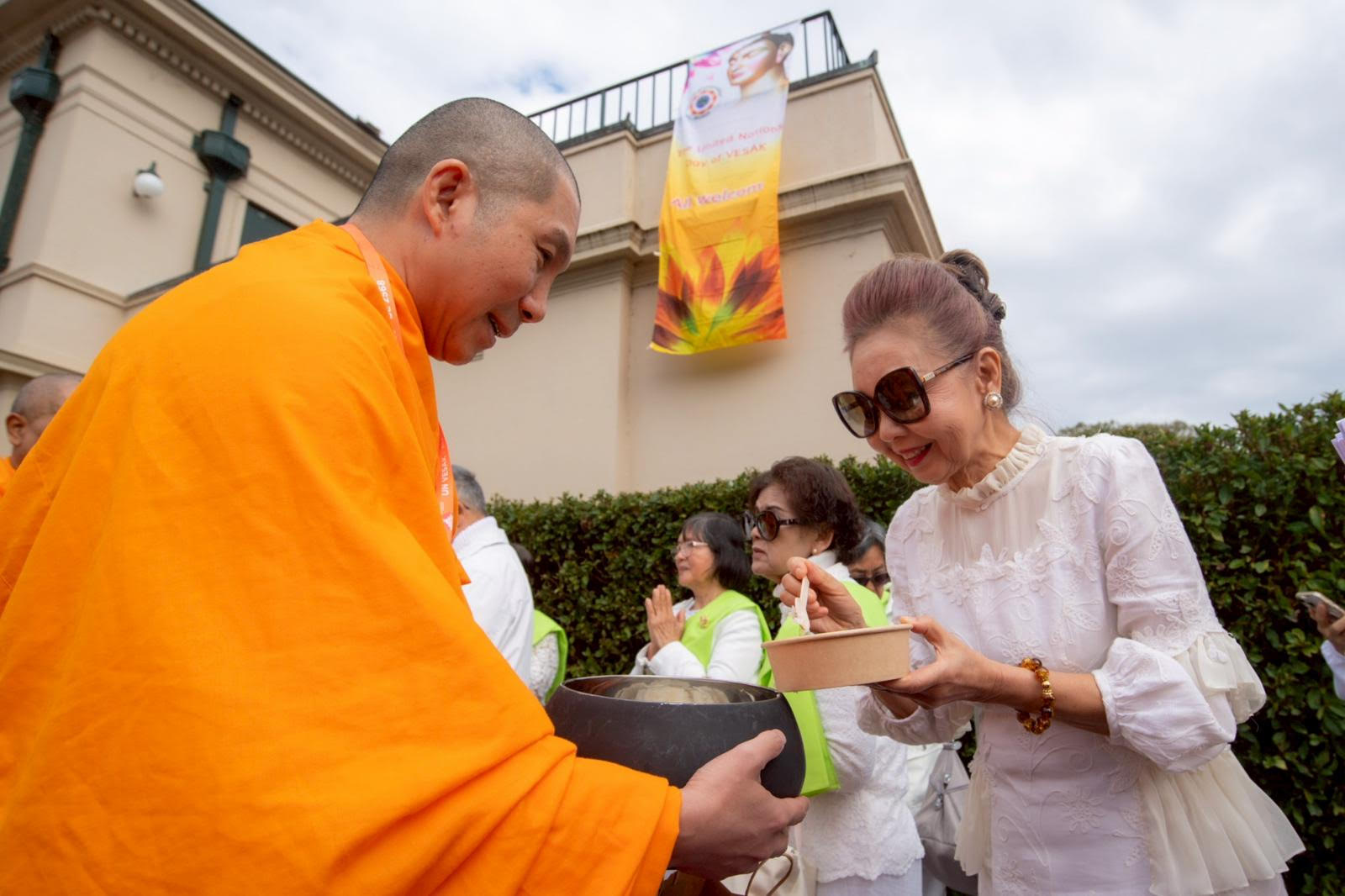
The day began with merit-making, as 150 monks and nuns from over 60 temples across NSW, Victoria, and the ACT participated in a traditional alms offering. This rare moment highlighted monastic unity across traditions.
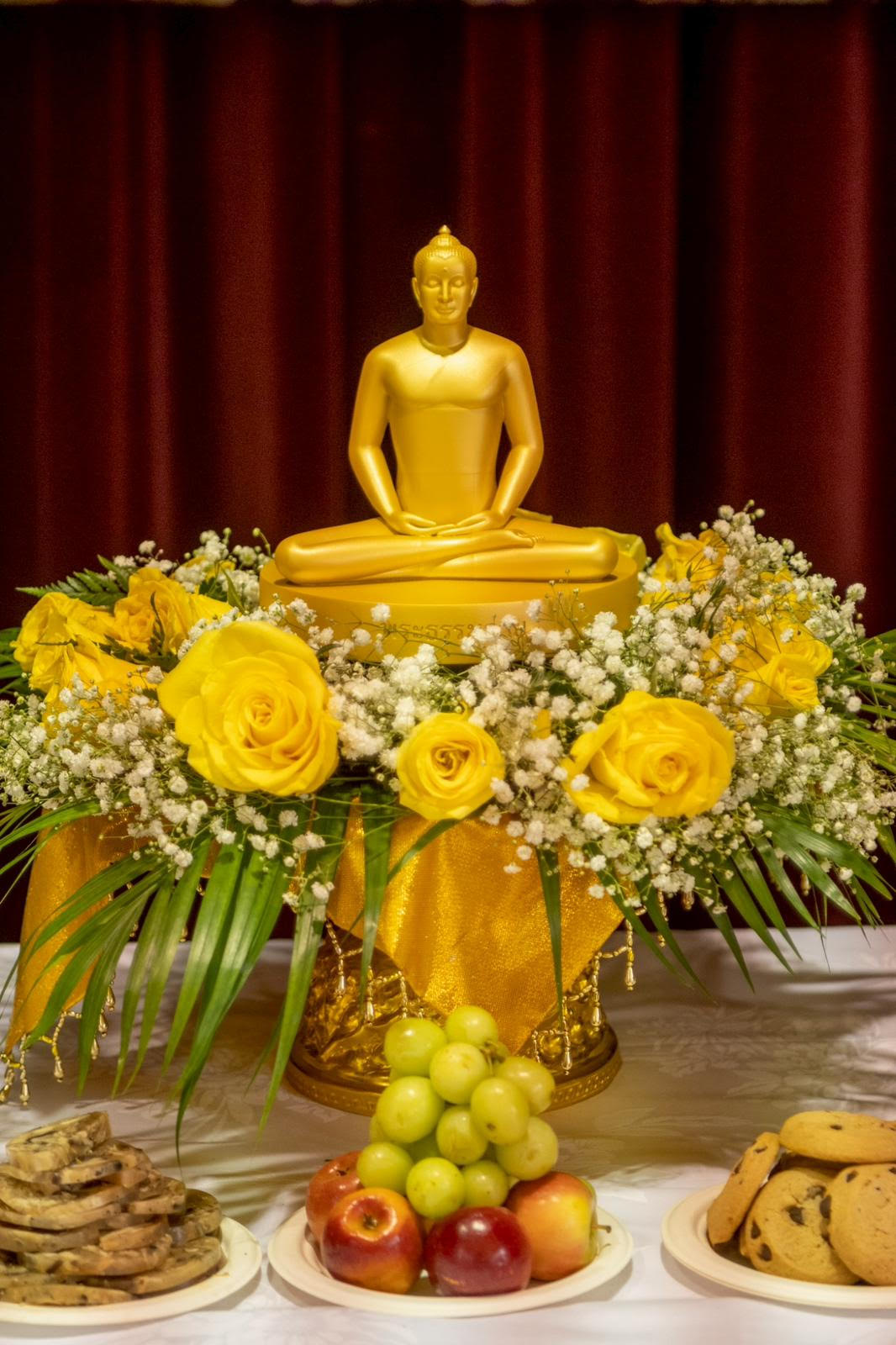
Lunch was served at Albert Hall, generously catered by the Bhutanese Buddhist and Cultural Centre in Canberra and Quang Minh Temple in Victoria, reinforcing the spirit of harmony and togetherness.
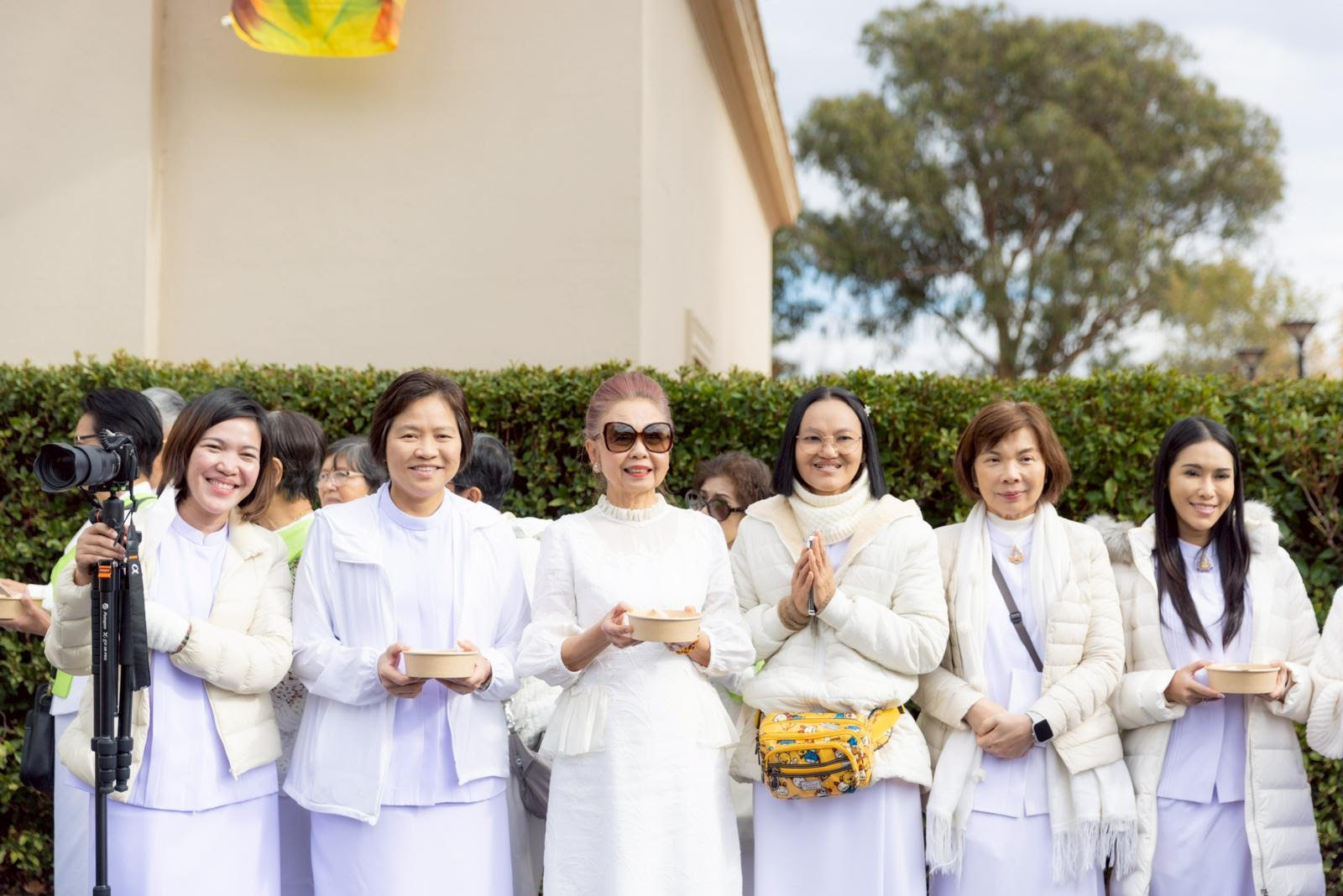
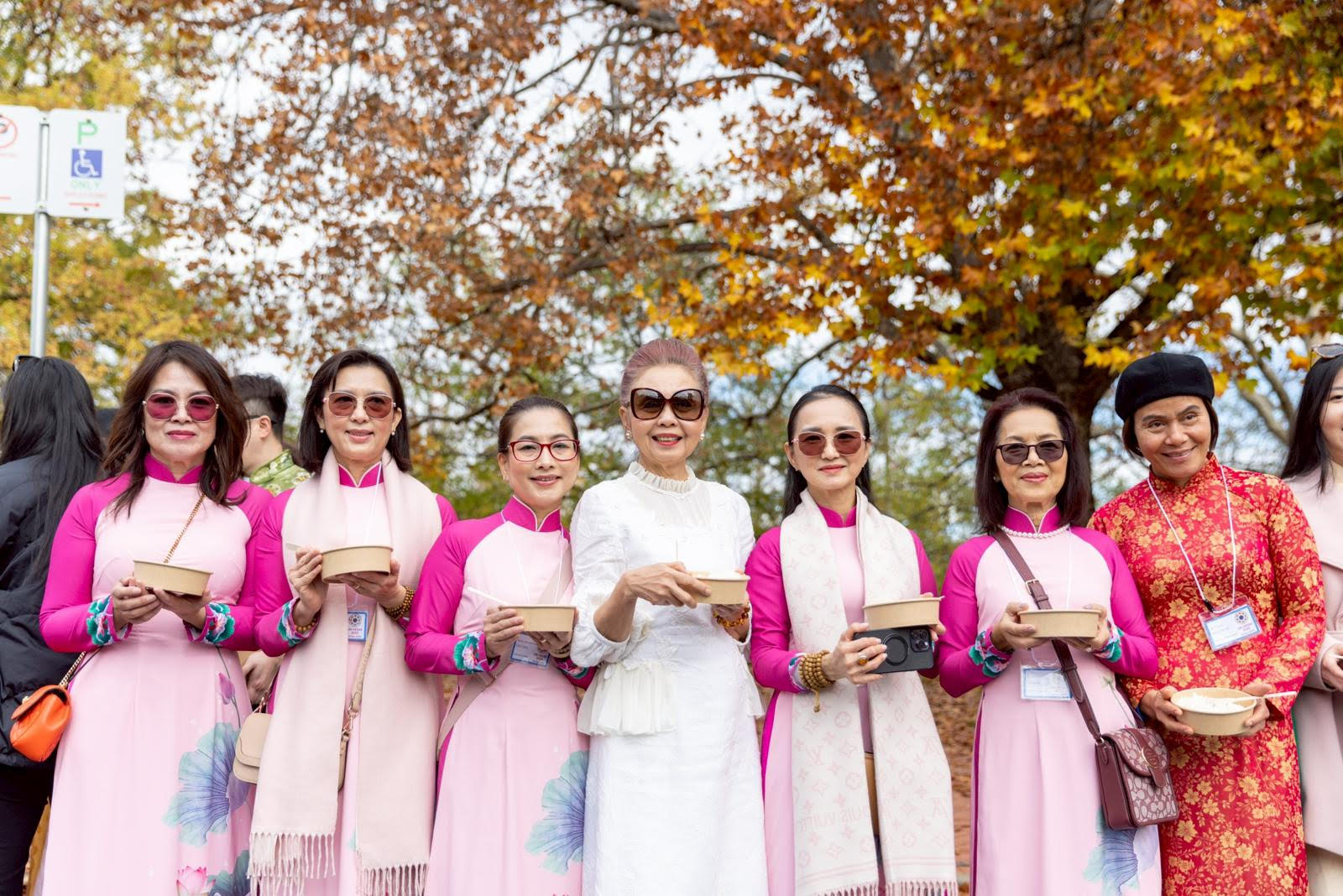
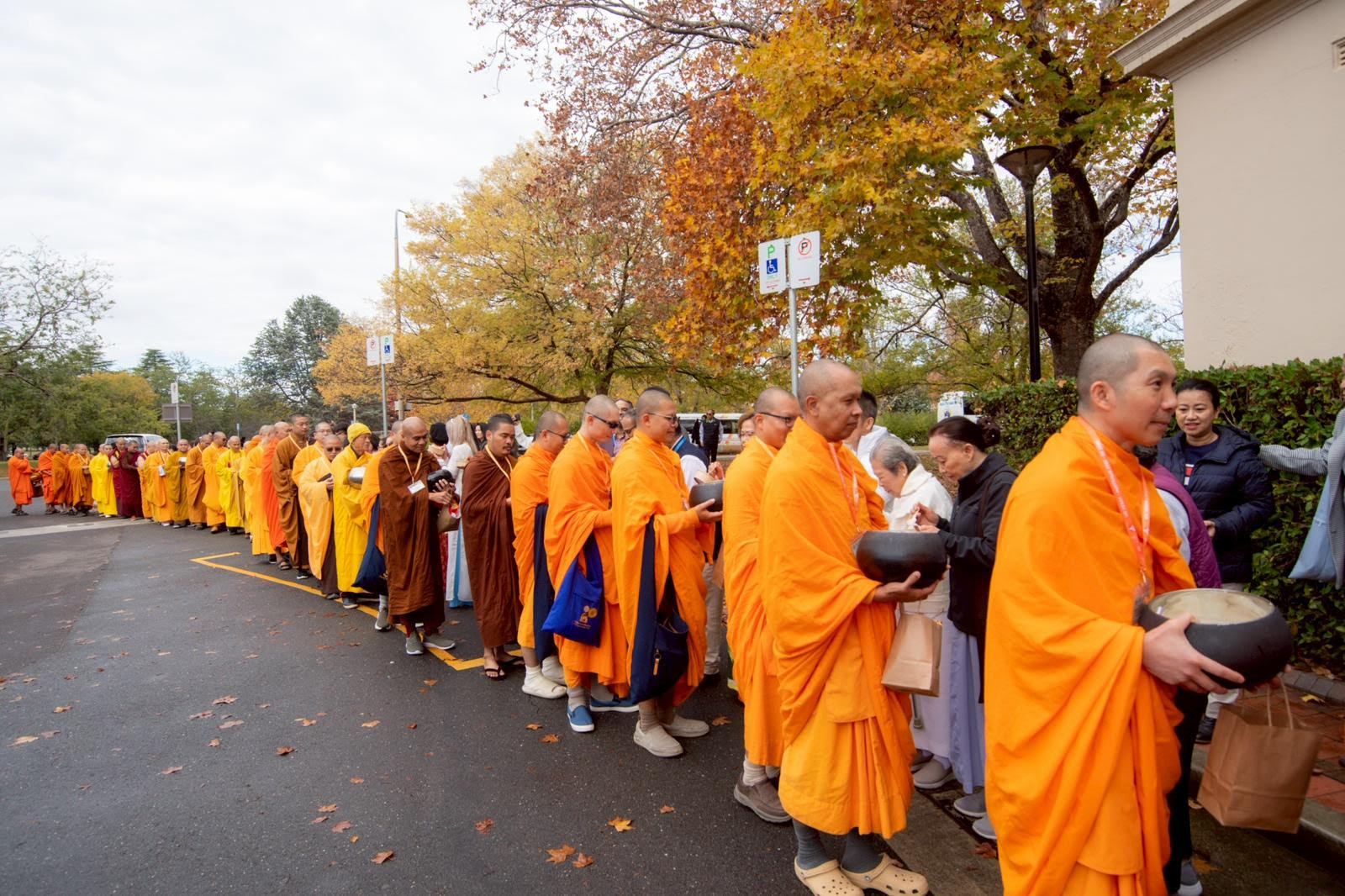
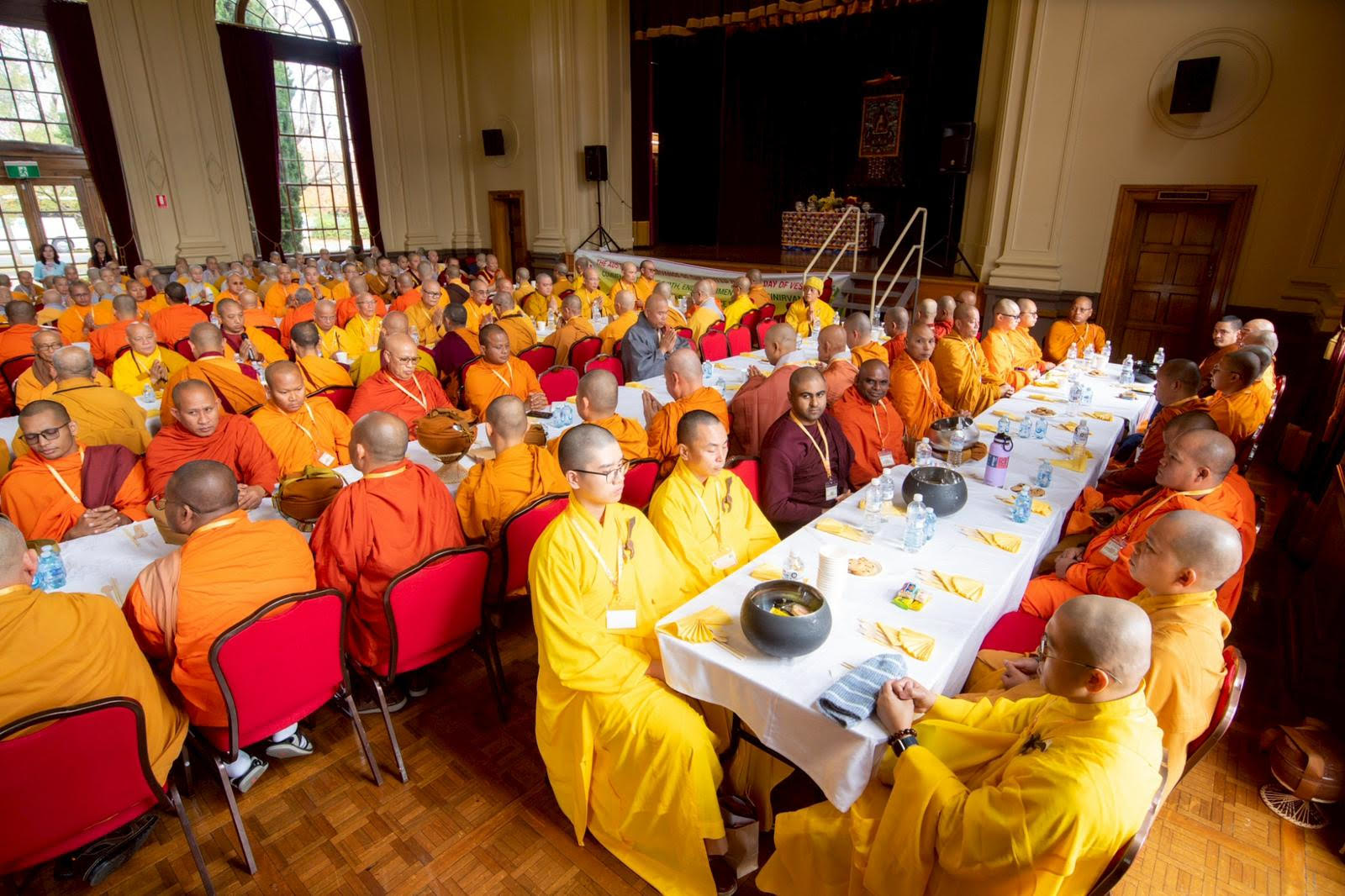
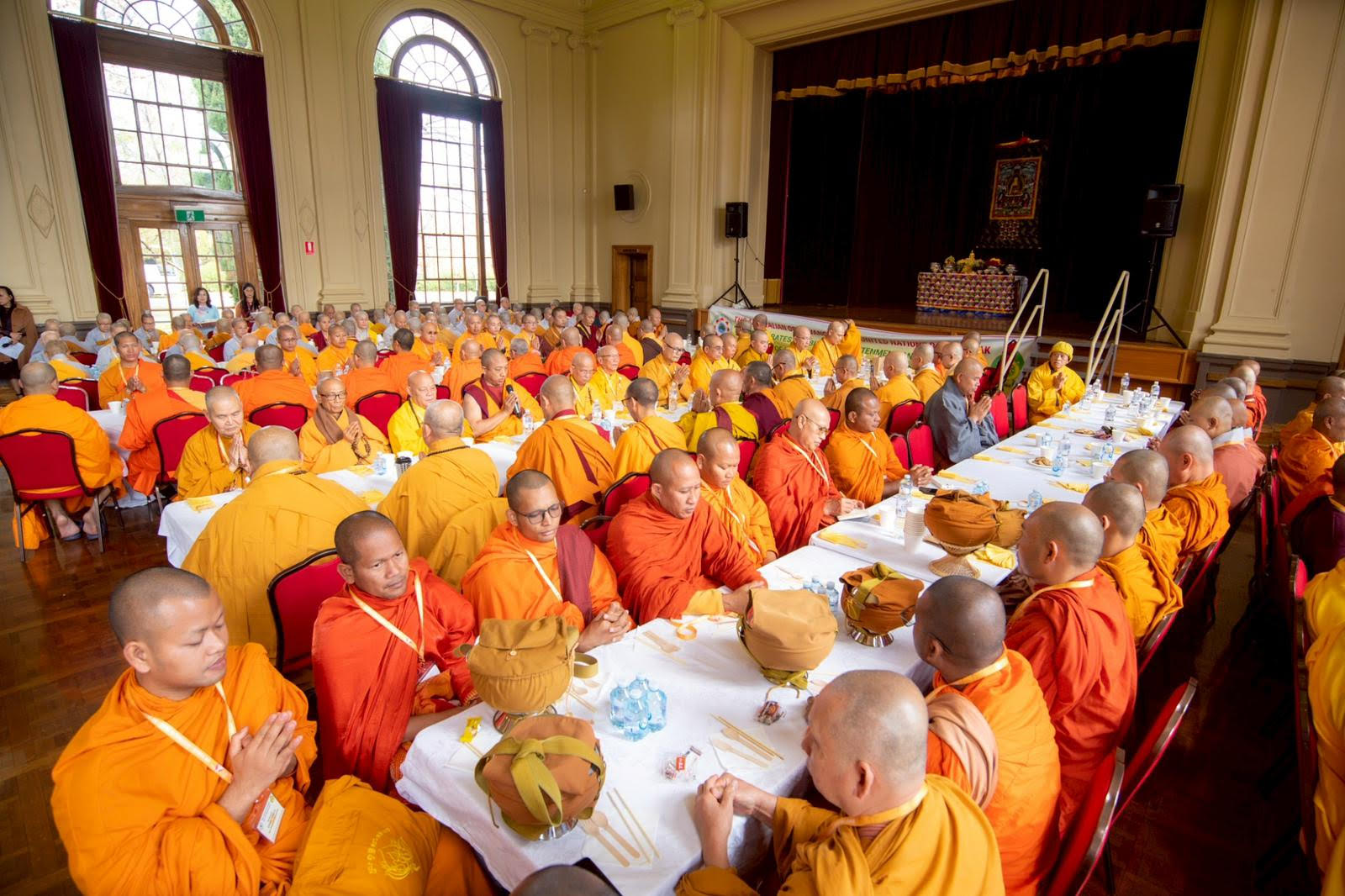
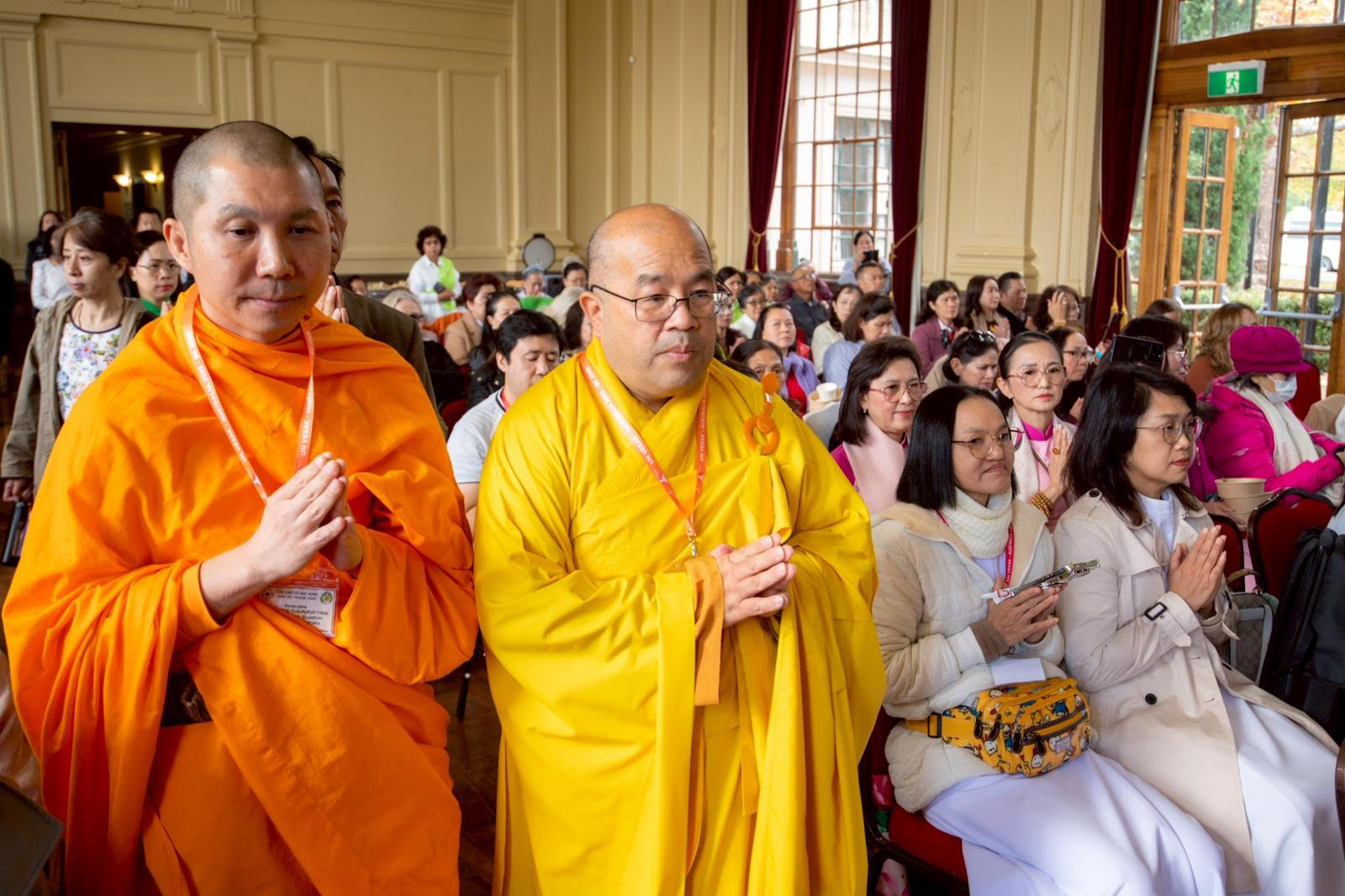


Mindfulness Walk (from the Old Parliament House to the New Parliament House)
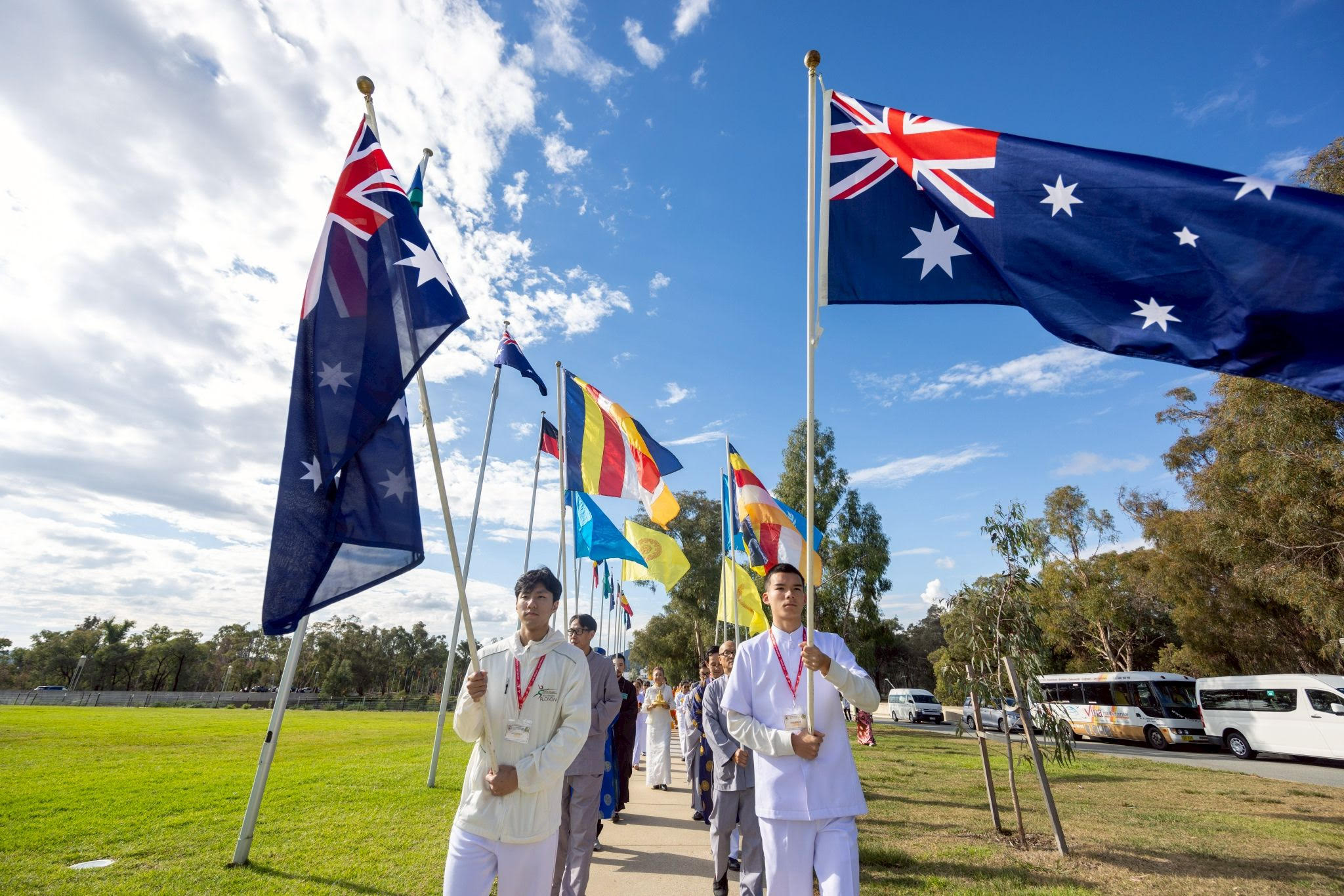
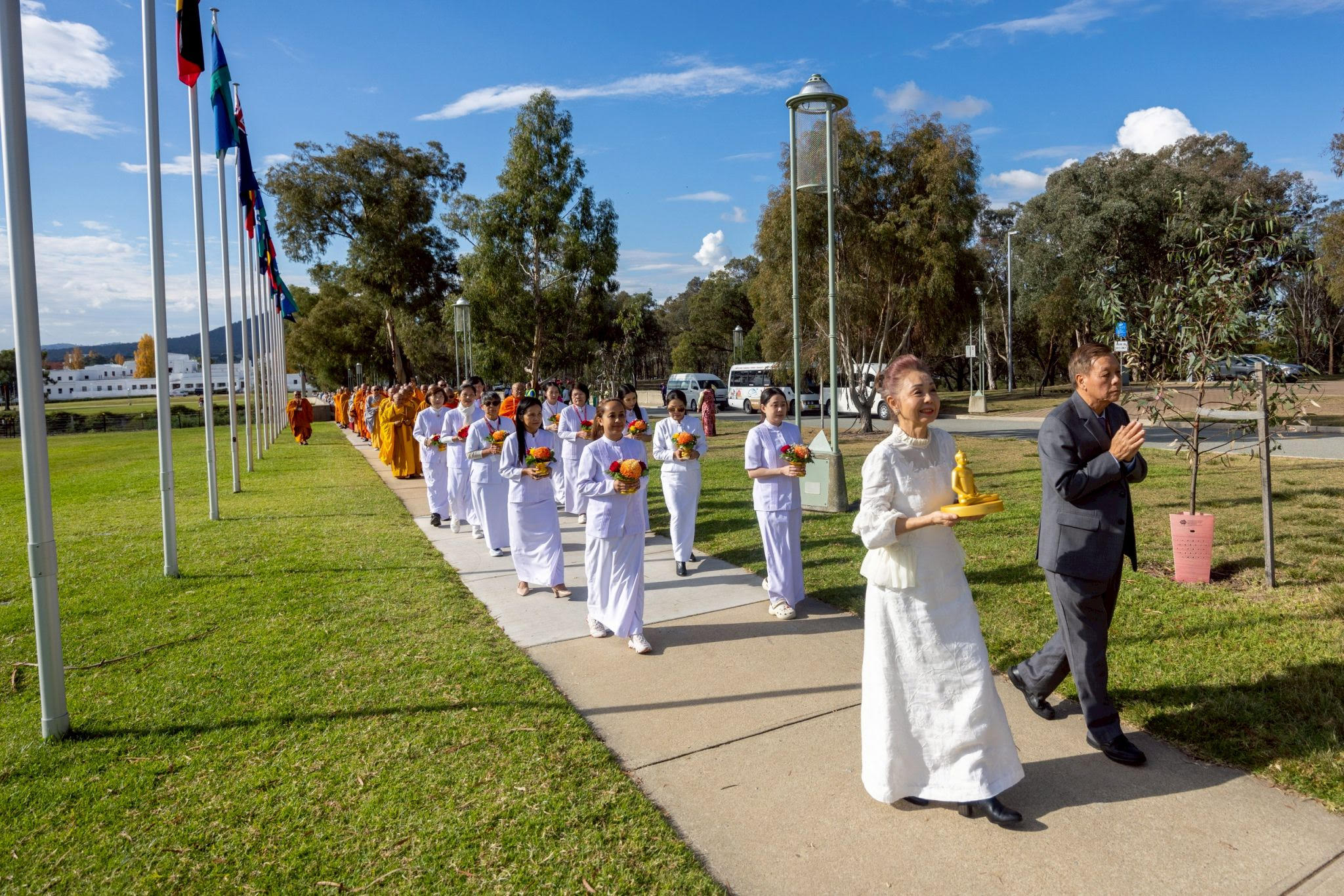


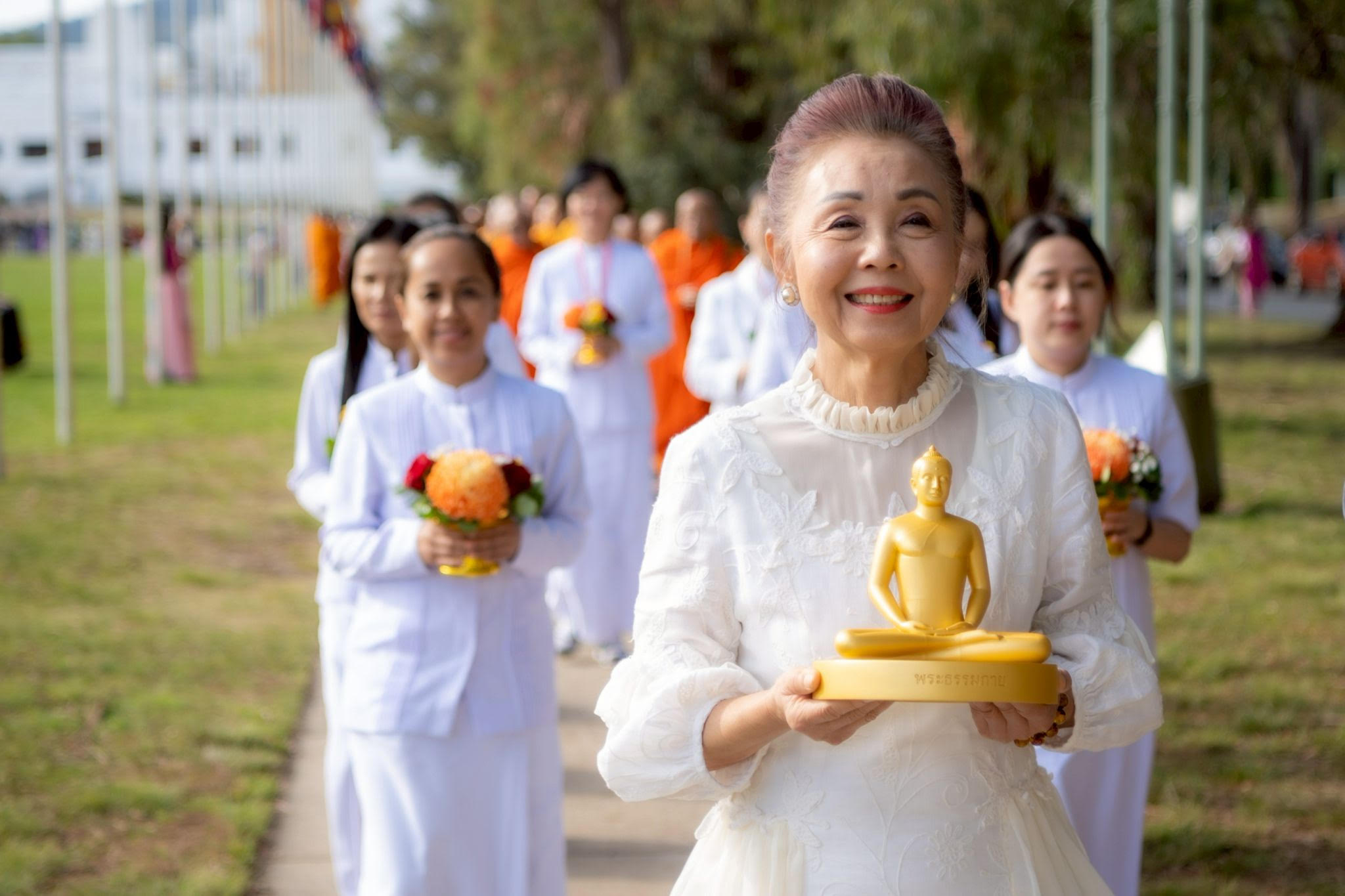
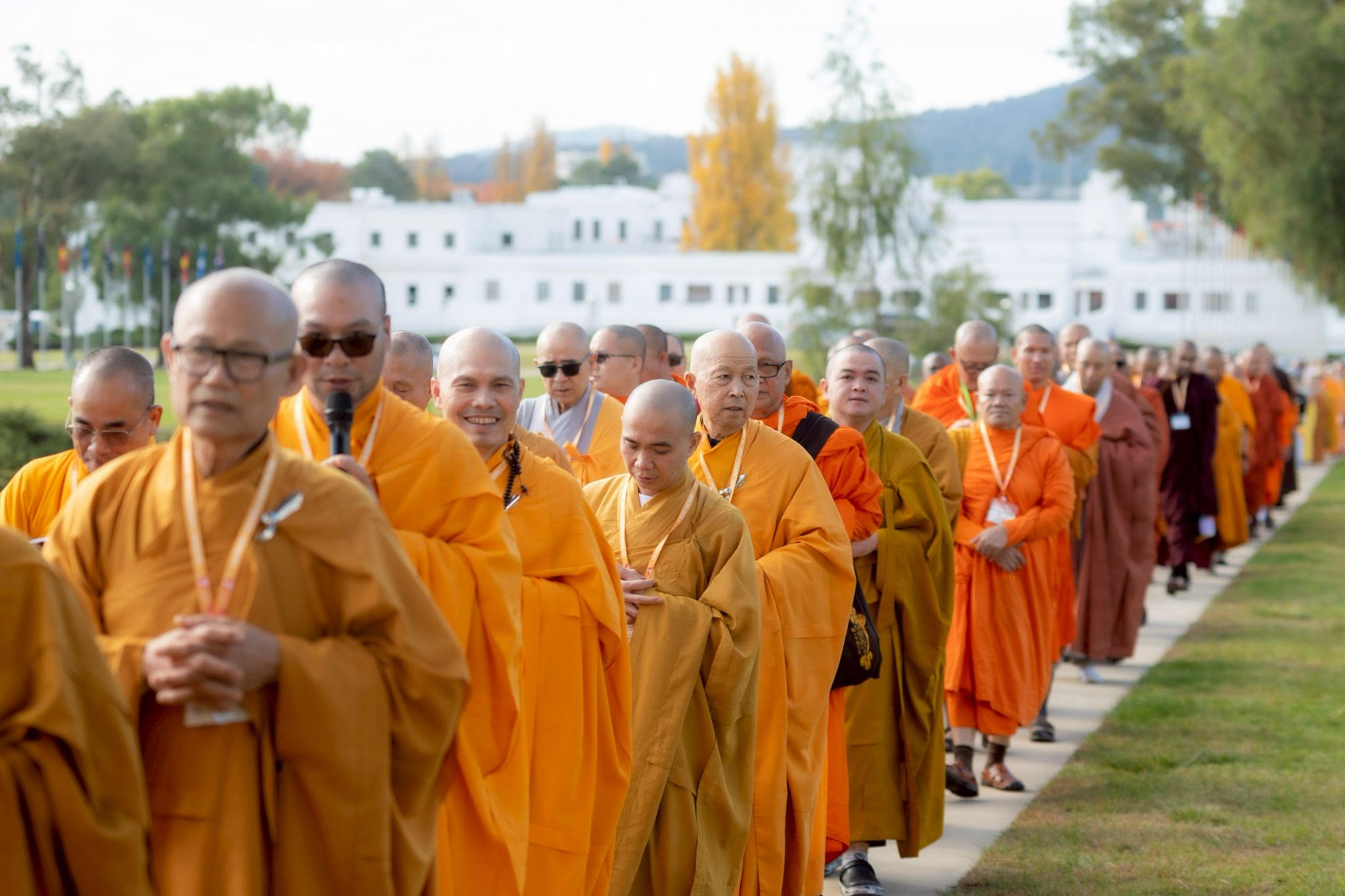
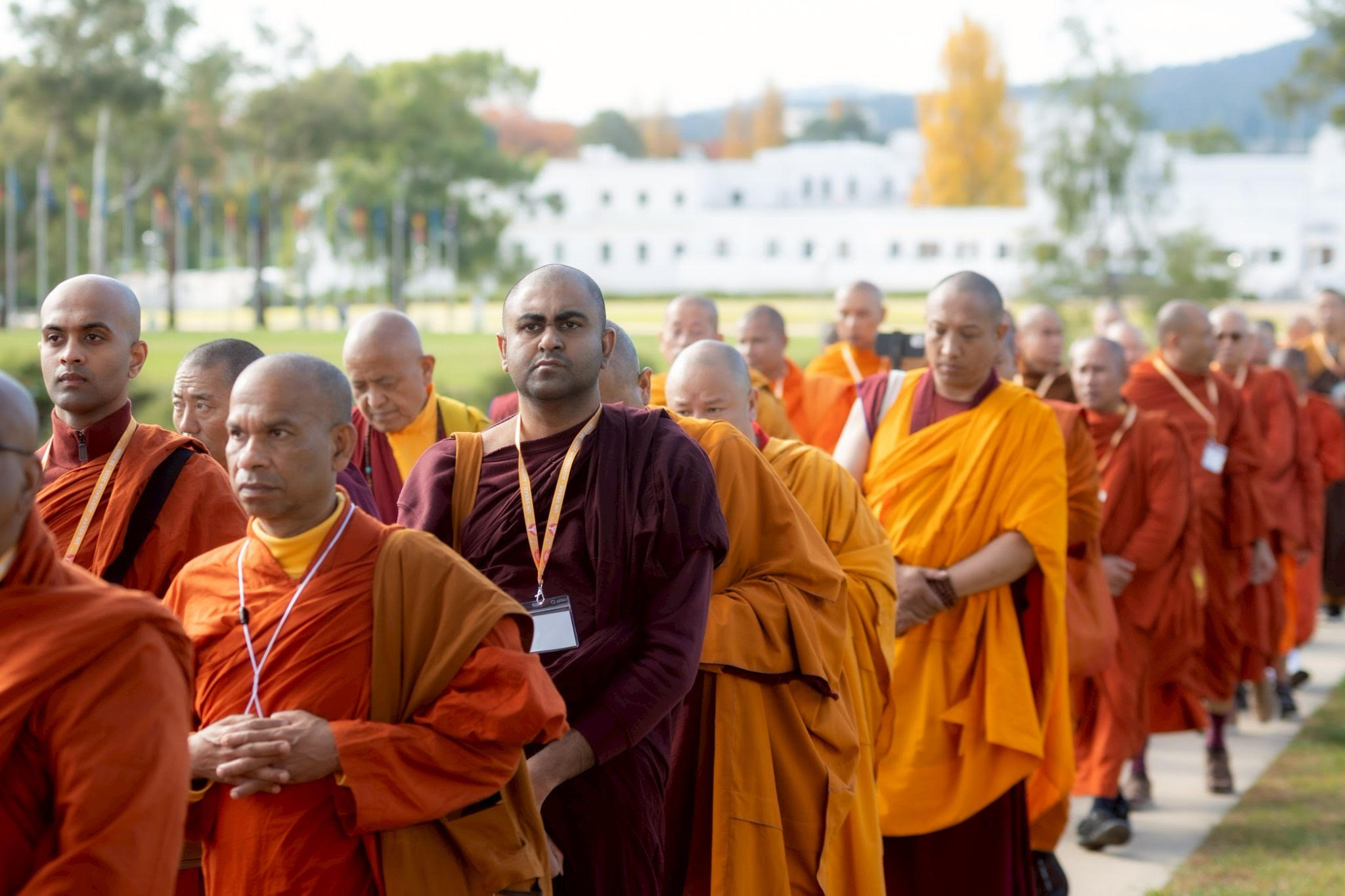


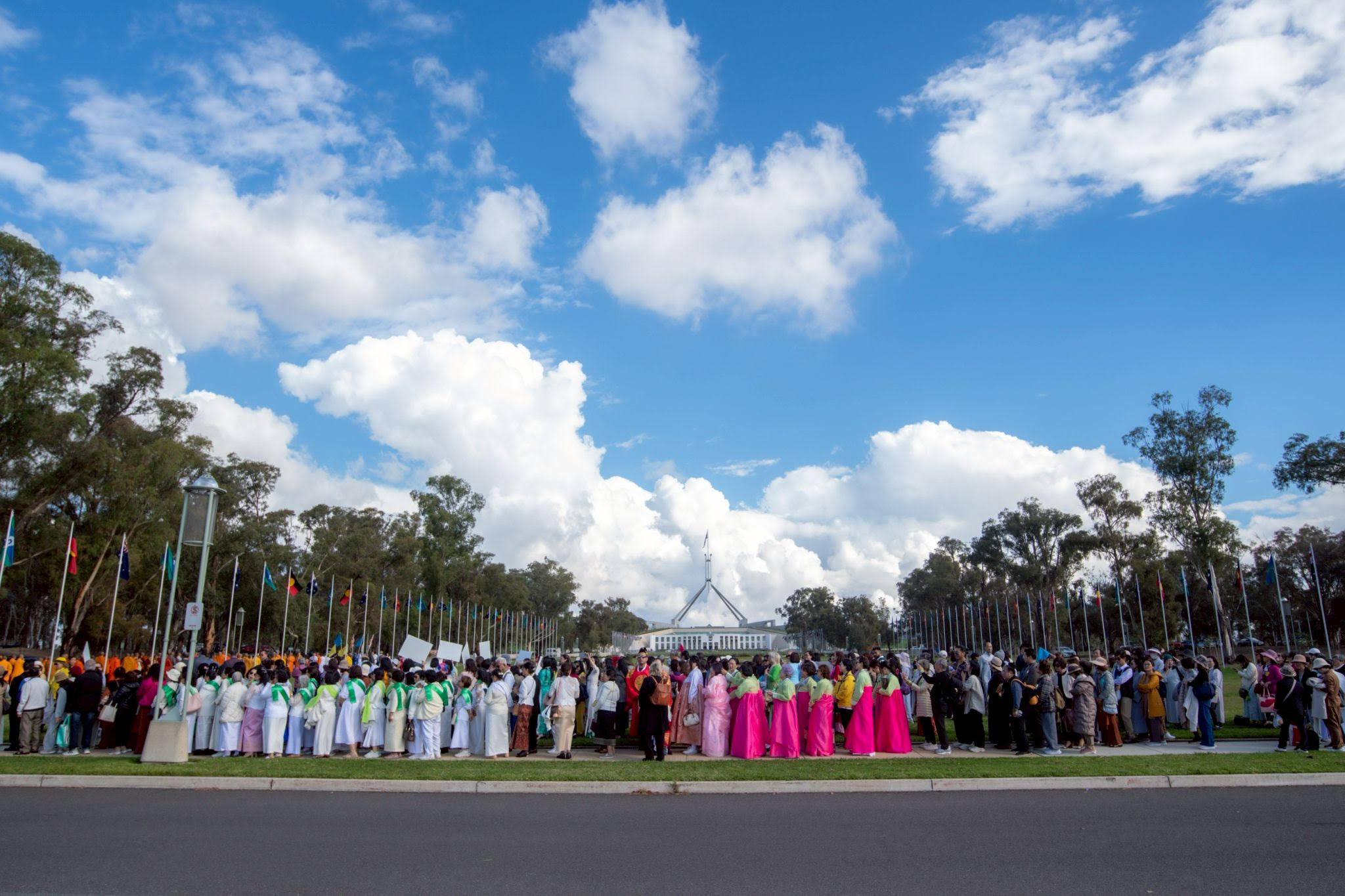
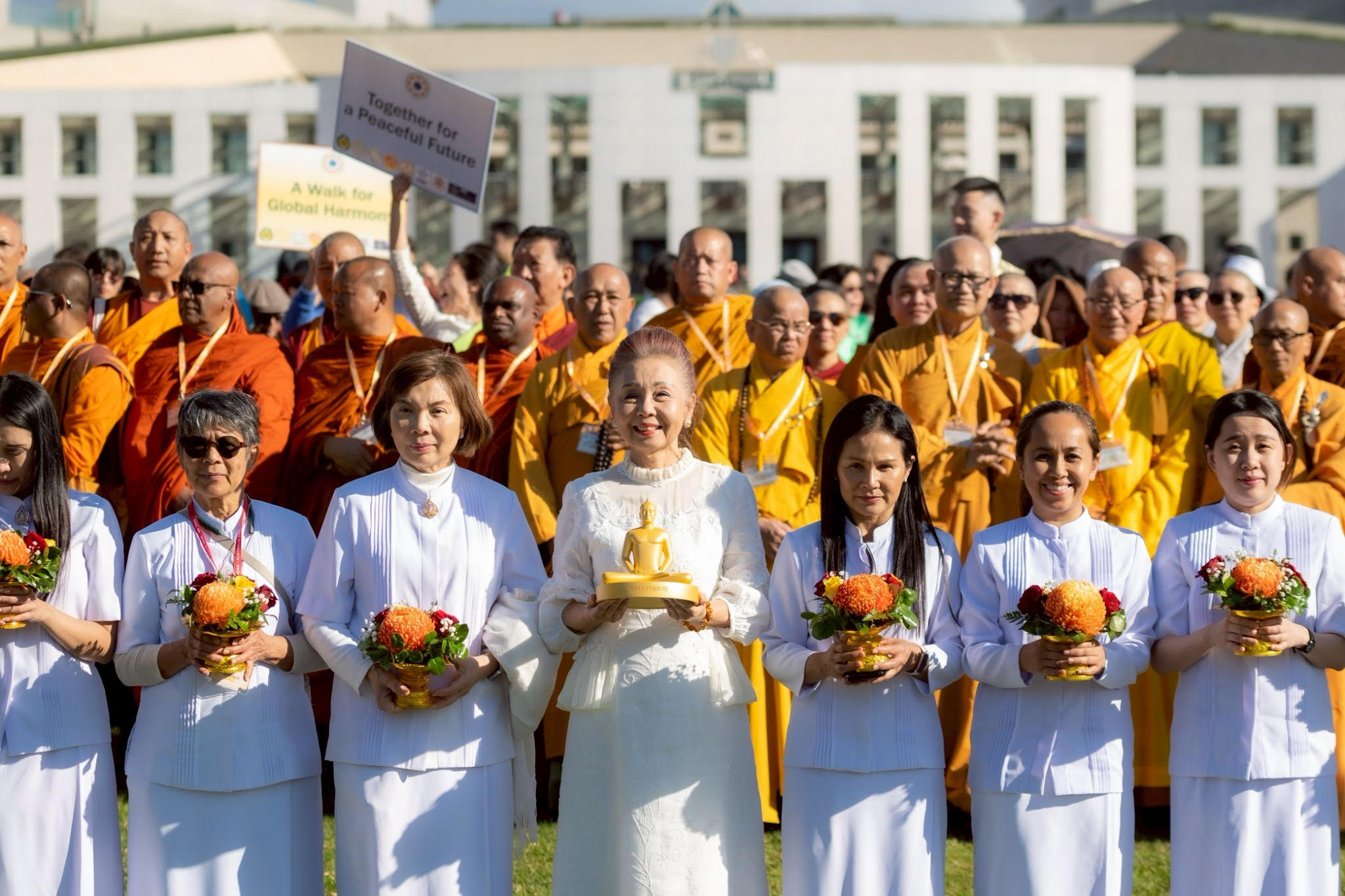
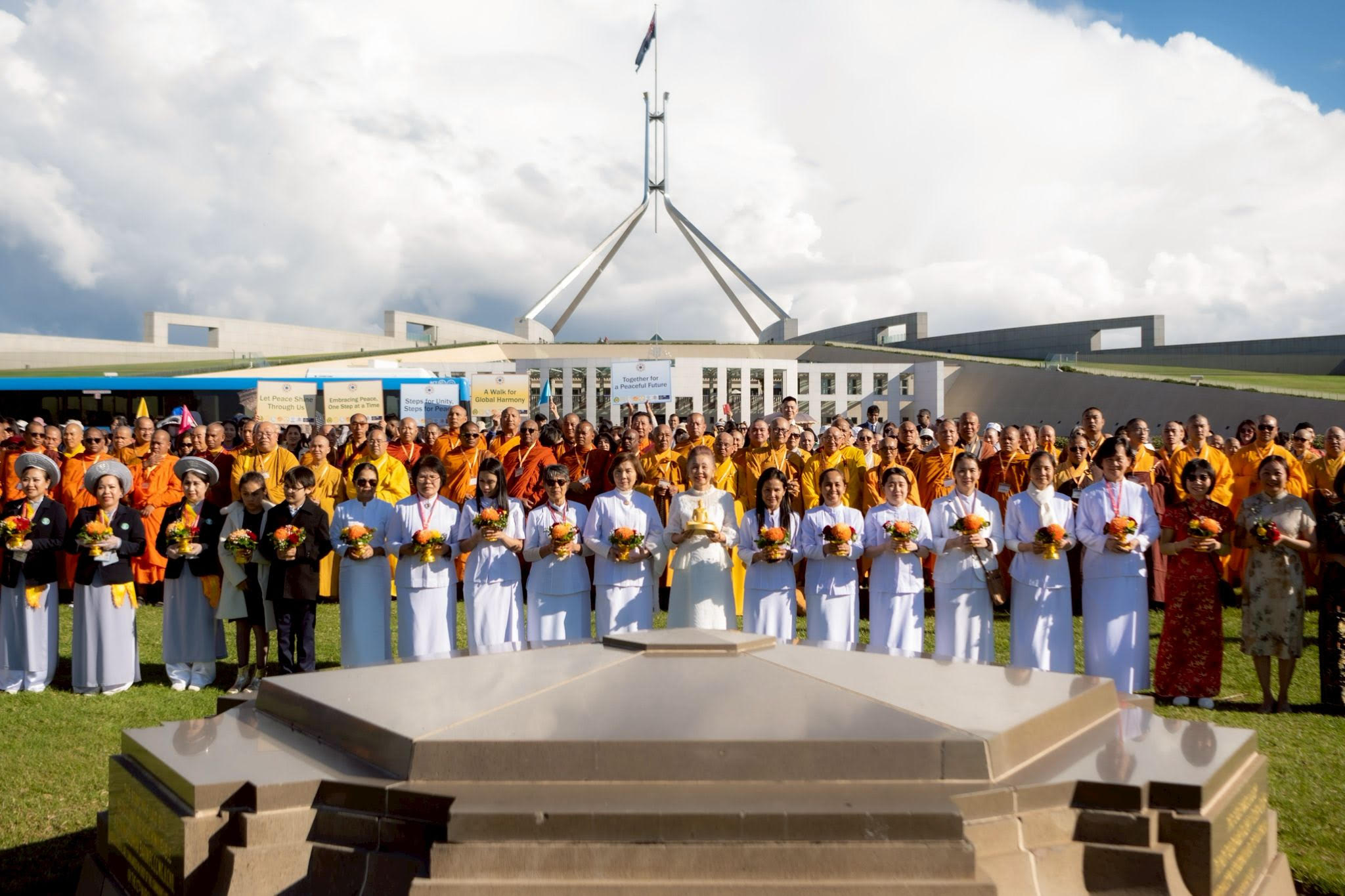
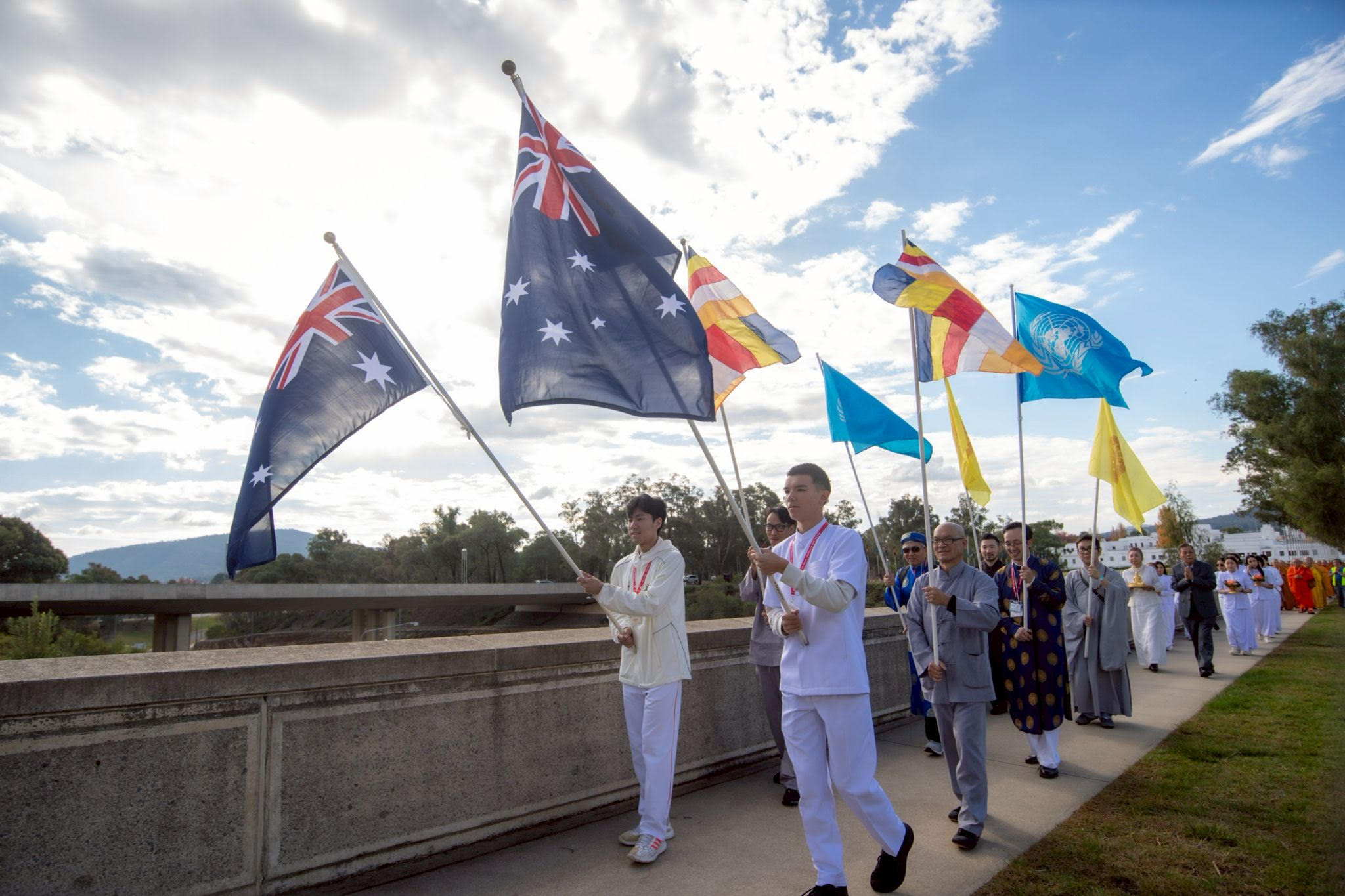
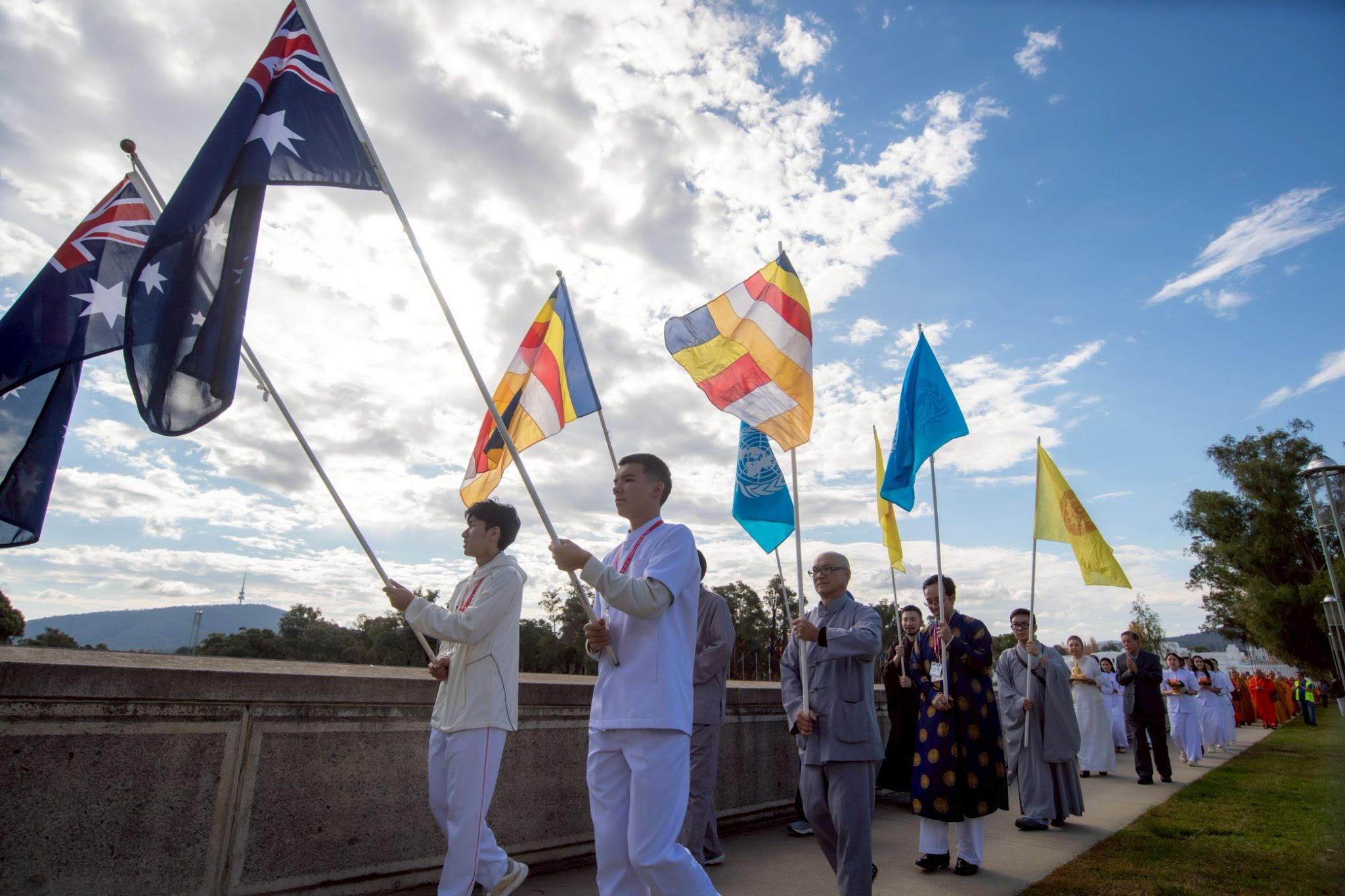

UN Day of Vesak 2025 Ceremony at the Great Hall, Parliament House Canberra
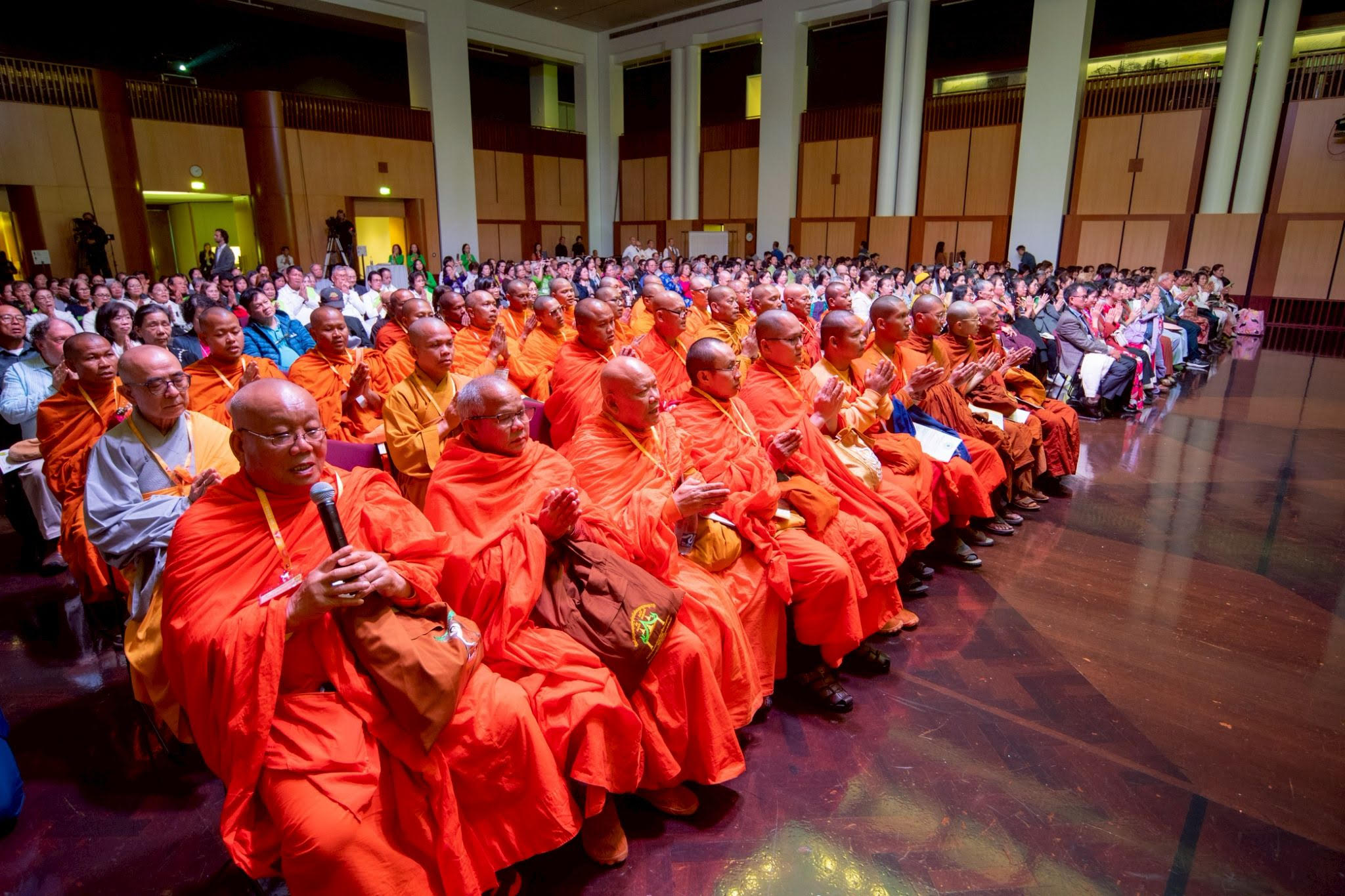


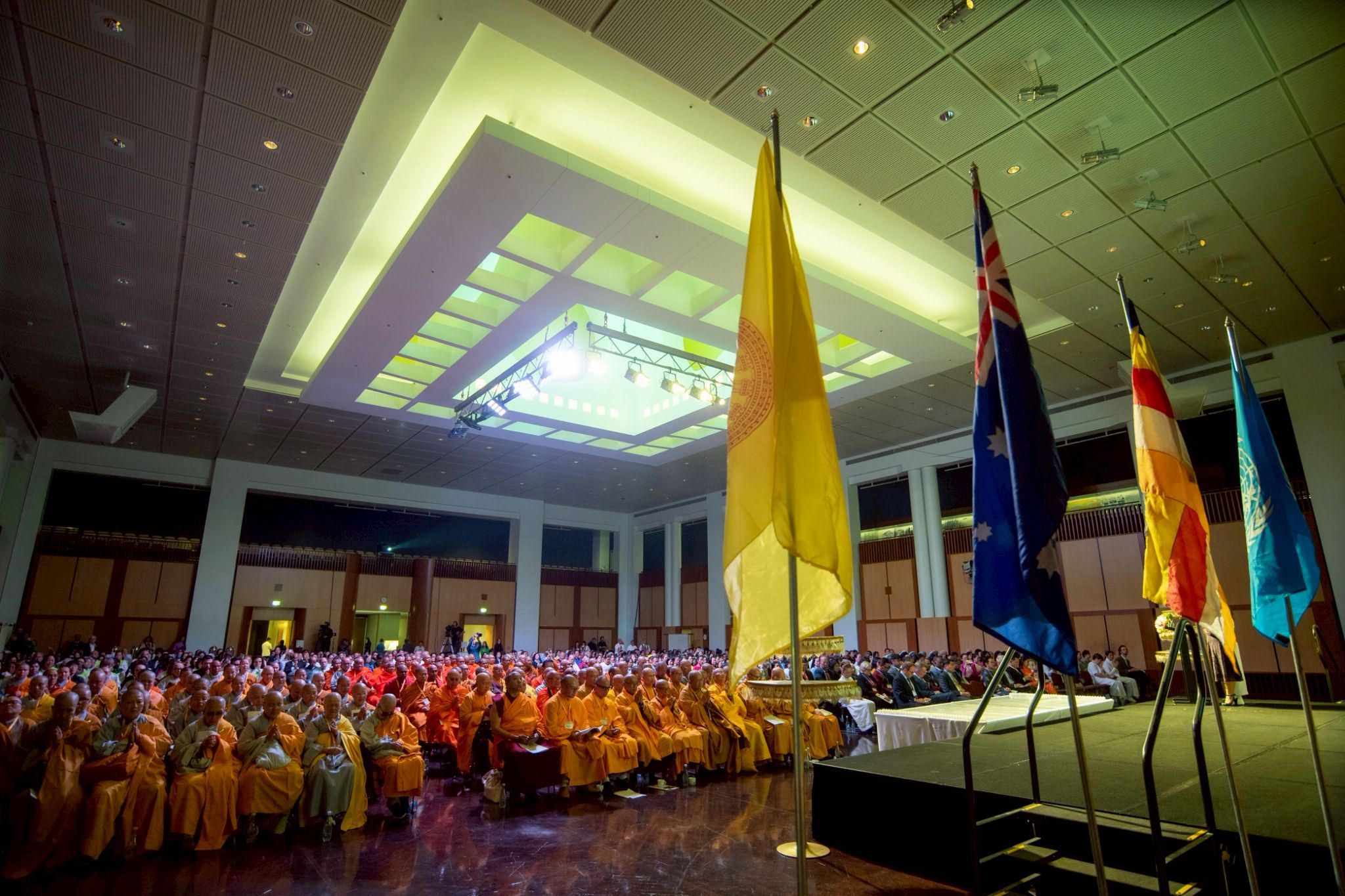
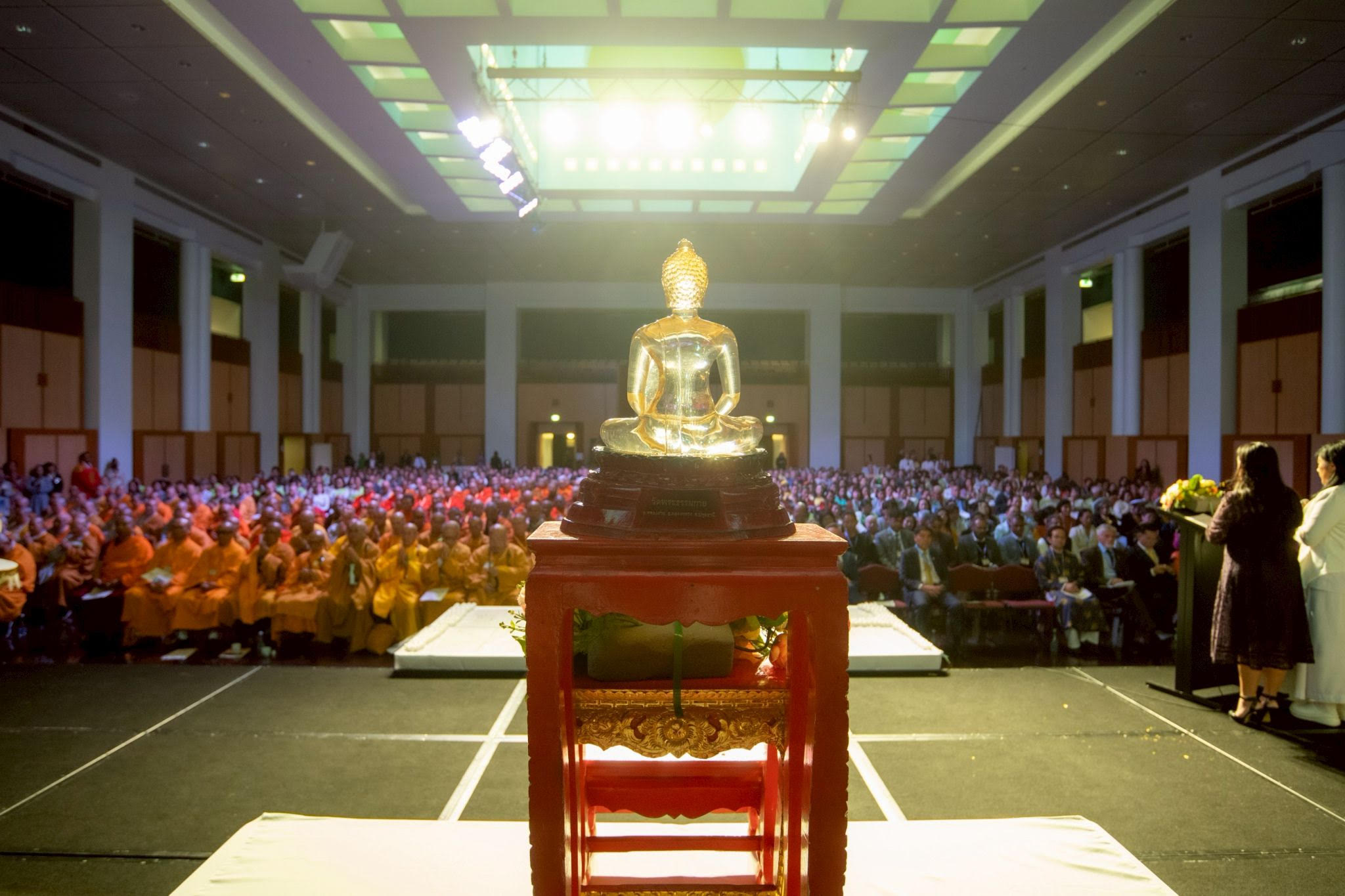
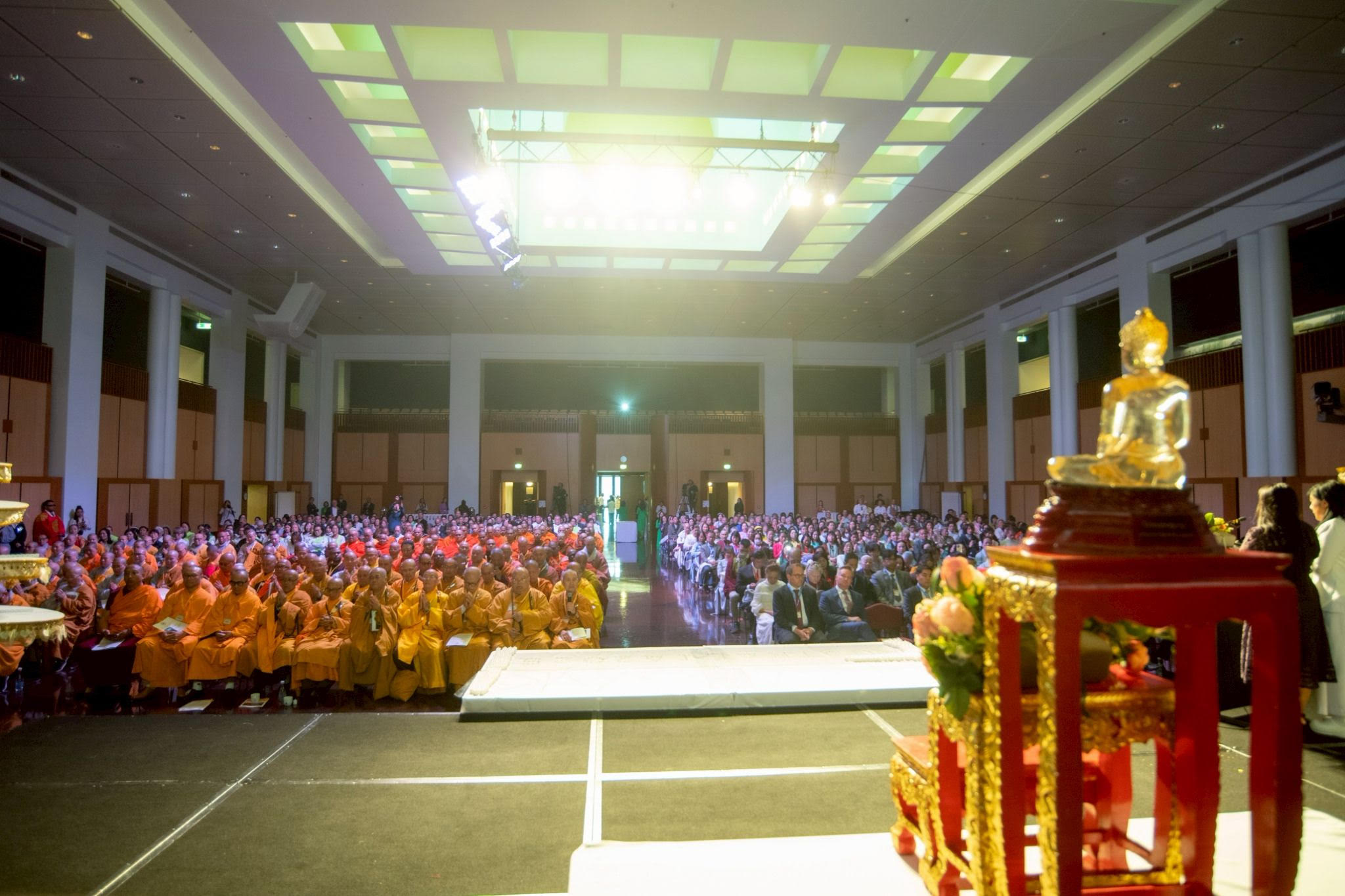
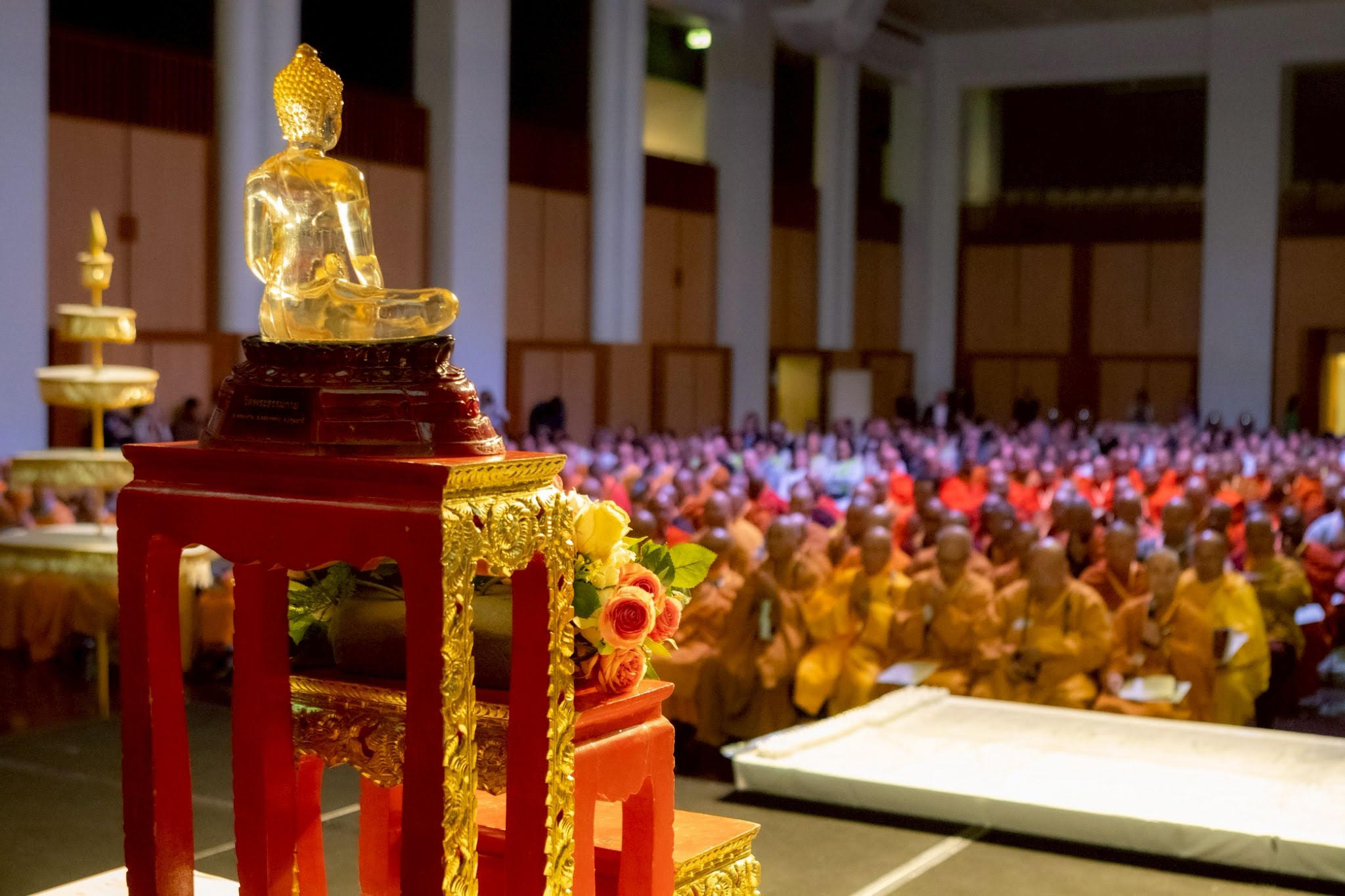
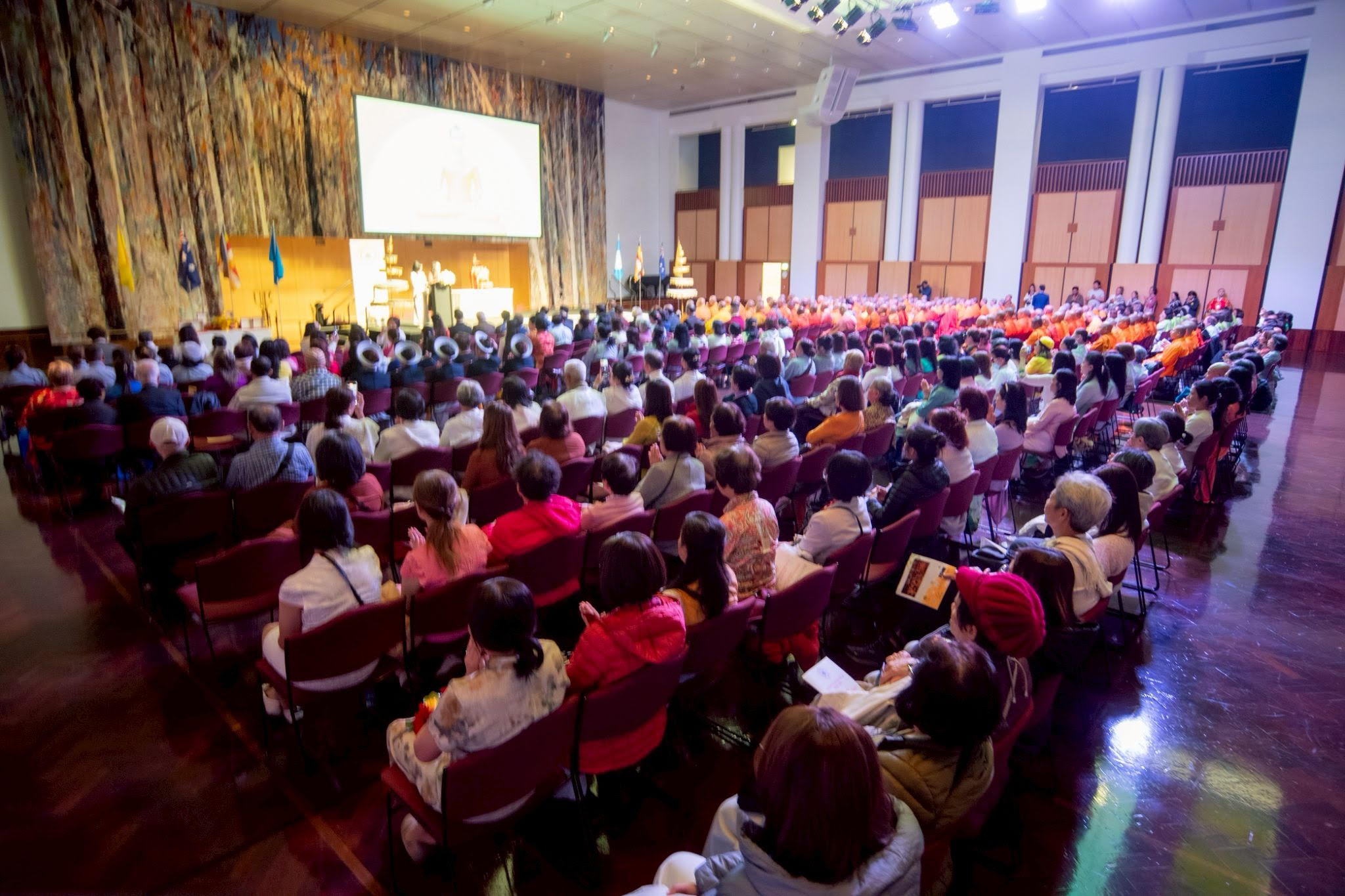

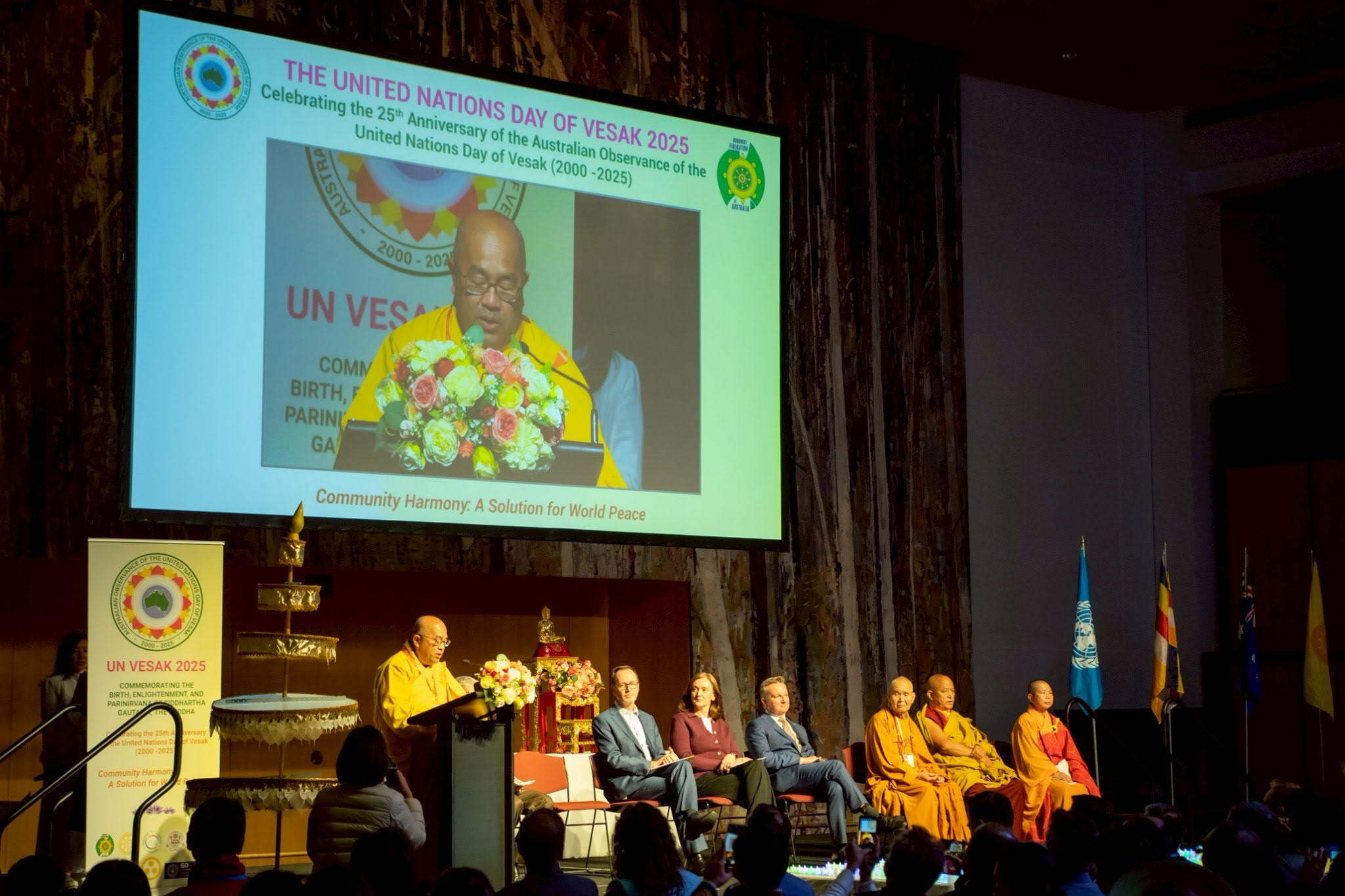
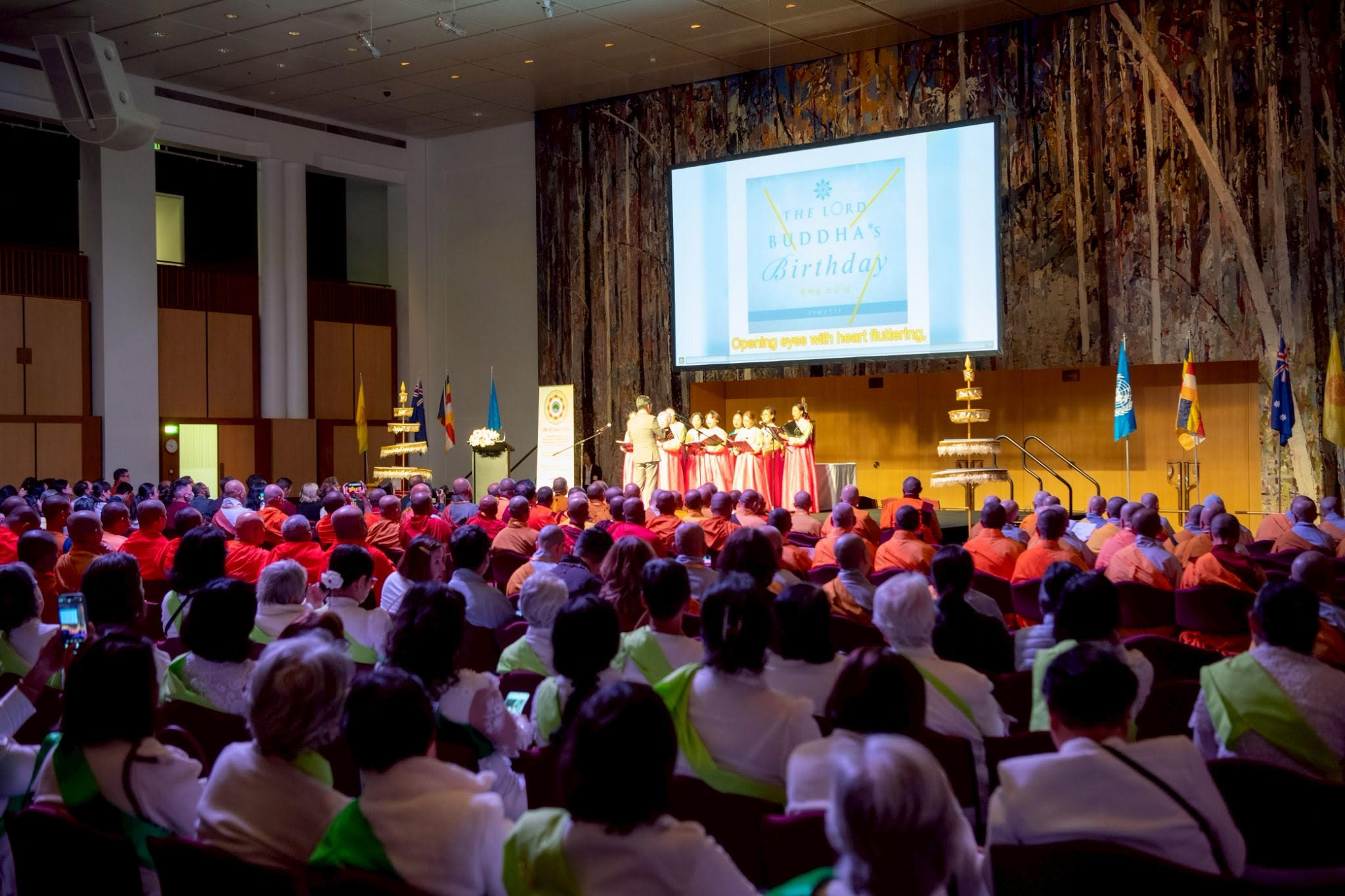
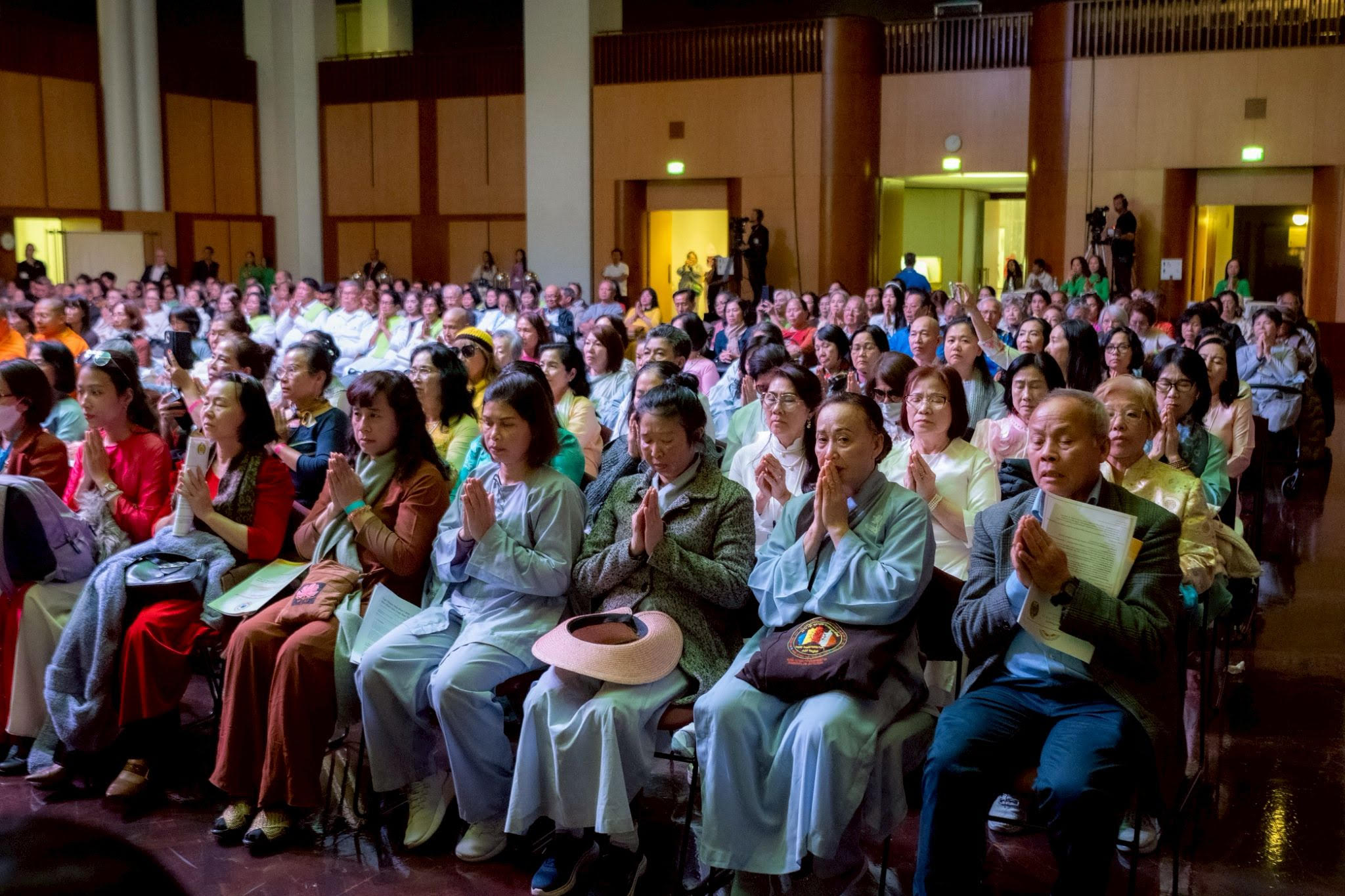

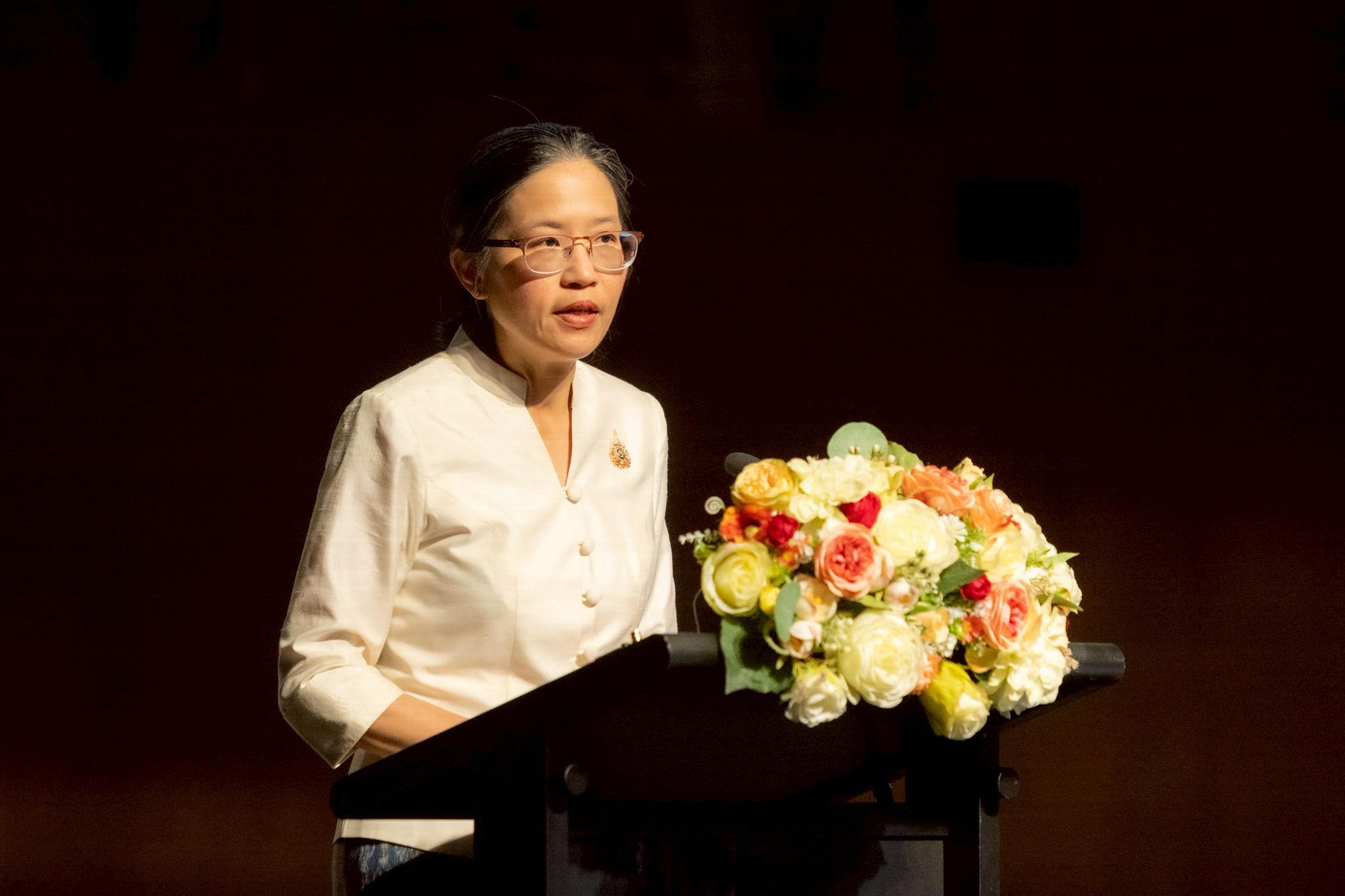
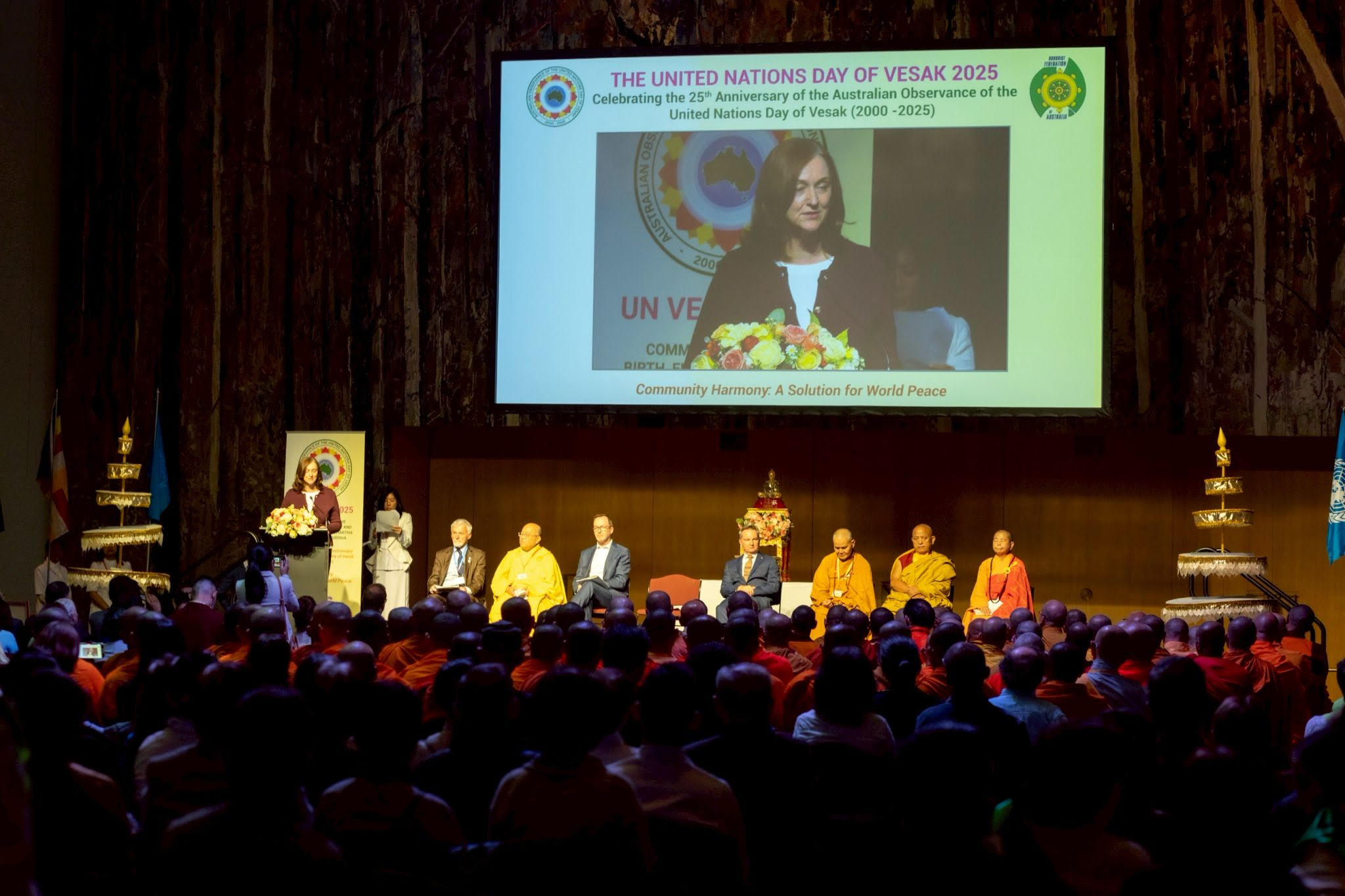
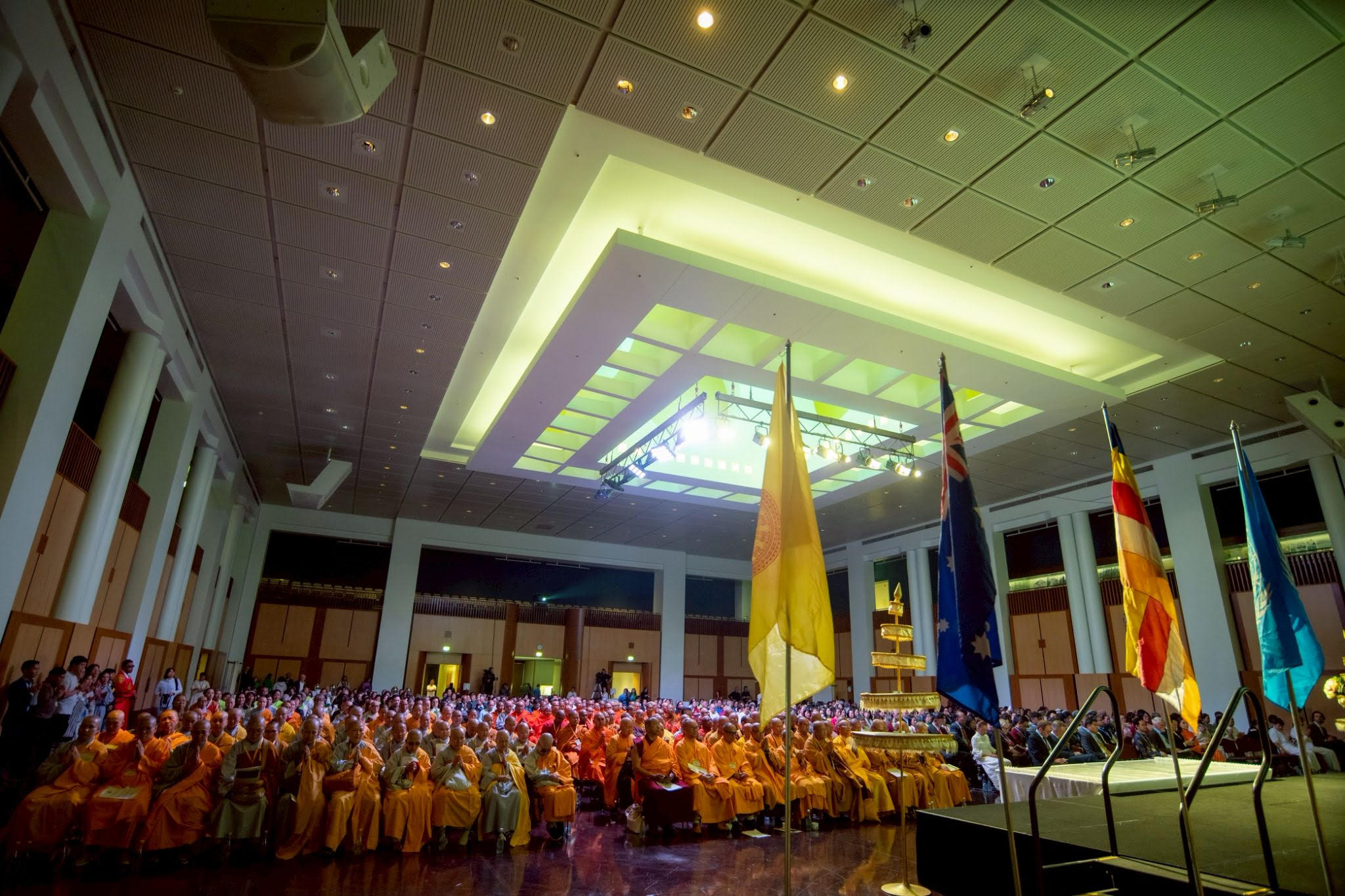
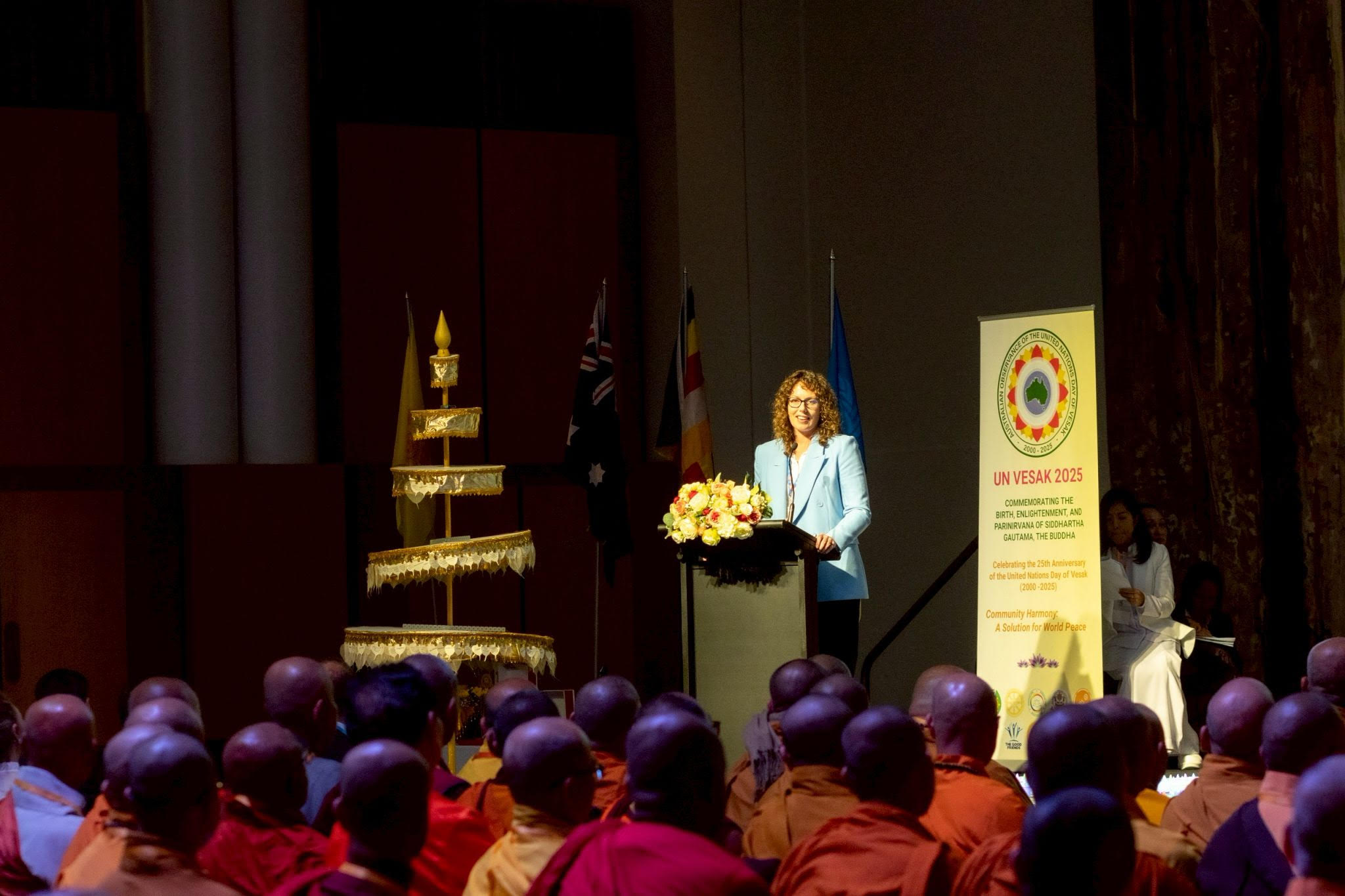
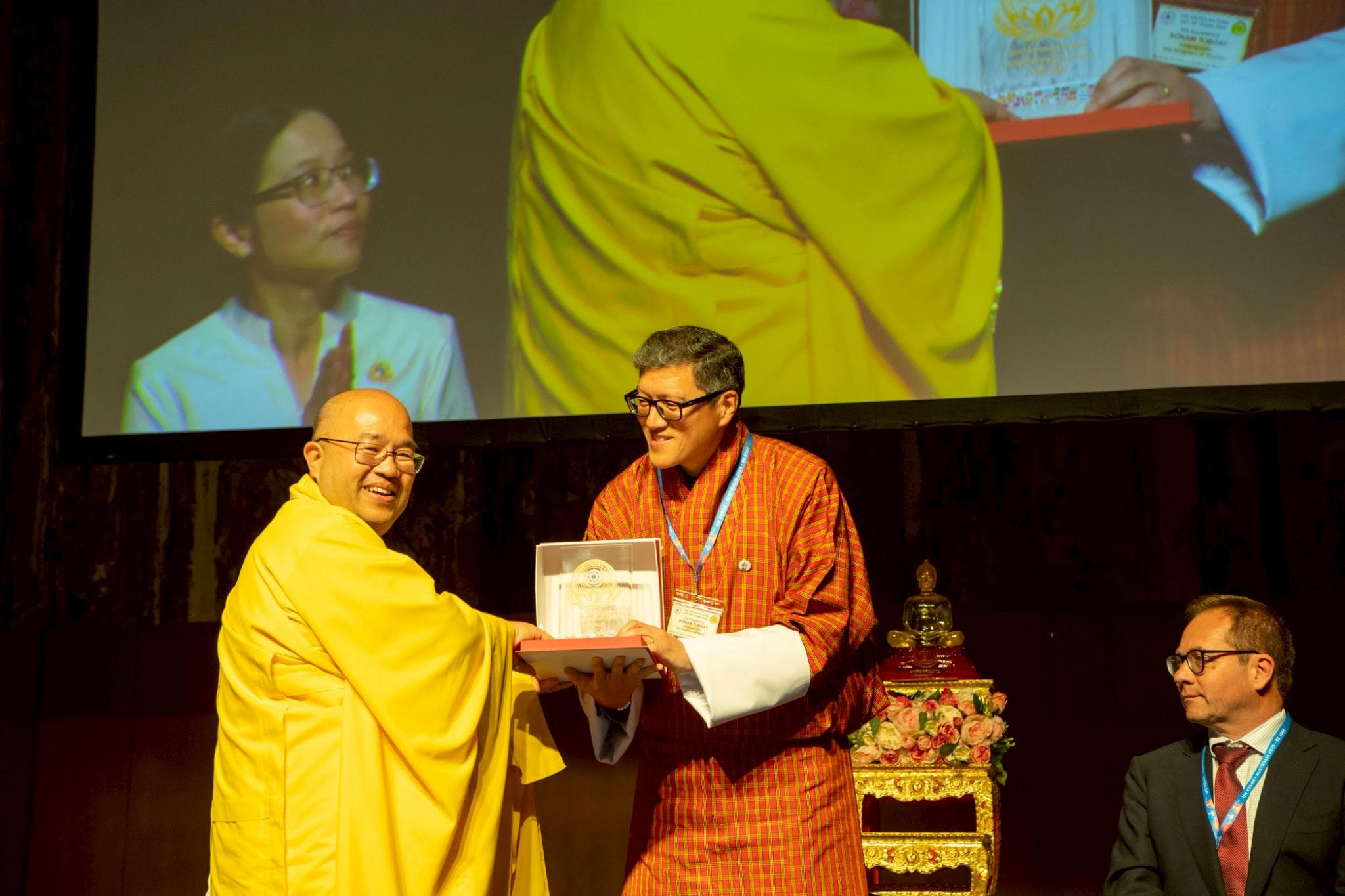
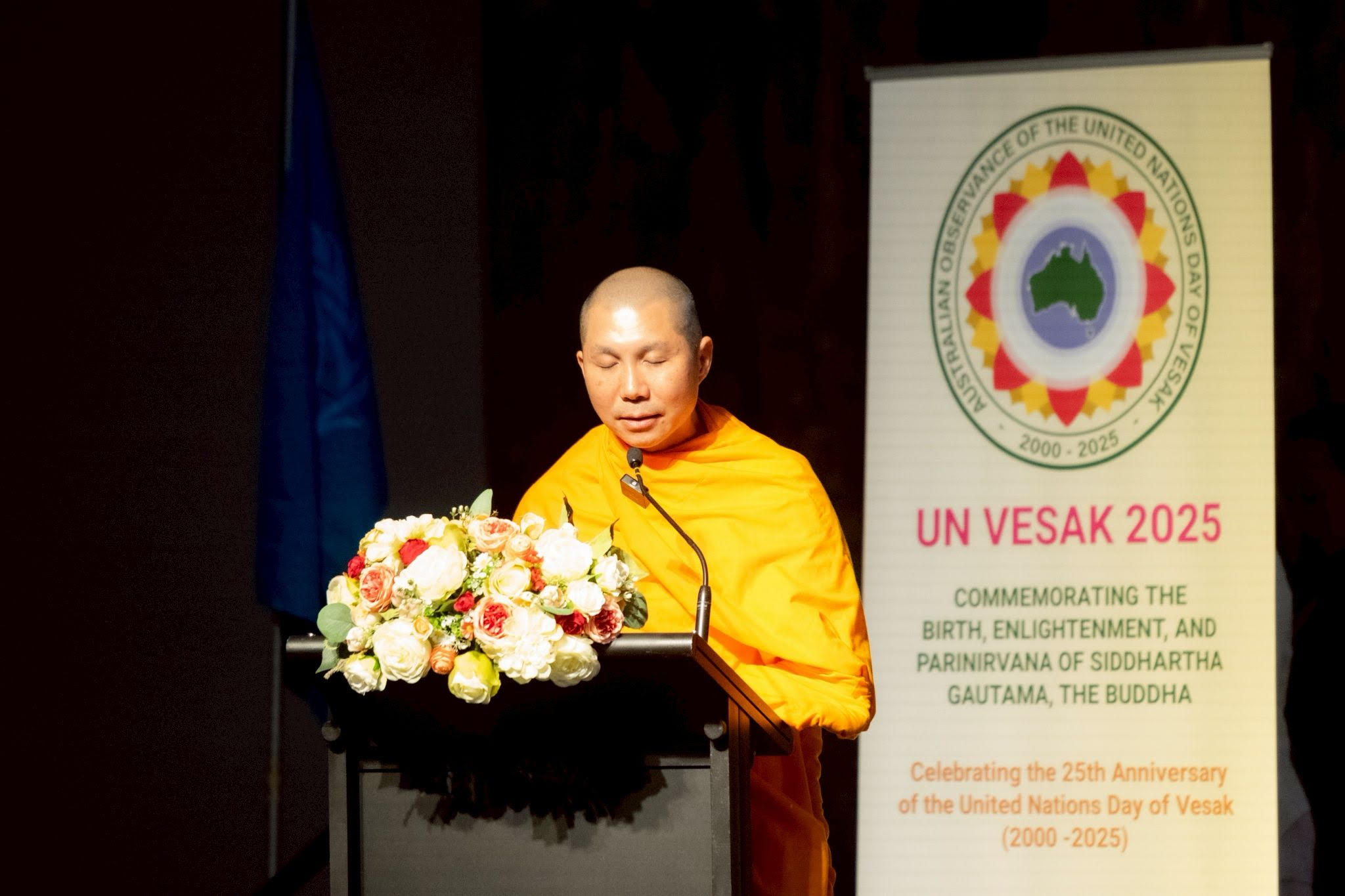
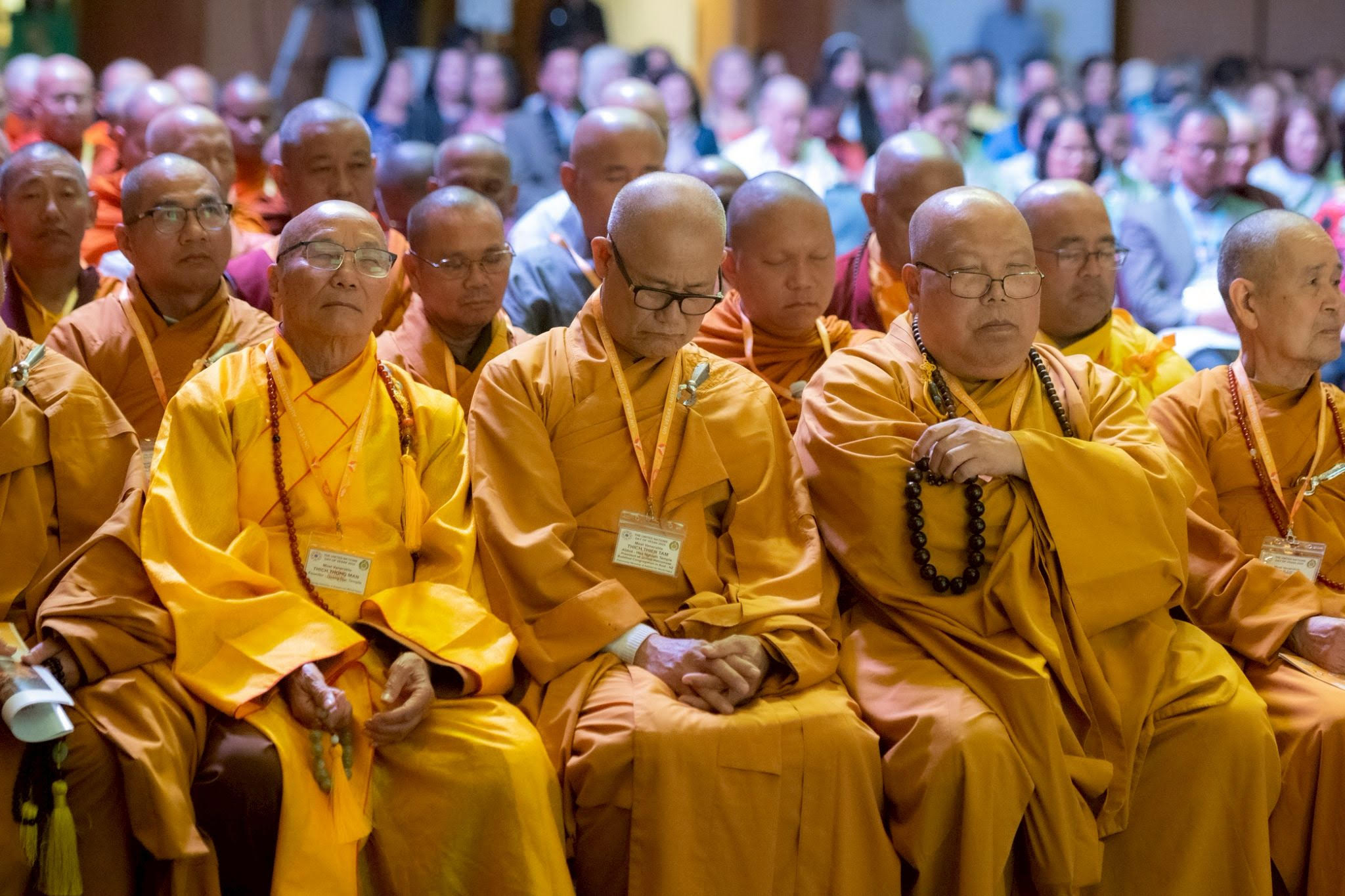
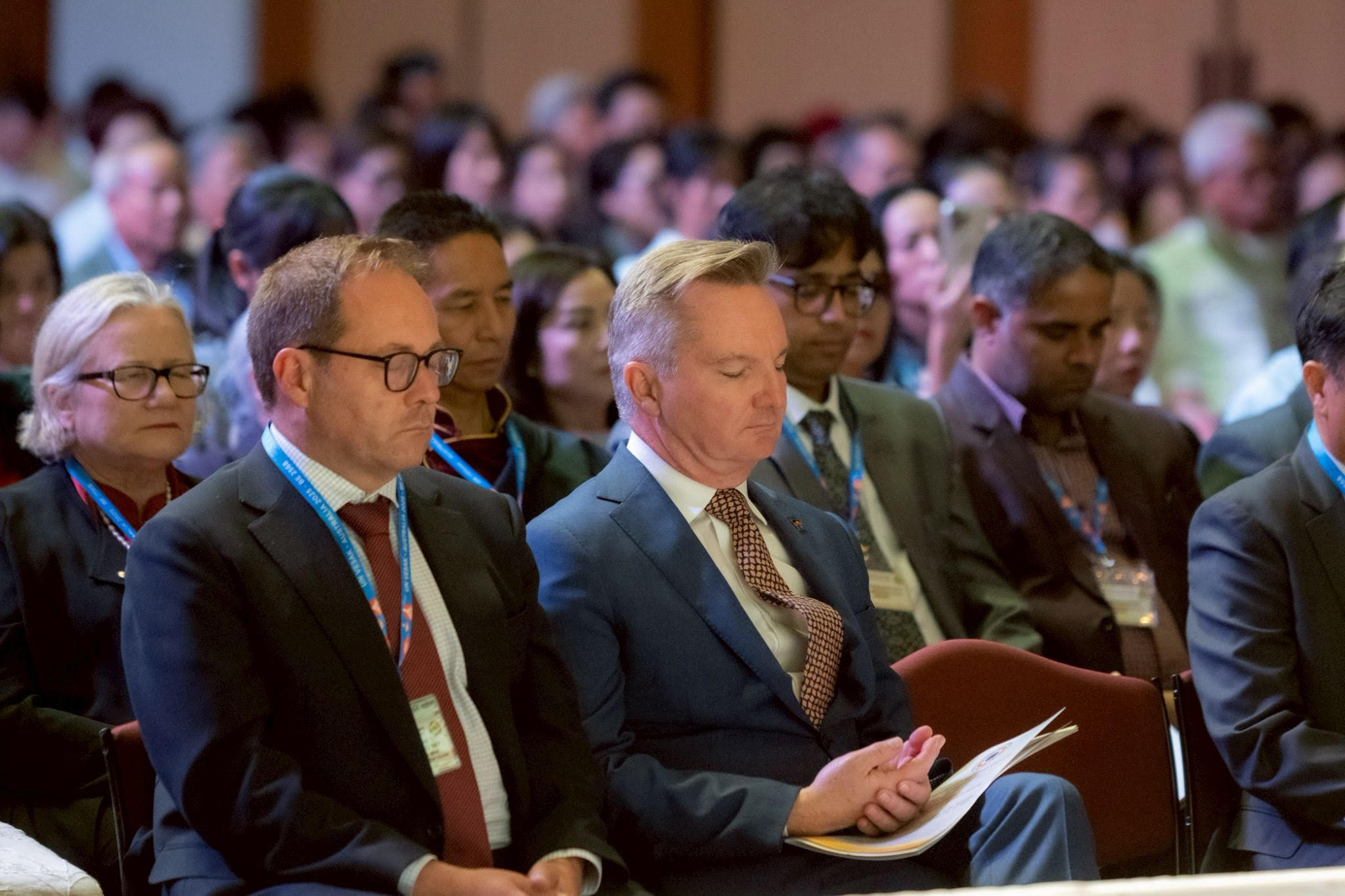
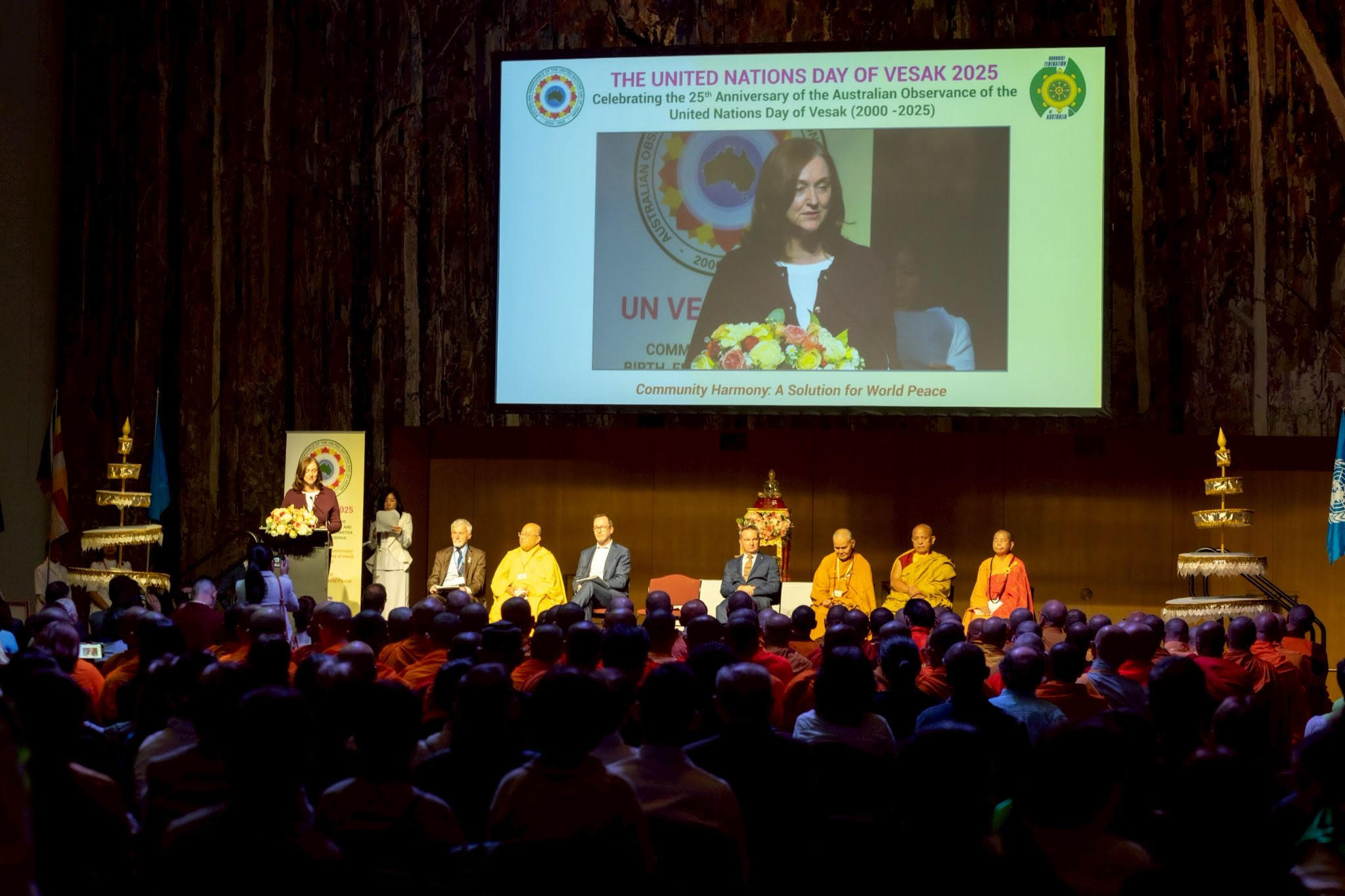
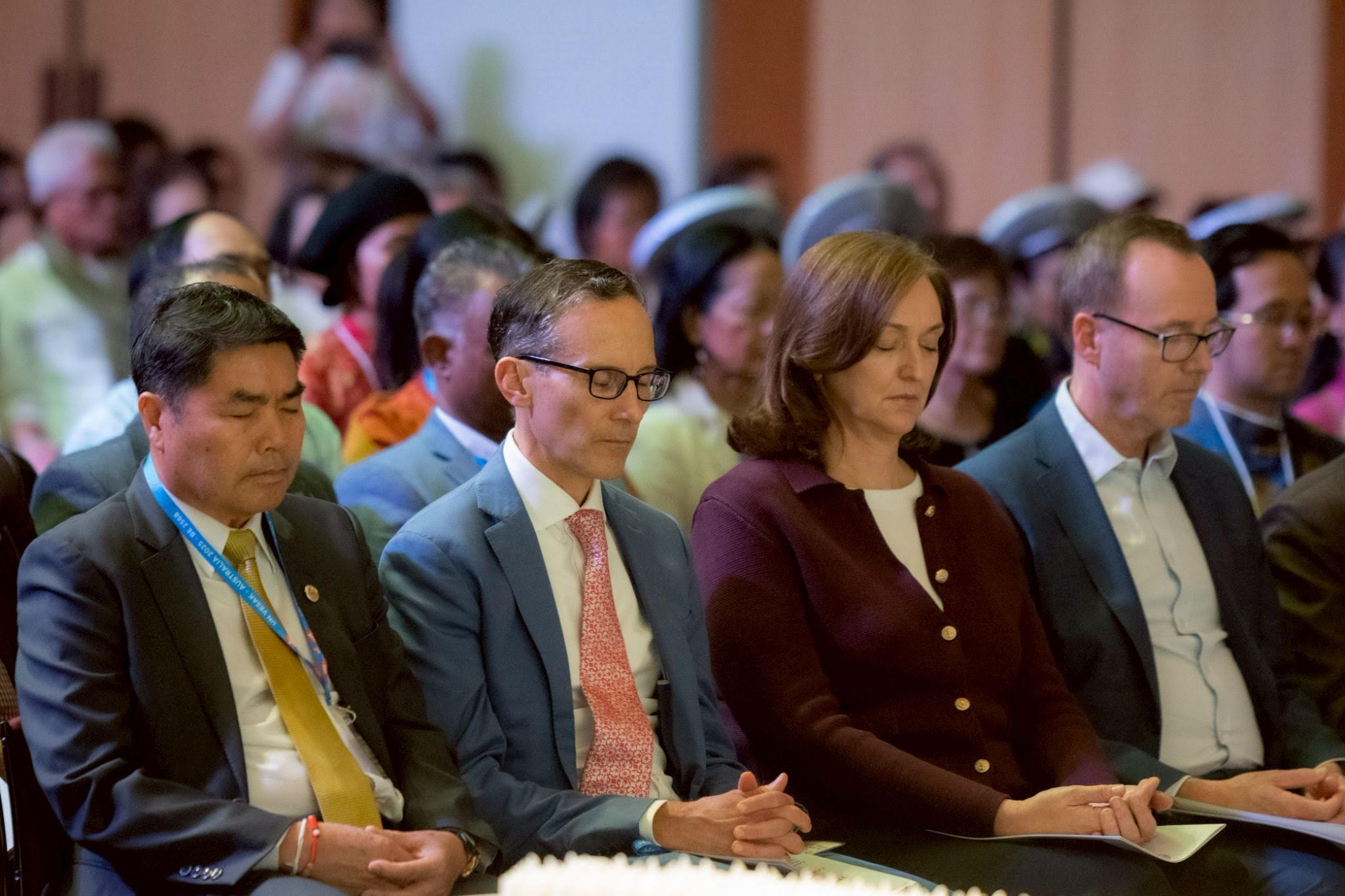
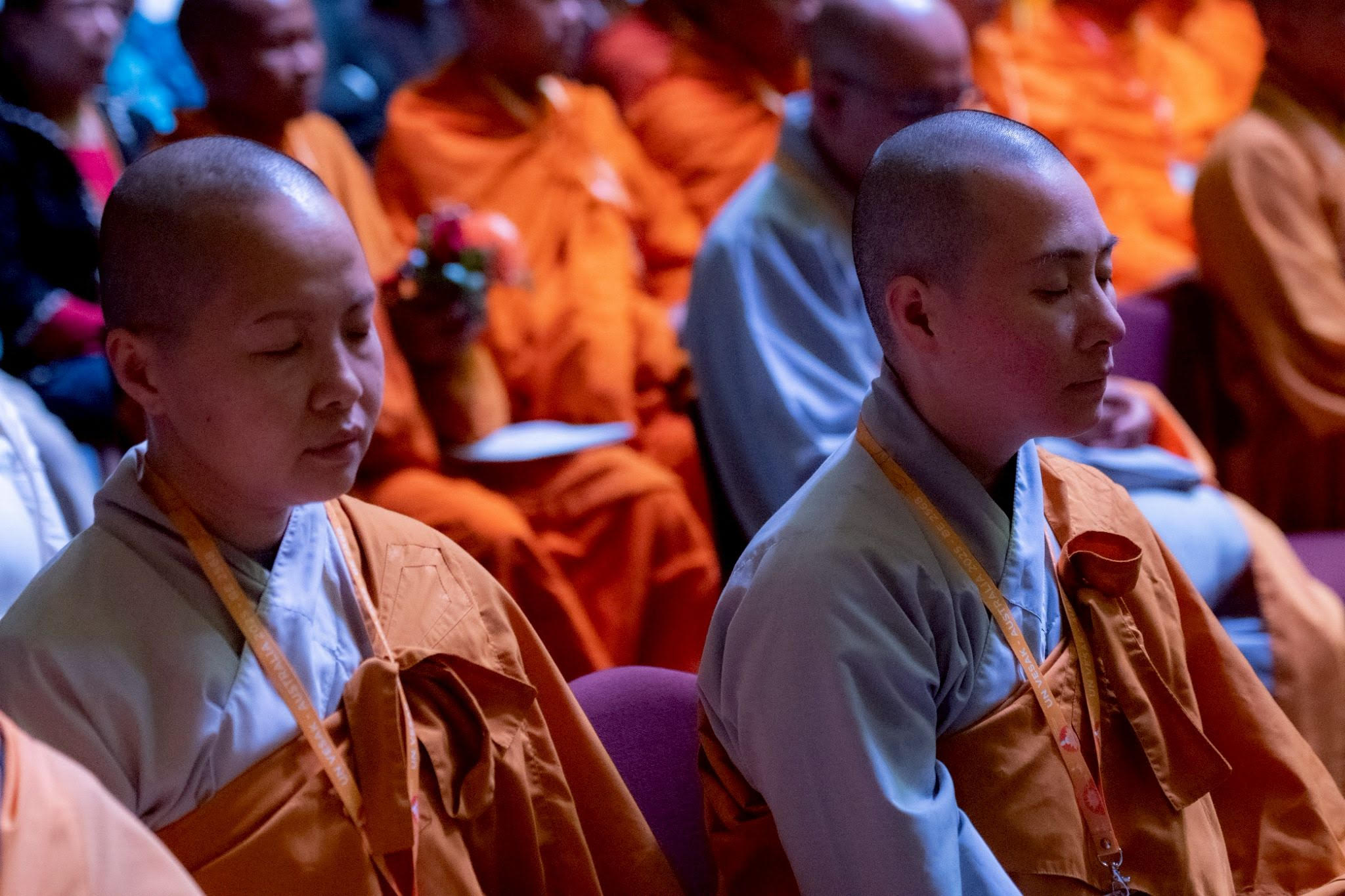
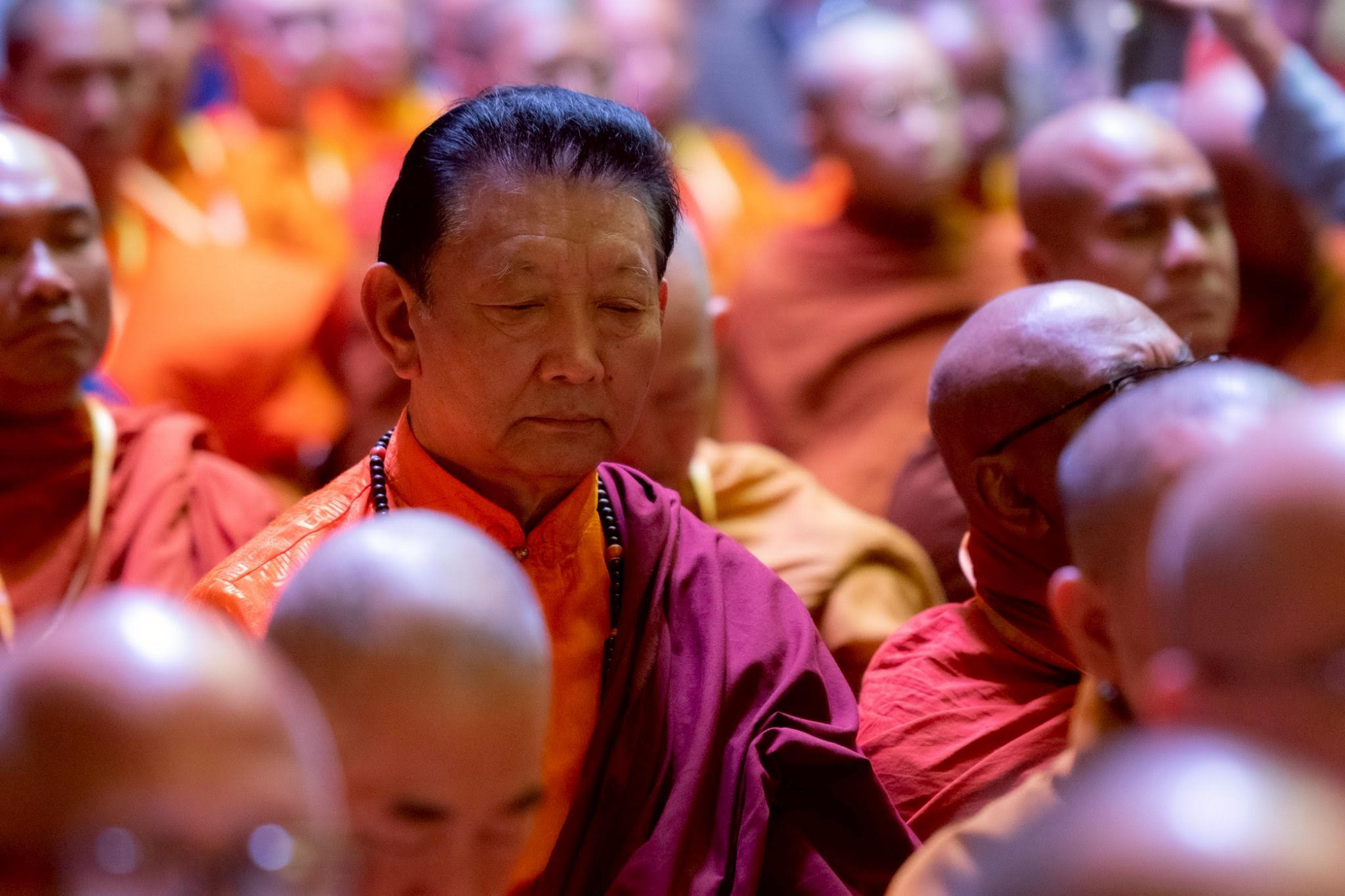
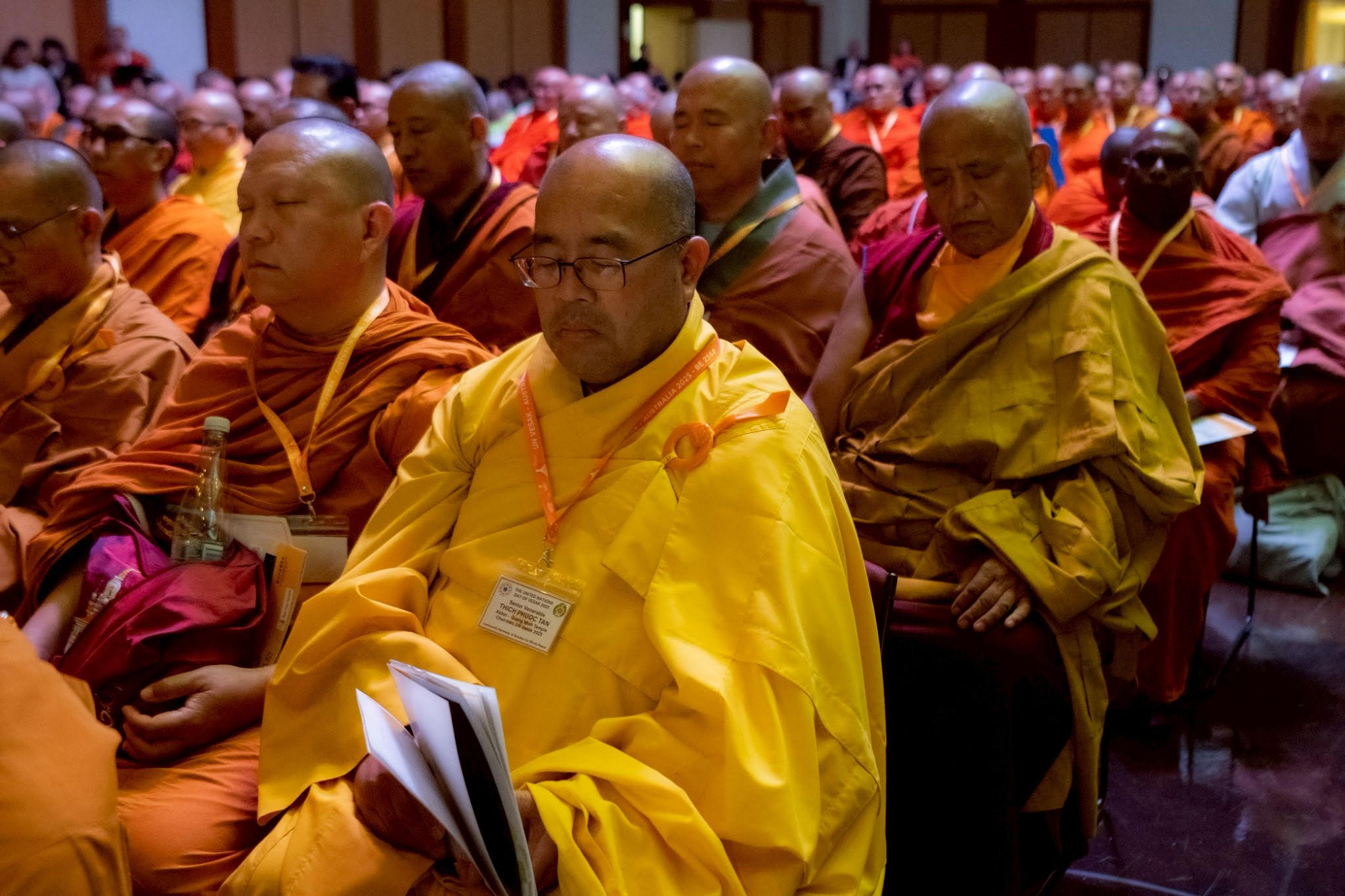
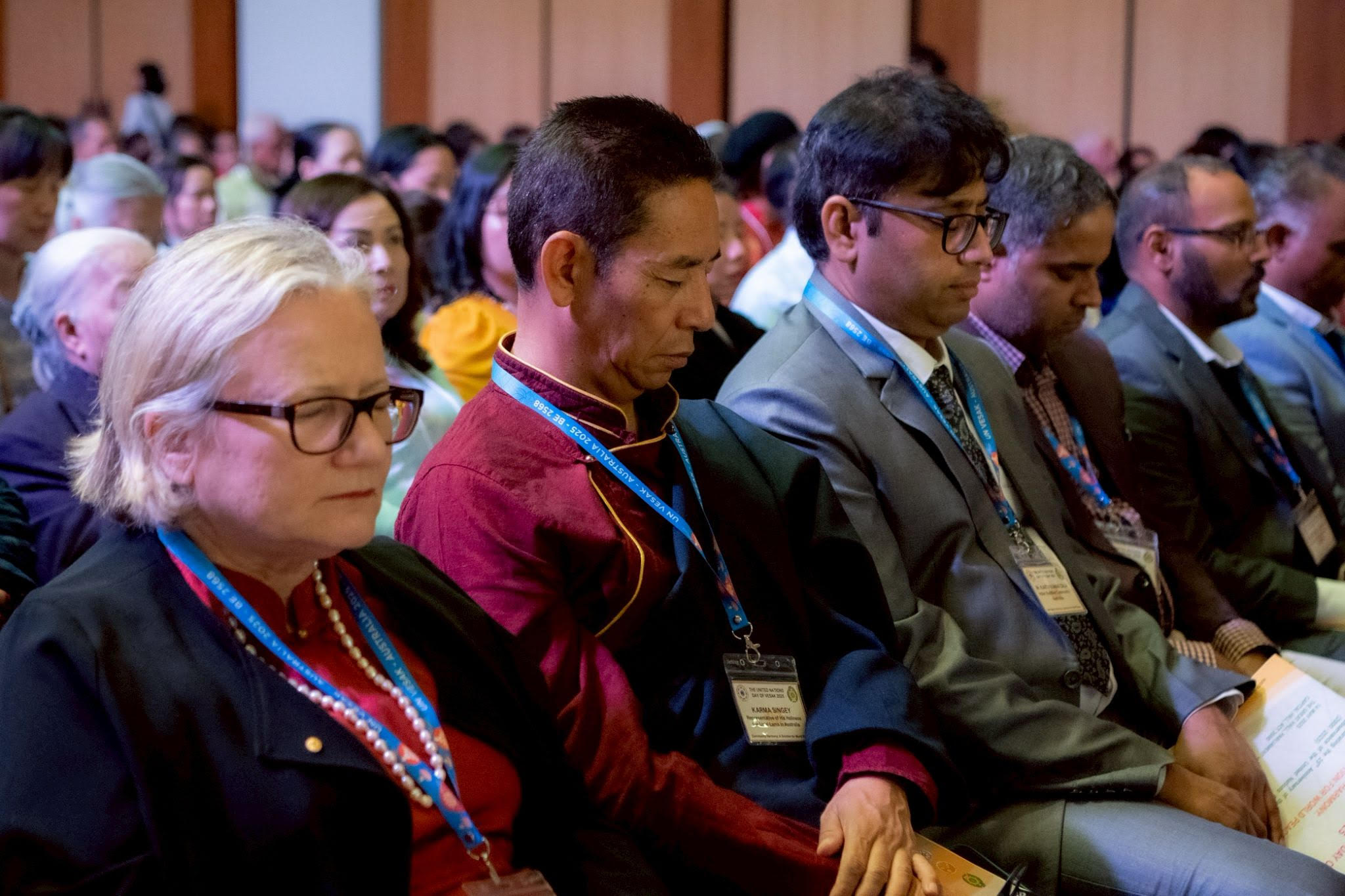
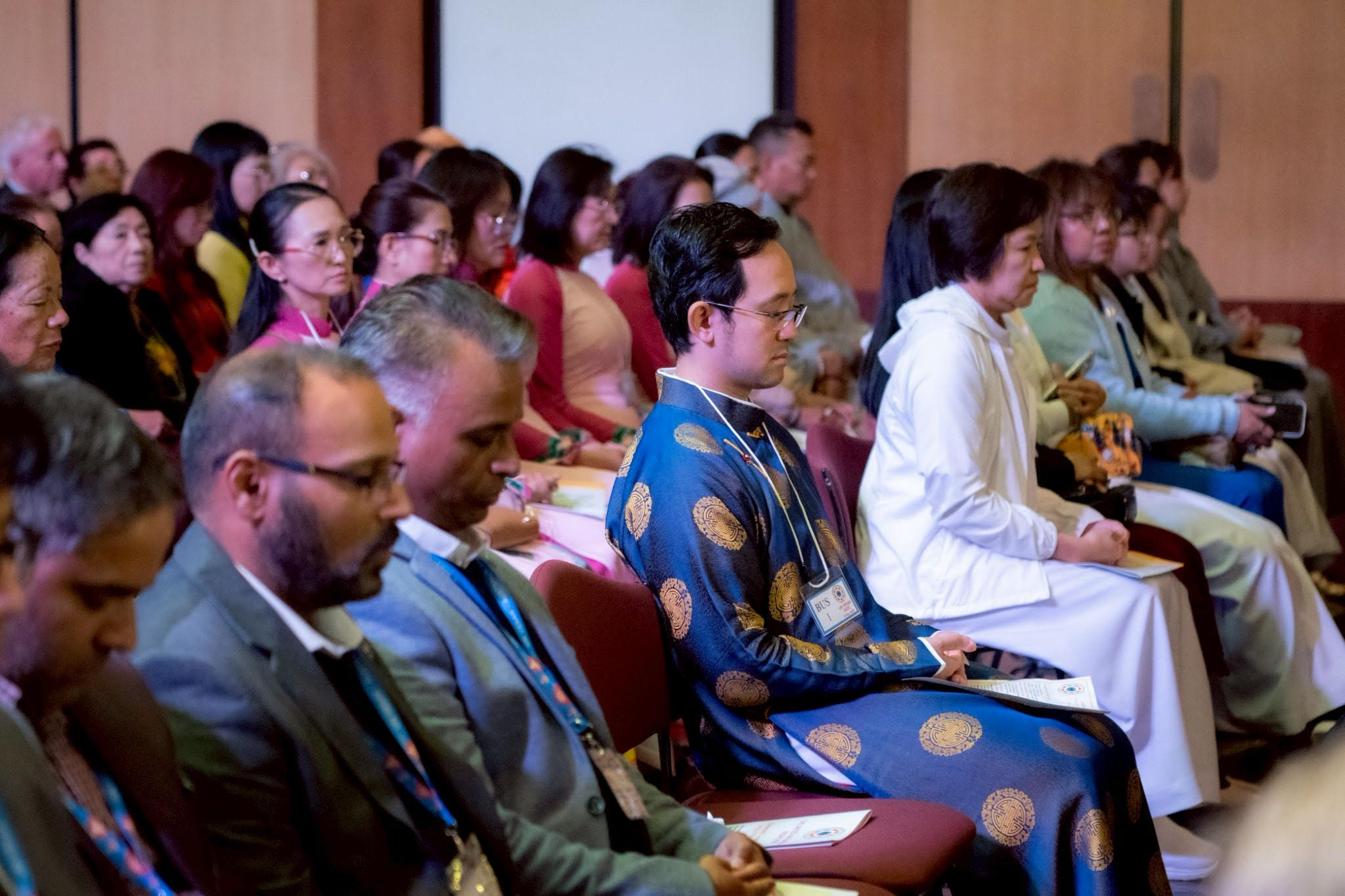
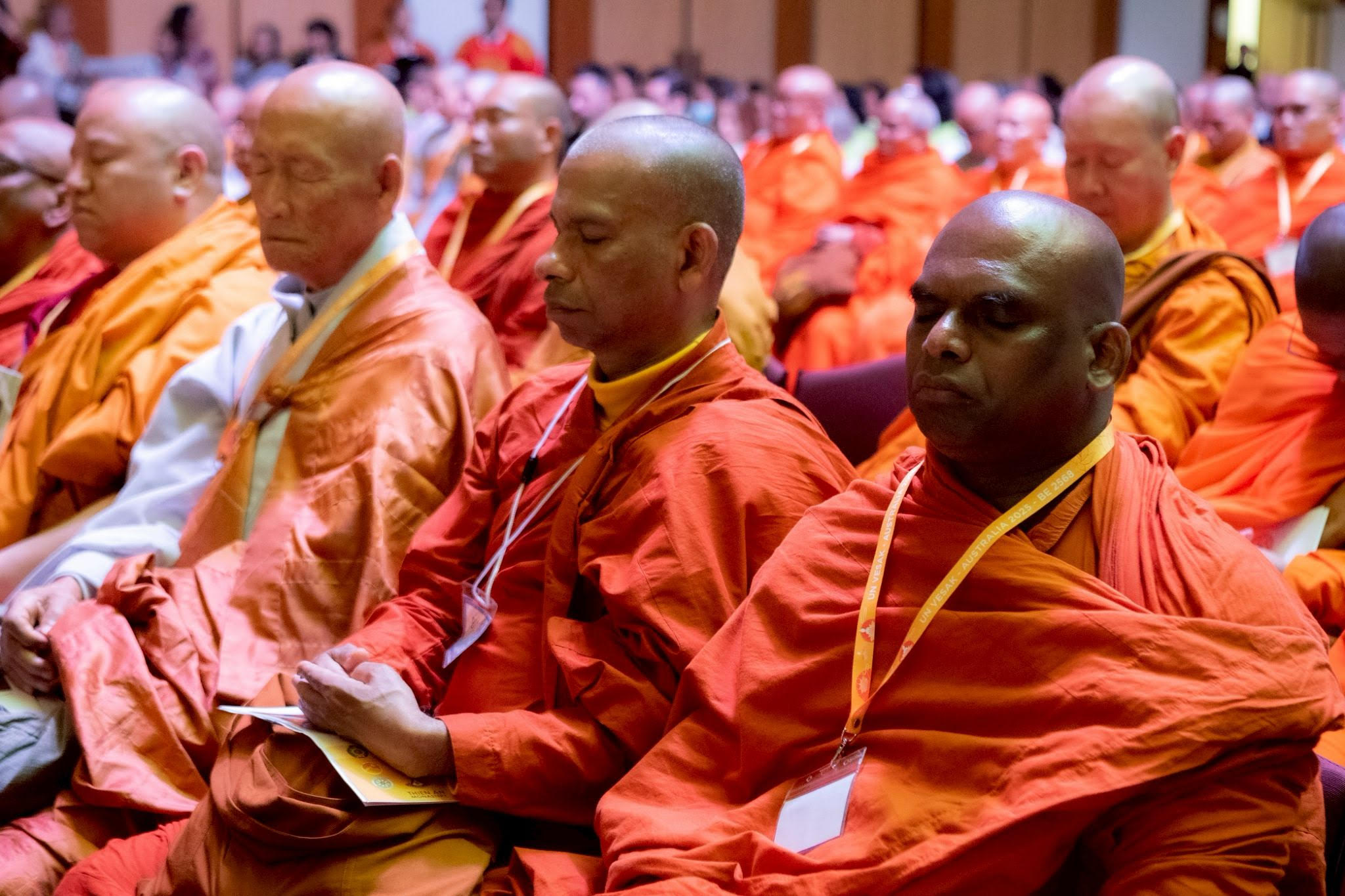
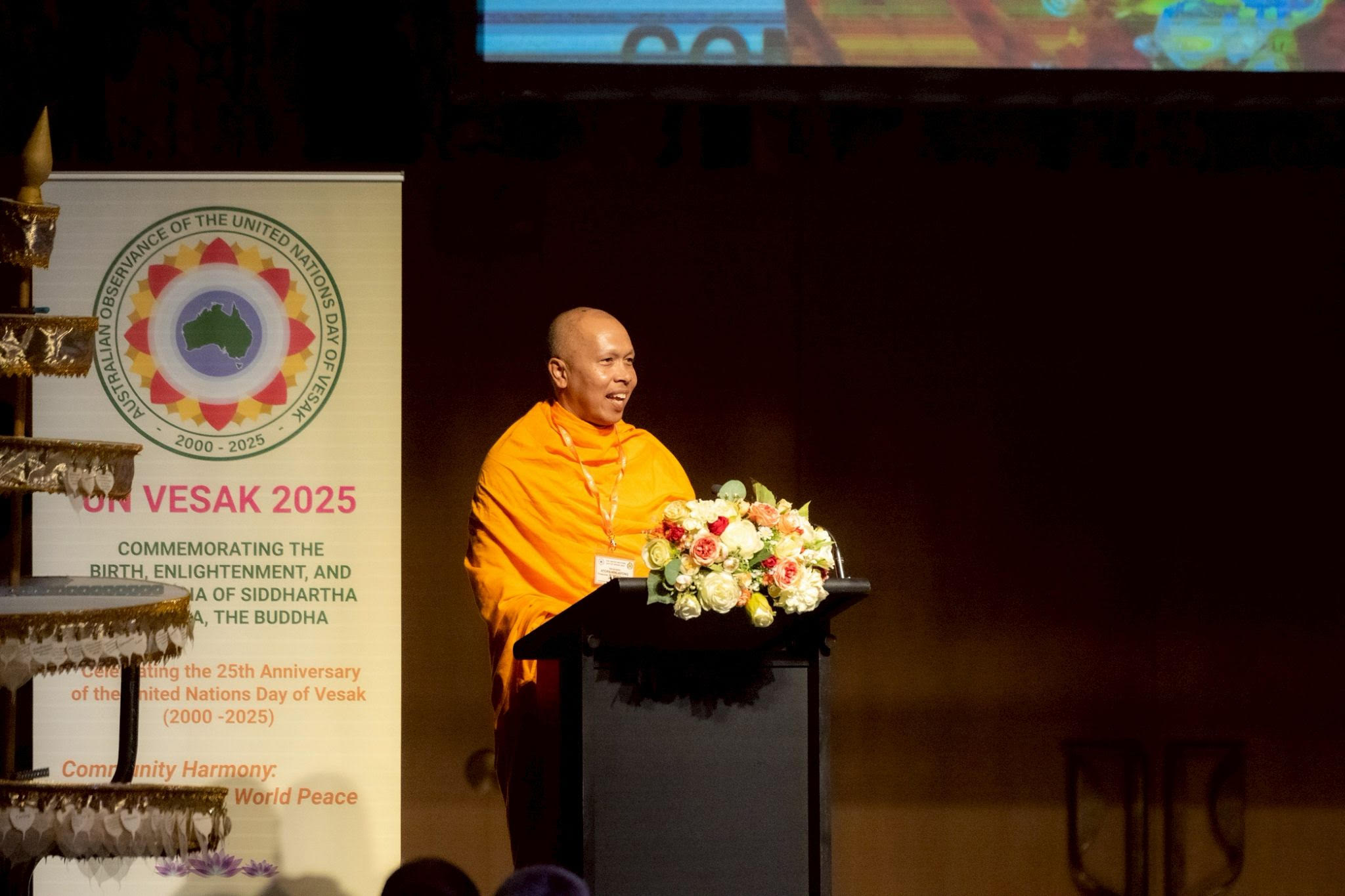
Opening Speech by Senior Venerable Thich Phuoc Tan OAM, President of the Buddhist Federation of Australia, Chair of the Organising Committee.

Venerable Sangha Members, esteemed leaders, honoured guests, lay Buddhist communities, ladies and gentlemen,
Today, as we gather to observe the United Nations Day of Vesak 2025, we celebrate not only the Buddha’s birth, enlightenment, and passing but also the enduring wisdom that inspires us to seek peace, harmony, and compassion in an ever-complex world.
As the Chair of the organising committee and the President of the Buddhist Federation of Australia, I am deeply humbled to welcome you all to this momentous occasion. This year’s theme ‘Community Harmony, A Solution for World Peace’ – is both a guiding principle and a call to action, urging us to reflect on our role in building a more peaceful and unified global society.
In Buddhism, the phrase Tâm bình, Thế Giới bình: ‘peace in the mind, peace in the world’ reminds us that peace begins with and within each of us. A calm and harmonious mind creates a ripple effect, inspiring peace in our homes, communities, and across nations.
Yet inner peace alone is not enough. The challenges we face—from local disputes to global conflicts – call for thoughtful and compassionate action, as is the saying, ‘think globally, act locally’ Many of the world’s greatest crises began as small, unresolved conflicts. These tensions can escalate when left unaddressed, eventually shaking entire nations and continents. Just as a single ember can spark a bushfire that consumes homes and forests, so too can unexamined discord grow into worldwide turmoil.
In my training, I recall hearing: ‘Do not underestimate a small snake, for it can take down even the largest person. Do not dismiss a young prince, for he may become king one day’. These words echo a more profound truth: every action, every choice, and every individual matters. Here in Australia—a nation that may appear modest on the global stage – we hold immense potential to lead by example. We can demonstrate how unity and understanding triumph over division and hostility by nurturing harmony within our diverse communities.
Additionally, let us heed this caution: do not mindlessly take sides on issues simply because they are common or familiar. Instead, approach each matter with modesty, sophistication and wisdom. Investigate further to uncover the true motives behind any action, for intentions rooted in selfishness or negativity can derail even the most noble and holy endeavours.
It is said that every journey begins with a single step. Let us believe that world peace begins with our first peaceful breath.
As this celebration is broadcast far and wide, let us embrace the responsibility that each of us carries. Let us commit to building community harmony, knowing that every act of kindness, patience, and empathy contributes to a larger tapestry of world peace. Together, we can light the path toward a future where peace is not just an ideal but a living reality.
On this United Nations Day of Vesak, may we honour the Buddha’s teachings in words and deeds. Let us act locally with the wisdom of thinking globally. And let us dare to believe that our united efforts here in Australia can inspire hope and harmony worldwide.
Thank you, and may this day bring clarity, compassion, and peace to all.
Explanation of the Commemorative Logo for the Australian Observance of the United Nations Day of Vesak
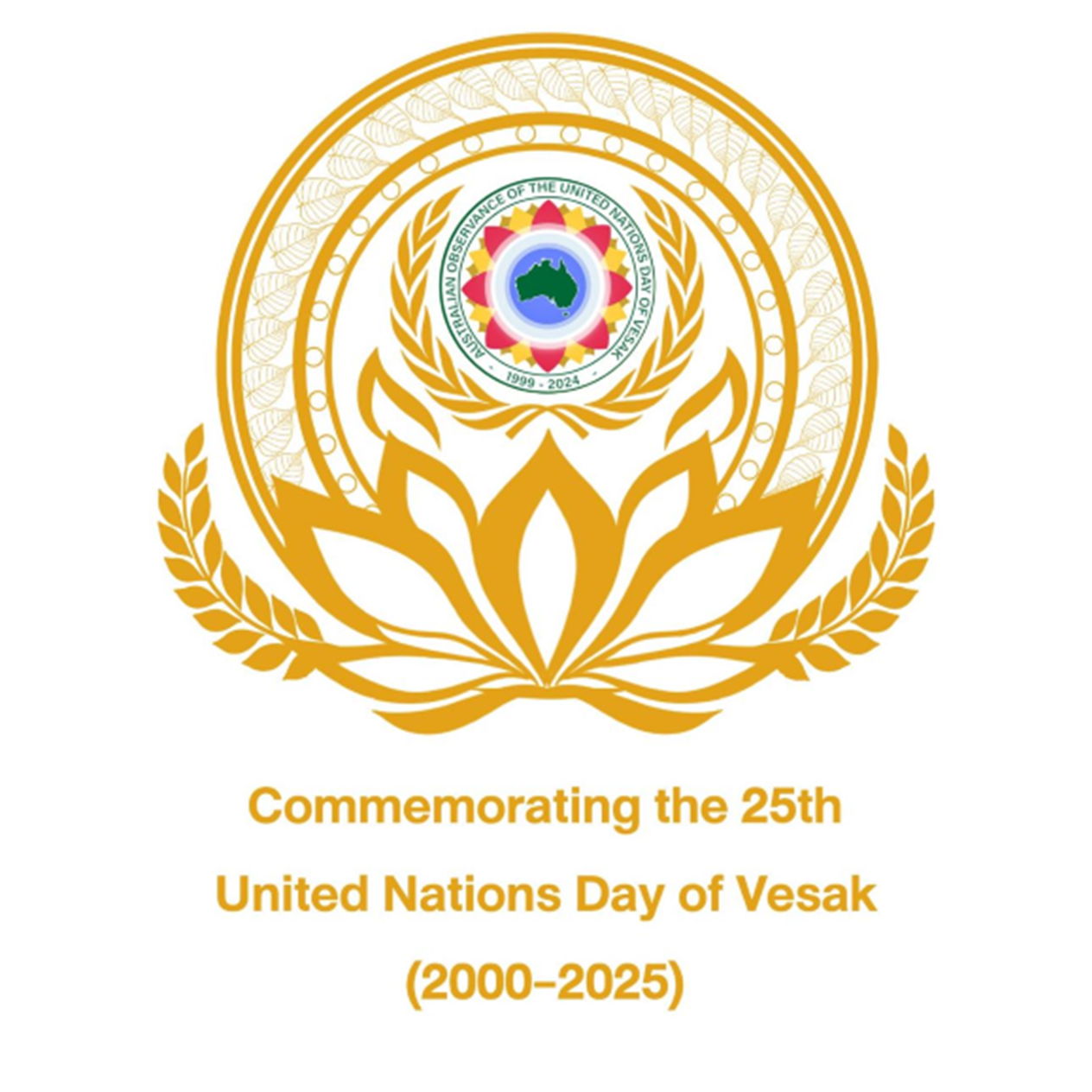
This logo symbolises the values, significance, and global support for the United Nations (UN) Day of Vesak. Each element has been carefully chosen to reflect the rich tradition and universal message of Vesak:
· Bodhi Leaves (25 leaves): These leaves symbolise the moment of enlightenment under the Bodhi tree, marking the Buddha’s awakening. Twenty-five leaves represent the 25th anniversary of the United Nations’ recognition of Vesak Day.
· Lotus: Symbolises purity and spiritual awakening.
· Sala Leaves (34 leaves): These leaves signify the 34 nations that have supported the UN resolution to recognise the Full Moon Day of May as the UN Day of Vesak, highlighting the international unity in honouring the teachings of the Buddha.
· Two Flames: These flames embody the two essential virtues in Buddhism – wisdom and compassion. Wisdom represents deep understanding and insight, while compassion reflects kindness and empathy towards all beings. Together, they illuminate the path towards peace and enlightenment.
Additionally, the three chosen plants – Lotus, Bodhi, Sala – are deeply connected to the three significant moments in the life of the Buddha. The Lotus represents the Buddha’s birth, as it is said that upon his first seven steps, seven lotus flowers blossomed beneath his feet, signifying his pure and enlightened nature. The Bodhi tree signifies his enlightenment in Bodh Gaya, where Siddhartha Gautama attained supreme wisdom and became a Buddha. The Sala tree, under whose shade the Buddha entered Mahaparinirvana, represents his passing and liberation from the cycle of birth and death. Together, these elements reinforce the profound significance of Vesak, commemorating the Buddha’s life and teachings that continue to inspire millions of individuals worldwide.
This logo not only commemorates the global observance of Vesak but also serves as a profound reminder of the collective journey towards wisdom, compassion, and harmony among nations.
Keynote Speech by Dr. Diana Cousens OAM
Creating a Murmuration – Peace Making Through Spiritual Friendship
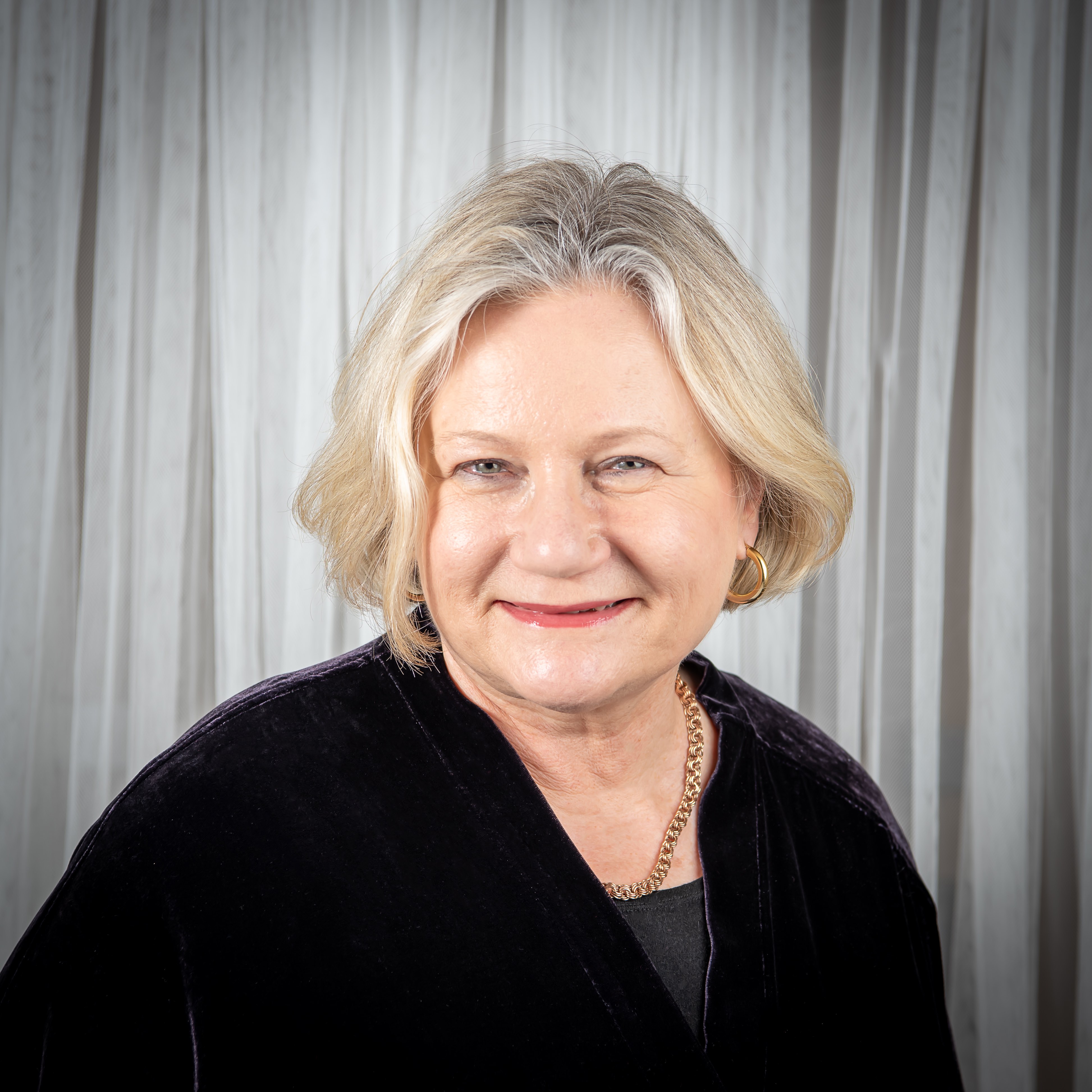
Dr Diana Cousens, OAM, has a PhD in Himalayan Studies from Monash University. She is the past President of the Federation of Australian Buddhist Councils and the past Vice-President of the Buddhist Council of Victoria (BCV). She has been involved in the BCV intermittently since the 1990s and has designed many of its policies including on disability access to temples. She is also well known for her booklet on palliative care, Buddhist Care for the Dying.
Diana publishes on engaged Buddhism and the Tibetan treasure tradition and has been a regular speaker in interfaith dialogue since 2001. Diana was also the founding President of Sakyadhita Australia, which represents Buddhist women across all traditions. She received a Medal of the Order of Australia in 2023 for service to the Buddhist community in Australia.
I would like to acknowledge the traditional custodians of the land on which we meet, the Ngunnawal and Ngambri peoples, and I pay my respects to elders past and present. I am honoured by the invitation to speak here today on the auspicious occasion of Vesak, the Buddha’s birthday, and I also want to explore this image of the murmuration of birds.
For thousands of years people have wondered how it is that every day in certain parts of the world tens of thousands of starlings can gather in the sky and dance and create beautiful shapes without bumping into each other. [1] At different times people have proposed different ideas to explain it. In 1931 the ornithologist, Edmund Selous, proposed that it must come about through telepathy, that, “all the birds must think collectively, all at the same time”. It was assumed that to do something so complex must require a very complex solution.
The method behind this extraordinary patterned flying was discovered only 20 years ago, when two Italian physicists used multiple cameras to photograph 4,000 individual birds as they were changing positions and then used these photographs to construct their positions. What they found out was that each individual is only interacting with seven neighbours. They fly in the same direction as the seven neighbours that are closest to them, reacting from second to second, staying close, but not too close. The starlings have no plan, no leader and no telepathy. Each one and their seven neighbours responds to the seven neighbours beside them, each of those seven respond to another seven, going on into infinity. [2] So I am using this example to put forward a model of collective action through small scale interaction.
If we think about the historical Buddha, his first teaching at Sarnath was to five disciples. Just six people. But each of those five kept interacting with another small group, who interacted with another group, and so on. The Buddha himself kept interacting with other groups who interacted with other groups. They had no television, internet, radio or even texts in the very beginning, they just had personal contact, but from this base the collective murmuration of the Dharma has taken shape over the past two and a half thousand years.
So we are in a world where there is great trouble, inequality, a climate crisis and even war in many places. How do we respond to that? I think the murmuration of starlings provides a model of collective action through small scale interaction. If we can build peace at a small scale in our own communities then that will have a flow on effect – peace is contagious.
So, how do we build peace? There is a wonderful term in Buddhism, the spiritual friend, the kalyana mitta. [3] The spiritual friend does not have to be ordained but they have to have certain characteristics and I believe we can all aspire to be spiritual friends. What is a spiritual friend? The historical Buddha described the kalyana mitta in this way in the Sigalovada Sutta in the Pali Canon.
“You can recognize a good-hearted friend who’s compassionate on four grounds. They don’t delight in your misfortune. They delight in your good fortune. They keep others from criticizing you. They encourage praise of you. You can recognize a good-hearted friend who’s compassionate on these four grounds.”
The Buddha spoke about this matter.
Then the Holy One, the Teacher, went on to say:
“A friend who’s a helper, one the same in both pleasure and pain, a friend of good counsel, and one of compassion; an astute person understands these four friends for what they are and carefully looks after them, like a mother the child at her breast. The astute and virtuous shine like a burning flame.”[4]
We need to be there for our friends in the community, first of all as helpers, being aware of others’ needs and finding ways to assist them. Second, acting as the friend who does not abandon others when they are in trouble. Thirdly we need to be the friend with discernment who discourages others from making mistakes and encourages them to undertake good actions. We need to point out the way to bring the dhamma to life. Fourthly we need to be sympathetic, rejoice in others good fortune and protect our friends from gossip and mistreatment. It is an ordinary human failing to criticise others, particularly when they are not around, and give free reign to our anger, resentment and jealousy. But if we are to build communities then we need to step back from these tendencies and also protect our friends from them. Peace building and community building doesn’t happen without effort. It takes courage to step in and put a stop to malicious gossip.
We also have an acute responsibility to be absolutely ethical in all of our dealings. In Victoria a number of temples have had significant problems because of bad financial management or not keeping proper lists of members. This has led to division and conflict and in one case a whole temple was lost because of financial speculation in property. Building communities depends on good will and good ethics. If you are responsible for a temple then please employ a qualified accountant to manage the finances and avoid future conflict.
It is always possible to think in very grand terms about great things but the real challenges of life are here and now with those six or seven people with whom we are directly in contact at any one time. Our good intentions and good actions with those six or seven has a flow on effect, it is our murmuration. Elsewhere in the Pali Canon, in the Upaddha Sutta (SN 45.2) Ananda said to the Buddha that kalyana mitta – good friends, companions, and associates – are half of the spiritual life and the Buddha replied, “Not so, Ānanda! Not so, Ānanda! Good friends, companions, and associates are the whole of the spiritual life. A mendicant with good friends, companions, and associates can expect to develop and cultivate the noble eightfold path.” [5]
Let’s think about our kalyana mitta and how we can build communities together. In Australia we pride ourselves on being a diverse, multicultural society, and I represent the Buddhist Council of Victoria on the state government’s Multifaith Advisory Group. We talk with government representatives on legislation that affects the different religious communities and sometimes we provide input into legislation. In parallel we, the members, are building friendships and supporting each other. We attend each other’s festivals and temple openings. We work together on projects of common interest. Myself and a few others are also members of the Victorian Coroner’s Court’s Multifaith Advisory Committee and we regularly meet at the court and discuss issues regarding the culturally respectful treatment of deceased persons. I am an active participant in interfaith dialogue and regularly attend places like gurudwaras, mosques and synagogues to participate in special events which may include giving talks on topics of common interest.
About two years back the Victorian Government decided to outlaw the image of the swastika when used as a hate symbol. As you will know, the swastika is also a symbol of auspiciousness and peace in the Hindu, Buddhist and Jain religions, so we worked together with the Jewish community on designing legislation which would respect the traditional use of the swastika while providing penalties for its use as a hate symbol. We created an educational program for each of our communities about its traditional use and the misuse by the Nazi Party in the 20th century, and by Neo-Nazis in contemporary Australia. This project led to good collaboration and new collegial relationships between all those involved. It also provided new understandings for our Buddhist community who may be unaware of the history of Europe in the 20th century.
I think we all want to see a more peaceful world and so we need to see ourselves as peace builders. If we have a very clear intention to increase the peace in the world through building good relationships and communities then we will achieve that. I think a lot of the time people do not take the opportunity to build peace because they lack confidence and think the aspiration is too great. But remember the murmuration of the birds, we only need to be in contact with a few people at any one time. If we have a clear intention to work through conflict and manage our relationships ethically and transparently and be a good spiritual friend, then automatically we will be building peace in the world. Good actions have a flow on effect, a murmuration.
Another way to describe the benefit of good actions to build peace is in an Indian medical model, the idea of Ayurvedic medicine. I lived in India in the 1980s and there learnt the difference between allopathic – Western – medicine and Ayurveda – Indian herbal medicine. Allopathic medicine works with things like antibiotics and chemotherapy to kill the bad bacteria or cancer cells and Ayurveda works to strengthen immunity and improve the basic goodness of the human constitution so that it naturally overcomes disease. I think that when we intentionally work to build peace and act as a spiritual friend, we are following the Ayurvedic model, in that this works to strengthen the underlying goodness of the society and by increasing the good, there is less place for the bad. So let us all work on increasing the good.
Thank you again for this opportunity today.
Reference:
- See: https://www.youtube.com/watch?v=X0sE10zUYyY
- See Yong, Ed, ‘The Singular Beauty of Collective Flight’, in National Geographic, April 2025, vol.247, n.4, Washington.
- See: Viafora, David, ‘Spiritual Friendship Is the Path’, Lion’s Roar, September 9, 2022.
Sanskrit: Kalyāṇamitra (कल्याणमित्र) - https://suttacentral.net/dn31/en/sujato?lang=en&layout=plain&reference=none¬es=asterisk&highlight=false&script=latin, accessed 26 December 2023.
- https://suttacentral.net/sn45.2/en/sujato?lang=en&layout=plain&reference=none¬es=asterisk&highlight=false&script=latin
 Australian Observance of the United Nations Day of Vesak